





Jean Marc Vignolles considers it “vital” for the CNMC to update content regulation
El consejero delegado de Orange España y Jazztel España sostiene que la regulación sobre contenidos en España se encuentra actualmente en una situación “no sostenible” de “casi monopolio”, “única en Europa”, que podría llevar a “contaminar la competencia en otros mercados de telecomunicaciones”.
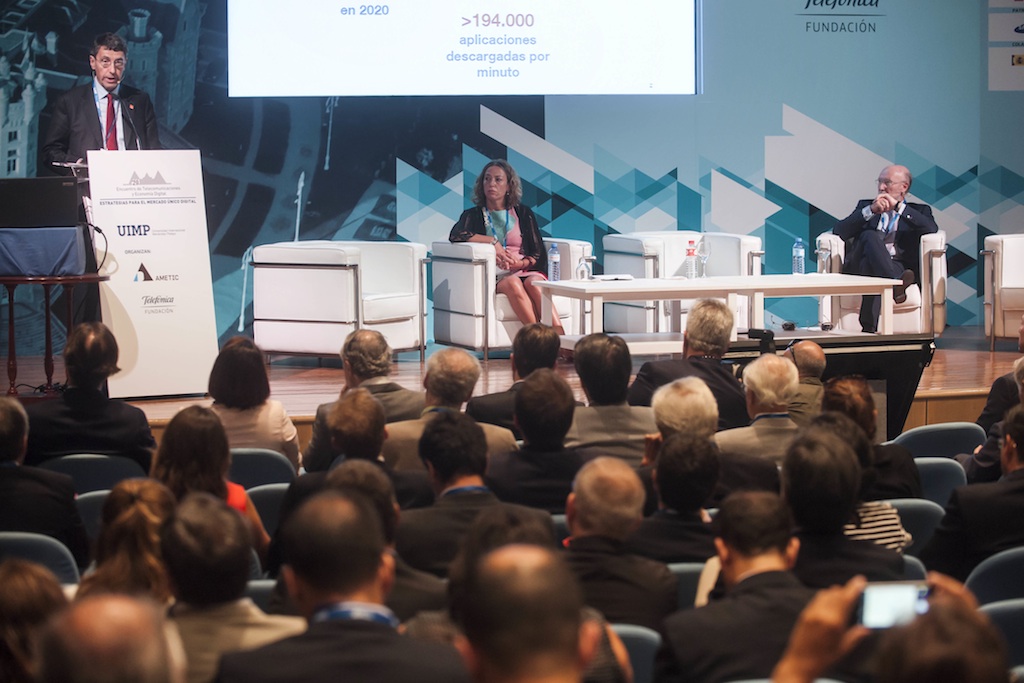
En la segunda jornada del 29º Encuentro de Telecomunicciones y Economía Digital que se celebra esta semana en Santander, el consejero delegado de Orange España y Jazztel España, Jean Marc Vignolles, analizó la situación del mercado de contenidos en España. A su juicio, es “vital” que la Comisión Nacional de los Mercados y la Competencia (CNMC) actualice la regulación sobre contenidos que en España se encuentra actualmente en una situación “no sostenible” de “casi monopolio”, “única en Europa” según sus palabras, y que puede llevar a “contaminar la competencia en otros mercados de telecomunicaciones”.
Para Vignolles, que dijo hablar por primera vez en público tras la compra de Jazztel por parte de Orange, el mercado español “se ha adelantado a otros en Europa” en fenómenos como el “auge espectacular” de la oferta convergente (telefonía fija, móvil y televisión juntas), con dos tercios de las altas nuevas en banda ancha de carácter convergente. España también va por delante de otros países en el despegue de la súper banda ancha. Por último, señaló que “el mercado de la televisión de pago ha dado un vuelco completo” en España.
No obstante, el consejero delegado de Orange España y Jazztel España aseguró que su compañía está en “una situación óptima” para competir en este entorno y convertirse en el “operador alternativo en España” (ya es el segundo por volumen de clientes totales). Vignolles añadió que pronto prestarán servicios de banca móvil personalizada en España y Francia, con un socio financiero.
La quinta revolución tecnológica
La directora de la División de Telecomunicaciones, Medios y Servicios de Altran España y Latam, Ana Mosquera, ha afirmado que actualmente vivimos una quinta revolución tecnológica, de la que hay que “aprovechar” su “florecimiento” y “estar despiertos” para la sexta. Así, ha explicado las diferentes eras tecnológicas de la Historia, comenzando con la Revolución Industrial; la era del vapor y los ferrocarriles; la era del acero, la electricidad y la ingeniería pesada; la era del petróleo, el automóvil y la producción en masa, y, finalmente, la era de las telecomunicaciones.
Según la experta, todas las revoluciones tienen las mismas fases, desde que se produce el primer impacto hasta la “bonanza”, pasando por años de “turbulencias” y “sinergias”, época en la cual estamos ahora. El primer periodo es el de la instalación, con un tiempo de irrupción y después de frenesí. Después hay otra época de “reacomodo, crisis y recesión” de las industrias involucradas, donde muchas de ellas desaparecen, y donde, además, las instituciones comienzan a preguntarse “qué está pasando”. A continuación viene el periodo de despliegue, la ya mencionada época de sinergia, en la cual las instituciones “empiezan a moldear el marco que necesita la revolución”. La quinta y última fase es la de la madurez, en la cual podemos “empezar a vislumbrar la siguiente transformación”.
Mosquera también ha analizado el informe “Migraciones de valor en las TIC y los medios en Europa”, realizado por Altran, que analiza 41 empresas europeas, americanas y asiáticas desde 2004 a 2014. Como resultados generales, los operadores de telecomunicaciones han visto decrecer su valor; las compañías de internet (OTTs) han multiplicado por tres su participación, y las compañías IT, en cambio, ha visto reducir su participación en un 30%. En
Así, los suministradores de terminales y las OTTs son los que más han aumentado su participación. Pese a la reducción de valor de los operadores de telecomunicaciones, la experta ha señalado que la Comisión Europea ha introducido ya mejoras regulatorias, muy similares a las de 2006 en EEUU. Además, se ha mostrado positiva al afirmar que “por fin pinta bien para Europa” en el liderazgo tecnológico.

Financiación para I+D+i
El Centro para el Desarrollo Tecnológico Industrial (CDTI) verá aumentados sus fondos en 30 millones en 2016 dentro de la partida correspondiente en los Presupuestos Generales del Estado que se están diseñando ahora, según adelantó ayer en Santander su director general, Francisco Marín, quien avanzó algunas de las novedades que el CDTI pondrá en marcha en el próximo ejercicio. Esta cifra se sumará a los 1.700 millones “movilizados” en 2015, suma de fondos directos (1.000 millones) y de la cantidad captada del exterior (700 millones).
Para Marín, con apenas unos meses en el cargo, la entidad mostraba “cierta complacencia” que se pretende combatir con tres medidas de “cambio acelerado”: explorar nuevos mecanismos de ayuda a la i+D+i empresarial, salir “a la búsqueda de iniciativas empresariales antes de que lo sean” y un mayor esfuerzo en la internacionalización de las pymes.
El director general del CDTI explicó que en la actualidad el centro lleva ejecutado un 53% de su presupuesto para 2015 y destacó que, “pese una curva lenta en los primeros meses del año”, la demanda de financiación ha crecido un 5%”. Otra de las actividades del CDTI reseñadas por Marín ha sido una mejor atención a las pymes, que tenían el acceso a la financiación más restringido debido a sus “balances damnificados” –según sus palabras- por la crisis, y que se ha concretado en una minoración de las garantías del 80% para proyectos de excelencia.
Como aspecto negativo, el titular del CDTI se mostró preocupado por el desequilibrio que se da en la participación de las distintas comunidades autónomas en los proyectos del centro, con regiones con volúmenes muy bajos de fondos obtenidos.
Smart communities
El presidente de la Comisión Smart Cities de CEOE y AMETIC y presidente de la Alianza Inercia, Adolfo Borrero, ha sido el encargado de moderar la primera mesa redonda del día sobre Smart Communities, que, como ha afirmado, sigue la línea de la celebrada ayer por la tarde en la que participó el alcalde de Santander, Íñigo de la Serna.
Así, el director general de Red.es, Daniel Noguera, ha resaltado en su intervención el Plan Nacional de Ciudades Inteligentes, que forma una red de más de 600 ciudades españolas y cuenta con un presupuesto de más de 188 millones de euros. Los ejes centrales de este plan son la ciudadanía y la industria, y tiene como objetivos aumentar la aportación de las TIC al PIB del sector industrial y mejorar la eficiencia en la prestación de servicios a partir de las TIC, entre otros.
Según ha indicado, una ciudad inteligente ha de ser “eficiente” y “amable”, y ha insistido en que su complejidad se reducirá mediante el “uso intensivo” de las TIC. “Para que sean inteligentes, tienen que digitalizarse”, ha subrayado Noguera.
Además, ha explicado que Red.es cuenta con tres actuaciones concretas, la primera y la segunda convocatoria de Ciudades Inteligentes, y la primera convocatoria de Islas Inteligentes. Así, la primera convocatoria de Ciudades Inteligentes contó con un presupuesto de 15 millones de euros, se presentaron 37 iniciativas y se seleccionaron 13; todas ellas contaron con un “elevado respaldo” del sector industrial y la sociedad. Sus beneficiarios fueron ciudades de Extremadura, Castilla La Mancha y Andalucía.
La segunda convocatoria de Ciudades Inteligentes es “más ambiciosa” y busca “mayor interoperabilidad entre plataformas”, según Noguera. El presupuesto se eleva a 48 millones de euros y sus beneficiarios serán entidades locales de más de 20.000 habitantes, como ayuntamientos, diputaciones, mancomunidades, cabildos y consells, así como comunidades autónomas uniprovinciales.
La primera convocatoria de Islas Inteligentes, por su parte, tiene destinado un presupuesto de 30 millones de euros y se basa en subvención al 100 %. Los beneficiarios podrán ser administraciones locales que gestionen servicios públicos en la totalidad del territorio de las islas pertenecientes a Canarias e Islas Baleares.
En la mesa redonda también ha participado el presidente del Cabildo de Tenerife, Carlos Enrique Alonso, quien ha afirmado que las estrategias digitales de las ciudades “no son un fin”, sino un “eje de trabajo” con un “largo recorrido” adaptado al desarrollo de la industria y los ciudadanos.
Así, Alonso ha explicado que el plan estratégico de Tenerife se articula en el llamado Tenerife3i, y tiene como horizonte el año 2030. Además, lo ha comparado con el videojuego Minecraft para ejemplificar la estrategia de la isla. Así, Tenerife basa esta estrategia en una rejilla, como el juego, para “tenerlo todo interconectado”. Además, apuesta por un plan de OpenData, donde los datos serían los ladrillos que el usuario utiliza en Minecraft. Uno de los objetivos finales del plan es, por tanto, generar un entorno “abierto” para que la isla sea “más amable”.
Por su parte, el primer teniente alcalde y delegado del Área de Innovación y Nuevas Tecnologías y Seguridad del Ayuntamiento de Málaga, Mario Cortés, ha contado la experiencia del proyecto Smart Costa del Sol, que busca coordinar la información y servicios de 15 municipios y abarca 165 kilómetros.
Según ha indicado, este proyecto contaba con varios retos asociados al turismo, como la masificación en vías y accesos a las ciudades; la aglomeración en las playas; el aumento de la demanda de los transportes públicos; la generación de residuos y el gran número de nacionalidades que confluyen en esa zona. Así, el objetivo es unir los servicios buscando la “optimización” y la “excelencia turística”. Necesitaban, por tanto, una plataforma de gestión para integrar todos esos servicios existentes en un “cuadro de mando unificado”.
Ahora, mediante Smart Costa del Sol, ofrecen parking inteligente; eficiencia energética en edificios; alumbrado público eficiente; gestión de riego; instalación de sensores y cámaras en las playas, y análisis y monitorización de flujos turísticos, entre otros.
Por último, la directora general adjunta de Telefónica, Marieta del Rivero, ha afirmado durante su intervención en la mesa redonda que ahora son las ciudades las que se tienen que “poner a la altura” de los ciudadanos en la revolución tecnológica actual. Además, ha asegurado que las Smart Communities son una “gran oportunidad” para transformar la sociedad, pero se ha de tener en cuenta que sus habitantes “no quieren simplemente ser gestionados”, sino participar.
La directiva también ha destacado que este proceso de digitalización y modernización ha de ser liderado por las propias ciudades, “estratégico”, y que perdure en el tiempo, más allá de los cuatro años de cada legislatura política.
Además, según ha explicado Del Rivero, las iniciativas “clave” para las Smart Cities son que los datos de los europeos “puedan viajar más allá de sus fronteras”, y la interoperabilidad, es decir, que las plataformas de las ciudades se comuniquen entre ellas. En este sentido, ha resaltado una iniciativa europea en la que más de 50 ciudades ya se han aliado.
Industria 4.0: oportunidades y amenazas
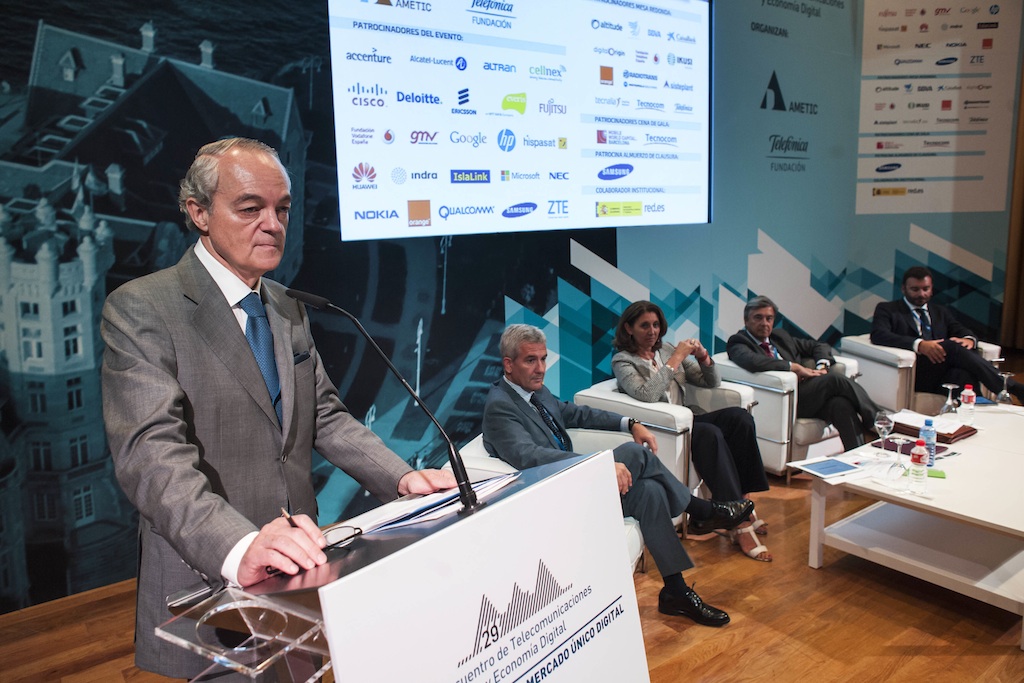
Para la secretaria general de Industria, Begoña Cristeto, encargada de mesa redonda sobre el sector industrial, “la industria 4.0 no es una opción” sino la única vía de futuro para uno de los principales sectores de la economía española, ya que “estamos en la 4ª revolución industrial”. Cristeto hizo hincapié en las nuevas oportunidades de negocio que abre la aplicación de tecnologías smart para las propias fábricas y para las empresas proveedoras de ellas, pero añadió que “también para nuevos players que podrán acceder a sectores antes copados por ciertas empresas”, como ha ocurrido ya con Whatsapp y las operadoras de telefonía.
Sus compañeros de mesa redonda, el presidente ejecutivo de Radiotrans, Alfonso Alarcos Capellán; el director de Innovación y Desarrollo de Negocio de Sisteplant, Alfonso Ganzábal; y el director de la División de Industria y Transporte de Tecnalia, Agustín Sáenz, coincidieron con ella en esta afirmación: la industria 4.0 representa tanto una oportunidad como una amenaza.
Ganzábal fue rotundo al alertar del riesgo de “quedarse fuera” de esta revolución y al defender su concepto de la industria 4.0, “cuyo cuerpo es profundamente tecnológico” pero que precisa “tecnología para saber qué está ocurriendo y también para entenderlo y reinventar lo que estamos haciendo”. En este sentido, defendió el plano humano de este cambio y abogó por capacitar a las personas para que adquieran el conocimiento para trabajar en este nuevo entorno y hacer uso de esa tecnología.
Agustín Alarcos, de Radiotrans, sugirió que el cambio al que debe enfrentarse la industria es “más grave” para la pequeña y mediana empresa a la hora de dar el salto hacia industria 4.0. En parecidos términos se expresó Agustín Sáenz, de Tecnalia, que habló del “choque cultural que se produce al sugerir a los directivos del sector industrial que colaboren con una startup creada por chavales de veintipocos años que hacen gaming” ya que “es un nuevo mundo para ellos, para el sector industrial puro”.
La secretaria general de Industria recordó que el Gobierno español está trabajando en el Plan de Digitalización de la Industria, para no quedarse atrás de otros países del entorno europeo, como Alemania y Francia, que llevan la delantera a España, y destacó el papel pionero en la industria 4.0 que está protagonizando el País Vasco.
Mercado único digital
El subsecretario de Economía y Competitividad, Miguel Temboury, ha sido el encargado de finalizar la sesión de la mañana del tercer día del 29º Encuentro de Telecomunicaciones y Economía Digital “Estrategias para el mercado único digital” en Santander. Temboury ha afirmado que las perspectivas económicas de España son hoy “mucho mejores” que en los últimos años “gracias a las medidas acometidas” por el Gobierno. Así, ha destacado el crecimiento en el primer semestre del año, la caída de los costes de financiación o el aumento del crédito nuevo. También ha resaltado el ritmo de crecimiento de las inversiones extranjeras y del consumo.
Entre los desafíos a los que se enfrentan todavía, citó la reducción de la tasa de paro. Según ha subrayado, en los últimos meses se han generado más de 400.000 nuevos empleos creados “a pesar” de la alta tasa de desempleo, en la que hay “seguir avanzando” para disminuir.
El subsecretario de Economía y Competitividad también ha destacado la importancia del mercado único digital, punto central del encuentro. Entre otras cosas, ha señalado que la legislación no puede ser “entorpecedora” de la nueva realidad que ha producido la revolución tecnológica. Por eso, hay que superar diversos problemas regulatorios para lograr crear empleo y ofrecer servicios “más baratos y competitivos”.
Beneficios y dificultades del big data
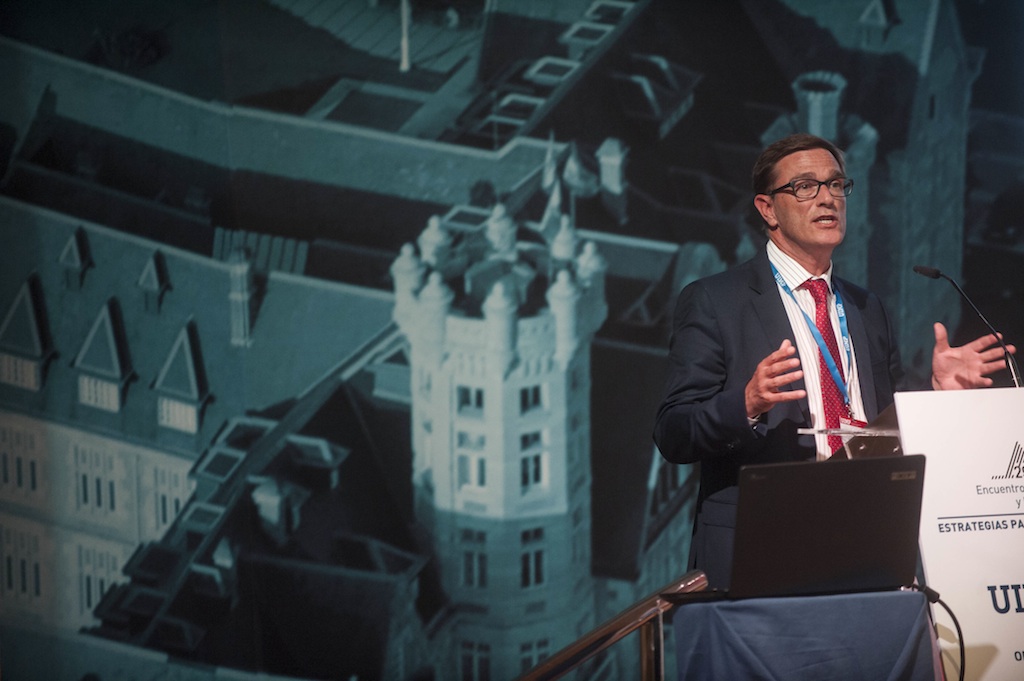
El director de Business Applications Services de Fujitsu, Juan Angulo López-Dóriga, ha definido el sistema Big Data como un conjunto de tecnologías que extraen, almacenan, procesan y analizan un gran volumen de datos a una “altísima” rapidez. Por tanto, el Big Data se refiere a volumen, a velocidad, a variedad de fuentes y a un valor incremental. Entre sus beneficios, el experto ha destacado la inmediatez de los resultados, que ayudarán a la toma de decisiones al producirse en tiempo real. En su opinión, “los datos van a ser el nuevo petróleo de la sociedad”.
La estructura de este sistema Big Data debe contener integración de datos, transformación y monitorización de la información; un procesamiento masivo a tiempo real o almacenamiento; disponibilidad de datos cedidos o vendidos, considerando esos datos como un “activo”, y una visualización de esos datos de forma textual o gráfica.
El directivo ha señalado que para implementar de “forma exitosa” este sistema “hay que identificar antes los beneficios y las dificultades” de esta acción y diseñar sobre bases tecnológicas que permitan realizar una explotación más extensa de los datos. “Tenemos la solución, pero antes hay que definir el problema”, ha recalcado.
Además, hay que realizar una serie de prácticas para esta implementación, como alinear los objetivos de Big Data con los del negocio; empezar por proyectos pequeños y limitados; utilizar servicios cloud; asociar Big Data con los datos de la empresa, y revisar los procesos y las políticas de gestión.
Fintech
El director general del sector banca y seguros de Tecnocom, Javier Rey, sugirió hoy durante la mesa redonda dedicada a debatir sobre las fintech que “si la banca no reacciona, podría convertirse en una commodity”, ya que en su opinión se está produciendo un “cambio irreversible” en el negocio financiero con nuevos consumidores digitales, nuevos agentes cercanos a la tecnología y entidades financieras tradicionales “en una situación de crisis”.
“Deben adaptarse a un entorno colaborativo y de coo-petición”, explicó, en el que “habrá alianzas con alguno de estos nuevos actores” y animó a los bancos a “convivir, transformarse y converger en el nuevo marco de los servicios financieros”.
La segunda en intervenir fue Marta Plana, cofundadora y general counsel de Digital Origin, una fintech fundada en Londres en 2011 que opera exclusivamente en el mercado español y que acaba de obtener una primera ronda de financiación de 15 millones de euros por valor del 30% de la compañía. Digital Origin, una de las mejores startup de 2015, es una plataforma de servicios bancarios online que ha adoptado el código de buenas prácticas británico de su sector.
A pesar de ello, Plana, que se mostró segura de que estos nuevos players pueden tener un espacio en España, afirmó desear una regulación estatal de las fintech que les “permita actuar con transparencia y confianza”. “Necesitamos unas reglas del juego comunes que nos permitan crecer y que den seguridad a los usuarios”, apostilló. Además, definió a Digital Origin y a otras fintech como “competidores, pero también colaboradores”.
El presidente y fundador de Avatarbtc, José Luis Várez, explicó que el bitcoin “nace de una necesidad del cliente al que un empresario debe dar respuesta”. Várez puso el ejemplo de los 3 millones de chinos que nacerán en el futuro, quienes no necesitarán una sucursal bancaria porque dispondrán de un móvil en su bolsillo. No obstante, aclaró que “si el usuario no percibe que hay soluciones prácticas que estén próximas a su vida ordinaria, el bitcoin no le va a interesar”. Asimismo, la moneda virtual “debe convivir con el sistema financiero”.
El representante de e-LaCaixa, David Urbano, coincidió en constatar que “el ecosistema financiero esta cambiando” y que “el banco tradicional se tiene que adaptar a este nuevo entorno digital”. En su opinión, disfruta de ventajas frente a otros actores, como la confianza de los clientes, un extenso know-how, una amplia cartera de productos y un entorno regulado que da garantía al usuario. Urbano señaló también que “la banca española es un referente a nivel mundial en digitalización, con líderes como LaCaixa, BBVA o el Santander a la cabeza”.
El CIO del BBVA, José Olalla Hevia, que convino con Urbano en que “la banca española puede enseñar mucho en digitalización a entidades de otros países”, subrayó que –en su opinión personal y en relación con las fintech- “en banca no ha aparecido ningún producto sustitutivo como ocurrió con el mp3 en la música; no tenemos sobre la mesa ningún whatsapp de los servicios financieros”, por lo que se confesó “escéptico” al respecto.
Asimismo, Ollala se mostró convencido de que la banca “tiene que transformase sí o sí” para hacer frente al hecho objetivo de que el cliente es cada vez más digital, más multicanal y demanda apps nativas, a lo que se añade la aparición de nuevos agentes en el mercado. En el caso del BBVA, esa transformación pasa por ser líderes en Net Promoter Score (NPS), por crear negocio en canales digitales, por cambiar la mentalidad de la compañía para fomentar el talento digital y desarrollar nuevos negocios digitales a partir de activos tecnológicos y de conocimiento.
Did you like this article?
Subscribe to our NEWSLETTER and you won't miss anything.
Related articles
 The CNMC addresses the future of DTT: it demands to supervise the tender for the new channel and warns about UHD
 Gerardo Olivares will direct a documentary about the life of Jean Reno
 Jean-Marc Racine, new product director at Haivision
 A CNMC report sheds light on possible interference between 5G and DTT
 'Tres', an avant-garde reflection on sound and vital desynchronization, Goya for Best Sound
 The CNMC publishes its contribution to the European Commission's public consultations on the regulation of digital platforms
 The CNMC opens a public consultation on the application of audiovisual regulation to video sharing platforms
 82% of broadcasters consider that access to content through 5G will overtake traditional television
 European public media warn about the rapid rise of global platforms without regulation
 Open Television considers the National TDT Technical Plan and the regulation of the second digital dividend unavoidable and urgent
 La CNMC sanciona al canal Revelation TV por la emisión de contenidos homófobos
 The CNMC approves the wholesale regulation of broadband markets
 La CNMC publica un Informe sobre los Pliegos para la contratación de servicios de telecomunicaciones en la Administración del Estado
 The CMT launches a public pre-consultation on the future regulation of fiber optics