





JVC adopta “On-Air over IP” como leitmotiv
JVC adopted “On-Air over IP” as the theme for NAB 2016, demonstrating complete solutions for mobile news production, studio, content production and also new robotic PTZ cameras, which feature simultaneous integrated recording and live video broadcast capabilities.
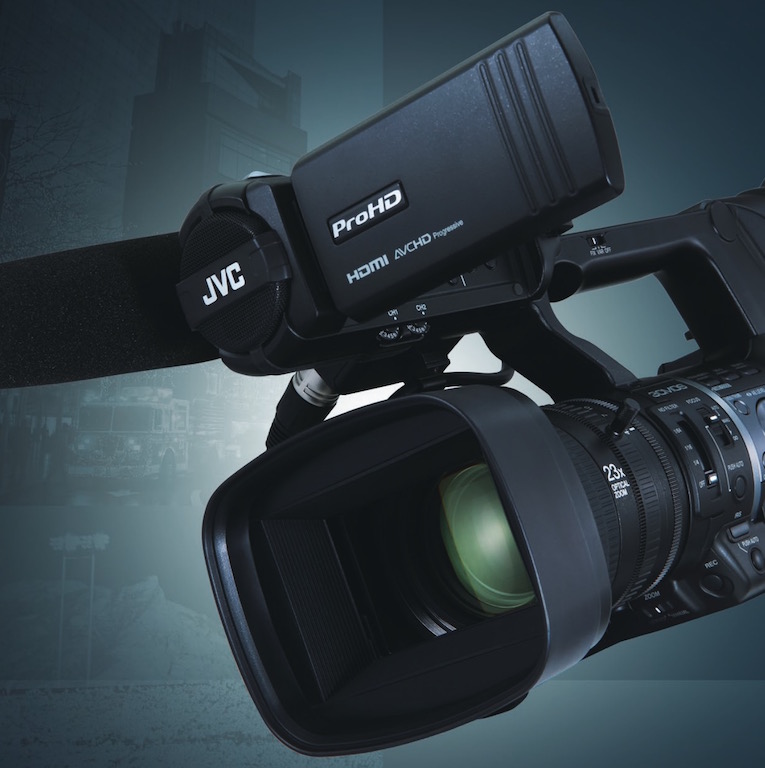
Making the most of new IP environments, JVC has pledged at NAB 2016 to bring the studio-based IP production experience virtually anywhere. Thanks to IP connectivity, JVC cameras behave like any other video source connected to the switcher in the production control room, regardless of where they are located in the world. The company adopted “On-Air over IP” as the theme for NAB 2016, demonstrating complete solutions for mobile news production, studio, content production and also new robotic PTZ cameras, which feature simultaneous integrated recording and live video broadcast capabilities.
ENG y broadcast
In 2012, JVC made a big bet on IP-based mobile news production with the launch of its GY HM650 ProHD camera.
Over the past four years, JVC has steadily improved streaming system reliability with the inclusion of Forward Error Correction (FEC), Automatic Repeat Request (ARQ), and Adaptive Bit Rate Control. Working together with Zixi, JVC has added a high reliability mode that can now support data packet losses of more than 40%. Combined with improvements in wireless networks, JVC's technology is now considered a strong alternative to dedicated microwave links.
At NAB 2016, JVC presented several enhancements to its IP camera systems, including improving field communications for reporters and expanding mobile applications beyond ENG. One of these improvements is the first IFB (Interruptible Fold Back) audio return system integrated into a camera on the market. Incorporated in the new GY-HM660 ProHD camera, which replaces the innovative GY-HM650, it allows the director or news presenter to communicate directly with the camera operator or reporter. In addition to ENG applications, the IFB system facilitates communications with camera operators, all in a fully wireless multi-camera production environment.
In Las Vegas, JVC demonstrated such a system in collaboration with NewTek, with a wireless multi-camera solution, ideal for mobile production. It is a first step in the direction of prioritizing “in-house” production, using the power of an IP-based workflow. The live shooting of images with multiple cameras that is done today requires a mobile production unit and also moving an entire team to the site where the news or event is produced. JVC's solution only requires camera operators equipped with IP cameras on site. Each camera records images using universal memory cards in the camera itself, while live images are transmitted back to the TV station's headquarters using a 3G/4G network. Camera operators communicate with the program director using the new IFB audio return channel.
To overcome the congestion sometimes present in Wi-Fi and LTE networks, JVC has developed a series of solutions based on private networks that provide reliable wireless communications while extending the reach of a traditional network. An example of this is the use of Ubiquiti Networks point-to-point radios integrated with the new GY-HM660 camera and also other models in this JVC IP video range.
For wider coverage areas, JVC's private MESH video network combines Silvus MIMO technology with JVC cameras, providing an ideal system for increasingly demanding field productions, such as sporting events or parades. The network is based on the use of mobile nodes of the MESH network, which are actually Silvus transceivers that function as transmitters and receivers. The network behaves as a self-managing, self-healing system that makes the best routing decisions automatically, and two-way communication over the network allows operatorless cameras to be controlled and remote controlled from remote locations.
Another novelty that JVC presented at the last NAB is the brand's first robotic PTZ camera: the KY-PZ100, which is ideal for applications in the studio or in the field. When connected to a Wi-Fi adapter or LTE modem via USB (or directly connected to a LAN), it generates IP streaming up to 1080p/60 with 2 channels of audio using the SMPTE 2022 error correction protocol. It can be used as a stand-alone remote camera, as part of a multi-camera production or as a conventional PTZ camera controlled by a simple Web browser, a remote control unit compatible with the standard protocol or also using the new remote control panel.
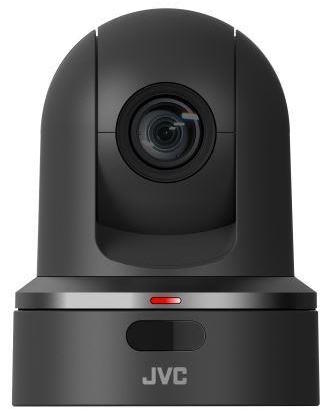 JVC RM-IP100
JVC también ha presentado un nuevo sistema de cámara para estudio basado en fibra óptica con funcionalidad IP, aplicado a su sistema de cámara GY-HM890 ProHD. Diseñado y fabricado exclusivamente para JVC por MultiDyne Video & Fiber Optic Systems, se trata de un módulo que se conecta directamente a la parte posterior de la cámara a través de su interfaz de 68 pines, transportando múltiples señales bidireccionales 3G-SDI, así como los protocolos de control, señales de audio, sincronización, y de intercomunicación entre la cámara y la estación base FS-900.
One base station supports up to 3 cameras, and its redundant power supplies provide the necessary power supply for each camera, teleprompters and even supporting monitors. Its three-in-one configuration is a more cost-effective solution than other systems that require separate controllers for each camera. Additionally, with its Gigabit Ethernet functionality and lightweight footprint, the base station – which occupies just 2 RU – enables IP control and configuration, and users can add SMPTE 2022 SDI-over-IP functionality to accommodate a fully IP-based workflow.
IP in sports
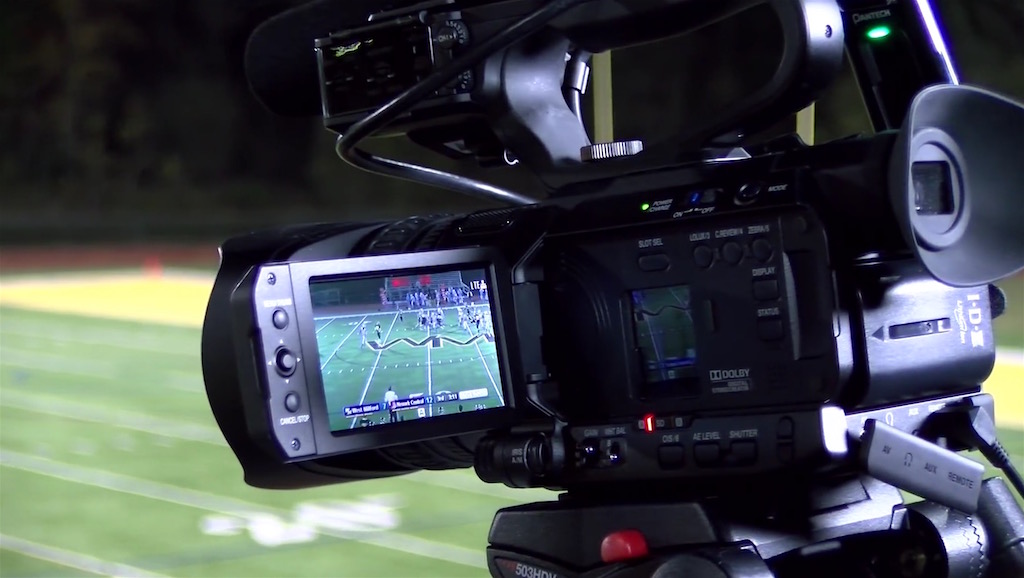
For sports production with limited budgets, JVC has introduced the GY-HM200SP streaming camera, with sports results graphics included.
Designed for coverage of events with a single camera, this model produces the insertion of results in real time on the recorded or transmitted HD video output, without the need to resort to any graphics generator or external mixer. As a result, one person can be recording the match, insert graphics and stream the live production directly from the GY HM200SP. The camera receives results information directly from a smartphone or tablet connected to the camera, through an intuitive graphical interface, and can even interact directly with the sports stadium scoreboard. Worth noting is JVC's partnership with Sportzcast, whereby the GY-HM200SP can automatically receive real-time data from the electronic scoreboard.
Did you like this article?
Subscribe to our NEWSLETTER and you won't miss anything.
Related articles
 TV3 adopts 5G remote production solutions from TVU Networks
 Vodafone adopts Android TV as its preferred platform for television
 ProSiebenSat.1 Media SE adopts EVS technology
 Ostsport.TV adopts the TVU Networks ecosystem
 ARRI adopts B-Mount mounting as standard on 24V batteries
 Digitell adopts JVC's PTZ robotic camera system for coverage of educational events
 Yamaha adopts Dante AV technology from Audinate
 Imagina US adopts MatrixStore as an integrated digital content management platform
 Éclair Group adopted Pablo Rio
 SBT in Brazil adopts Avid solutions
 Singapore adopts DVB-T2
 The French group M6 adopts Omneon technology
 Mediaset adopts the P2
 Canal Sur Tv adopts Panasonic's P2 HD in news