





Digitell adopts JVC's PTZ robotic camera system for coverage of educational events
Las cámaras KY-PZ100 cuentan con ranura para tarjetas SD para grabación en modo local, capacidad de streaming integrada, salida SDI y una óptica zoom de 30X.
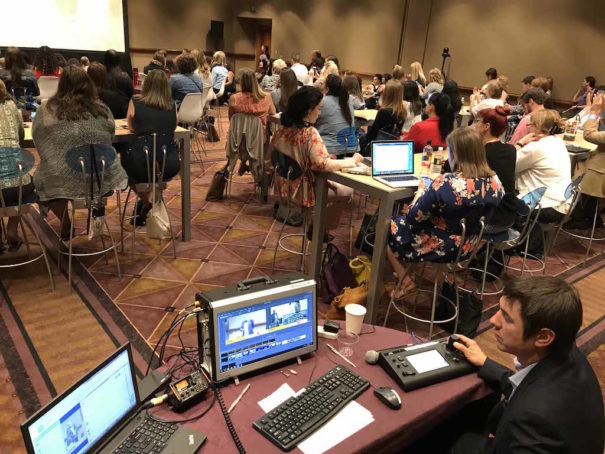
Digitell, una empresa que se fundó hace más de treinta años en Jamestown (EE.UU.) como proveedor de servicios de grabación de conferencias, cuenta con grandes clientes corporativos de ámbito transnacional a los que proporciona servicios de webcasting. Para ello, emplean una plataforma propia a la que se conectan las señales de cámaras robotizadas KY-PZ100 de JVC.
En los eventos que cubre Digitell se utiliza el sistema completo JVC con cámaras robotizadas PTZ, controles de cámara (CCU) y unidades de control remoto. Digitell llega a realizar la cobertura de hasta 100 eventos al año en diversas partes del mundo.
“El valor añadido que ha representado en términos de retorno de la inversión de este sistema robotizado de cámaras de JVC es increíble”, ha declarado Willliam Bacon, director de marketing de Digitell. “Son productos que aportan un montón de ventajas a empresas como la nuestra”.
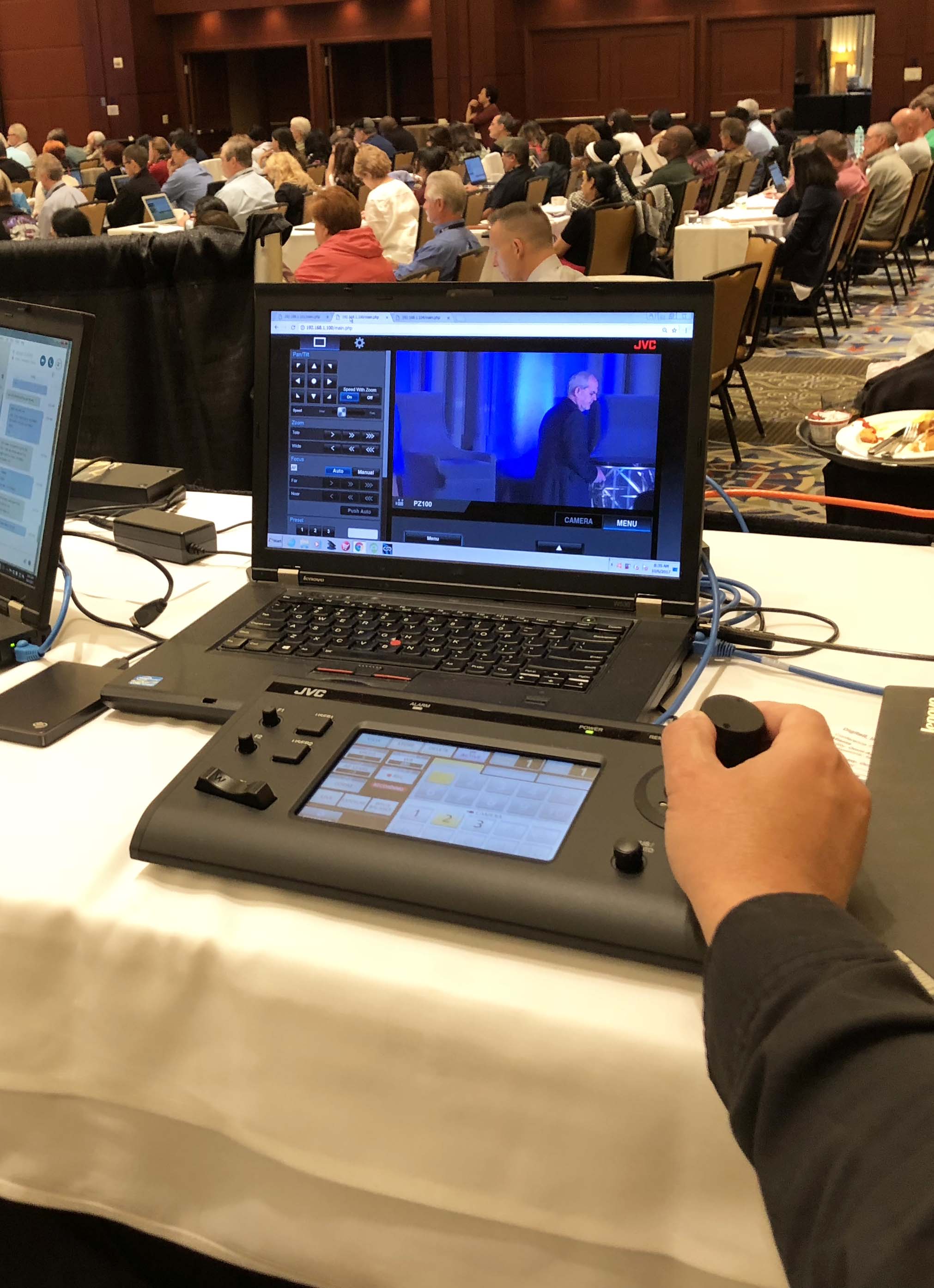 Bacon explicó que las cámaras KY-PZ100 presentan varias características que las distinguen de otras cámaras robotizadas del mercado, como su ranura para tarjetas SD para grabación en modo local, capacidad de streaming integrada, salida SDI y una fantástica óptica zoom de 30X, más que suficiente para cubrir la inmensa mayoría de auditorios y grandes salas de convenciones. También destacó el funcionamiento suave y el preciso control de movimiento que aportan a los operadores el panel de control de las cámaras, cuyas posiciones predeterminadas son una excelente ayuda para la agilidad de la producción. “El joystick encanta a los operadores. Y además, lleva poco tiempo familiarizarse con este control de cámara”, añadió Bacon.
Digitell dispone en este momento de nueve cámaras robotizadas KY-PZ100 que la empresa adquirió el verano pasado para cubrir un evento multisala en Francia. La producción de eventos usando cámaras robotizadas evita la necesidad de alquilar cámaras de formato estándar con ópticas largas y también grandes trípodes, reduciendo enormemente los costes.
He transporte de un sistema robotizado como el de JVC también es más sencillo y económico para una empresa de servicios como Digitell. Bacon dijo en este sentido que el pequeño tamaño de las cámaras KY-PZ100 de JVC permiten transportarlas y enviarlas a cualquier parte del mundo en una pequeña maleta tipo Pelican, incluyendo la cámara, el controlador, el trípode, el codificador, la tarjeta de audio y el cableado.
Workflow
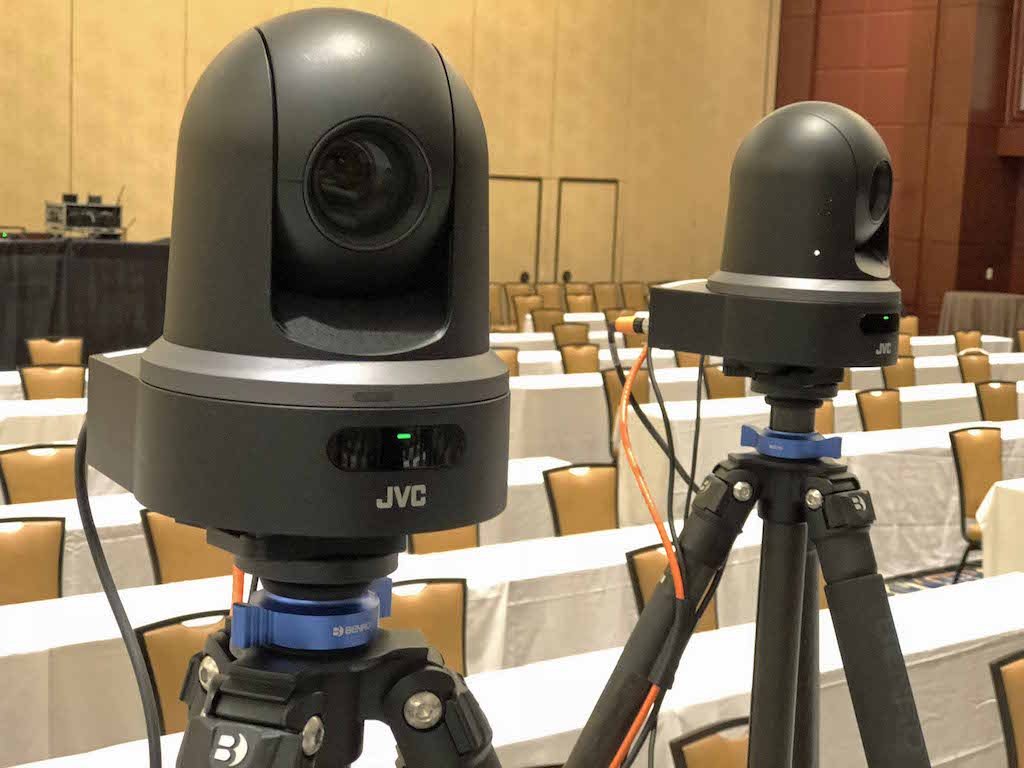
Un evento típico de Digitel consta de una cámara PTZ montada sobre un trípode ligero de 7 patas, rodeada de postes separadores con cintas retraíbles para protegerla adecuadamente. Fruto de ello, los clientes finales no necesitan alquilar tarimas o elevadores (uno para la cámara y otro para el operador para minimizar las vibraciones). Digitell acostumbra a implementar las cámaras de la siguiente forma: envían al codificador la señal SDI de la cámara, por un lado, y una señal gráfico desde un portátil, por otro. De esta forma el productor puede compartir una fuente u otra (o ambas como una doble toma) para la audiencia web. También se captura audio de fondo del auditorio o sala de conferencias y se lleva a una mesa Tascam para tener un mejor control del mismo y se enlaza a la cámara para grabarlo localmente.
Digitell, según las condiciones de cada auditorio, llega a montar hasta 3 cámaras robotizadas de JVC, una de ellas dedicada especialmente a la participación del público. En vez de recurrir a operadores de cámara separados y trabajando sobre tarimas o elevadores repartidos por el área de conferencia, uno de ellos se sitúa junto al productor y controla las cámaras robotizadas PTZ con el control RM-LP100. Este flujo de trabajo que utiliza Digitell con la ayuda de las cámaras JVC permite reducir el personal y evita la necesidad de emplear sistemas intercom para la comunicación entre el equipo de producción.
“Tener a un operador situado cerca del productor en vez de sobre una tarima alejada es algo crucial para poder obtener una buena toma”, declaró Bacon. “Considero imprescindible también disponer de balance de color y control de exposición. Las memorias facilitan al operador trabajar fácilmente con la cámara y generar un streaming por sí mismo”, concluye Bacon.
Did you like this article?
Subscribe to our NEWSLETTER and you won't miss anything.
Related articles
 The Catalan broadcaster 3Cat acquires the Artimo robotic camera system from Ross Video
 Sonic College adopts Solid State Logic system for immersive audio training
 Globo tests the use of 5G to cover major events with TVU Networks
 TD Ameritrade adopts virtual presentation format for its Market Drive events
 Riedel adopts Intopix TICO-XS FPGA IP-Cores to boost broadcasts and events
 Cuatro begins recording 'First Dates Cruise' with 59 robotic cameras on board a ship
 Riverside TV automates its coverage with JVC IP robotic cameras and Blackmagic mixers
 'Operación Triunfo 2017' will use fifty cameras, most of them robotic
 Data Media integrates a transcoding system for TVE's coverage of the Olympic Games
 JVC presents the private MESH network at NAB 2015 for coverage of multicam events without fixed structures
 Panasonic's robotic cameras now make it possible not only to hear, but also to see, RNE
 TVN adopts Riedel's Artist system for wireless digital intercom
 LiveU40i, a new LiveU uplink for event coverage
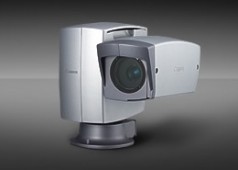 AVSC: control software for robotic outdoor cameras