





Ericsson y Sprint adelantan las posibilidades del 5G en una demo real
La tecnología de Ericsson permite retransmitir en directo con cámaras en HD un vídeo en 4K y UHD de los espectadores golpeando un balón “conectado” con todo tipo de estadísticas, mediante una señal 5G con velocidades de hasta 4 gygabites por segundo.
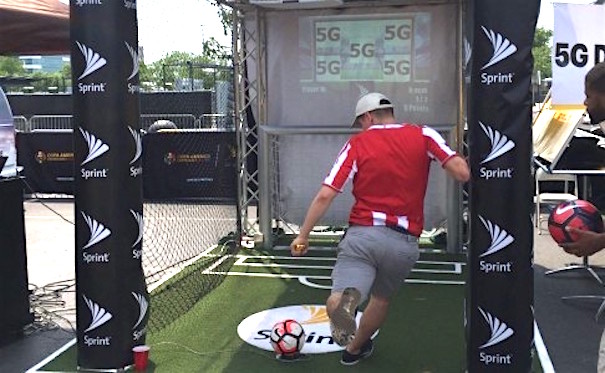
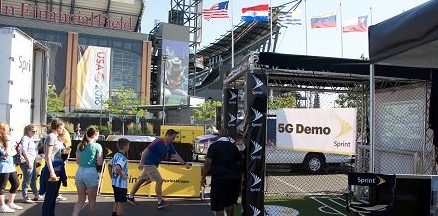
Ericsson y Sprint, propietaria del tercer operador de Estados Unidos, han ofrecido a los aficionados del Lincoln Field de Filadelfia un asiento de primera fila para asistir a lo que será una realidad cuando el 5G forme parte de la experiencia deportiva. Ambas compañías han retransmitdo en directo un vídeo en 4K y UHD sobre una señal inalámbrica 5G utilizando 400 MHz de espectro, incluyendo una cámara 4K UHD desde la Sprint Fan Zone.
Los visitantes han podido competir golpeando un balón de fútbol “conectado” que comunicaba estadísticas mientras el vídeo 4K en UHD transmitía en directo el chut a las pantallas, permitiendo a los asistentes verse a sí mismos y los resultados que iban logrando. En el futuro, tanto el balón como los jugadores podrían estar conectados, lo que permitirá al público ver información y análisis en tiempo real sobre velocidad, rotación y altura del balón. Los comentarios serán también más detallados, con nuevos datos y gráficos en la pantalla de televisión.
John Saw, director tecnológico de Sprint, ha asegurado que “alcanzar velocidades de 4 Gbps fuera de un laboratorio, en el aparcamiento del Lincoln Financial Field y ante miles de aficionados es algo emocionante. Nos da la gran oportunidad de demostrar lo lejos que hemos llegado tecnológicamente y por qué 5G será algo importante para los fans”.
Glenn Laxdal, director de Tecnología y Estrategia de Ericsson en Norteamérica, defiende que “el 5G hará posible una gama más amplia de servicios que cualquier otra red, y los eventos deportivos serán una excelente manera de demostrarlo. Nos satisface ayudar a Sprint a complacer a sus aficionados con esta visión del futuro de 5G con nuestro historial de colaboración, contribuyendo a que la tecnología mejore la experiencia del consumidor. Confiamos en la evolución de Sprint hacia 5G, gracias sobre todo a su posición única en el espectro y sus fundamentos tecnológicos”.
 Posibilidades que abre el 5G
Otros cambios futuros en la experiencia de los aficionados con la conectividad 5G incluyen la posibilidad de experimentar partidos desde nuevos y privilegiados lugares, usando teléfonos para moverse entre distintas cámaras en 360º de realidad virtual en ultra alta definición instaladas por todo el estadio. El 5G ofrecerá suficiente capacidad para que los asistentes usen vídeo en streaming de alta calidad y compartan panorámicas desde sus asientos con otras personas en el mismo partido.
La estandarización del 5G no estará lista hasta dentro de unos años, pero la tecnología ya ha progresado lo suficiente para entregar velocidades de gigabytes en entornos reales. Ericsson lidera el mercado 5G en demostraciones como MIMO, beamforming (formación de haces), beam tracking (rastreo de haces) y network slicing, y por crear el ecosistema necesario para garantizar que el 5G cumpla sus expectativas en todos los sectores.
Según una encuesta de Ericsson realizada a más de 100 operadores, el 87% aseguran que 5G cambiará las reglas del juego, mientras que el 86% creen que esta futura tecnología ofrecerá una gama de servicios más amplia que cualquier otra red hasta la fecha.
Acceso a la encuesta sobre la visión del 5G por parte de un centenar de operadores.
Did you like this article?
Subscribe to our NEWSLETTER and you won't miss anything.
Related articles
 Telling what is real: the legal limits of telling a true story
 Zero Density reveals all the secrets of its demo for IBC 2022
 Andrés Vicente, new president of Ericsson Iberia and CEO of Ericsson Spain
 More than twenty free demos and workshops in the Demo Area of the 4K Summit 2018
 Éxito de participación en la Demo Área del Segundo Observatorio de las Nuevas Tecnologías
 La Demo Area del Observatorio de Nuevas Tecnologías contará con más de treintena de experiencias
 Royalmedia carried out the coverage of 'Real, the concert' for Real Madrid TV
 Orange and Ericsson achieve speeds greater than 15 Gbps and 4K video in real time over 5G in Spain
 Las Fallas advance their 'cremà' with the premiere of '3D Flames'
 La tecnología de Editshare en la NASCAR Sprint Cup
 Digital+ and Astra launch Canal+ 3D Demo
 Demo days with LED curtain in IEC
 Wavelab 7 demo sessions at Microfusa
 Astra will launch a 3D demo channel