





Telling what is real: the legal limits of telling a true story
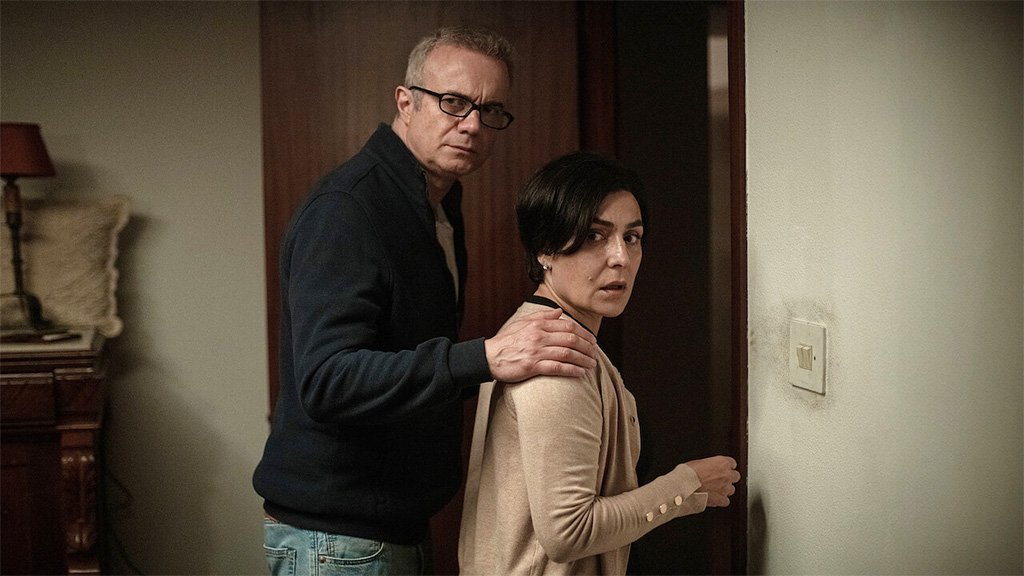

In this forum, Alberto Aduriz Sarabia, lawyer in Bardají & Honrado, delves into the prevalence of the right to honor, image and privacy compared to narratives based or inspired by real events, a growing trend in Spanish audiovisual production.
The recent controversy surrounding the attempted publication of the book hate written by Luisgé Martin, in which Jose Breton recognizes for the first time the murder of his children in 2011, has revived a debate as old as it is thorny: can anyone tell their version of the events, even the most atrocious, and market it as a literary story? Where are the lines drawn between freedom of expression and respect for the fundamental rights of third parties, especially when we talk about the right to honor, privacy and one's own image?
This is not the first time that narrative—literary or audiovisual—turns protagonists into criminals or victims of events that shocked public opinion. What changes in each case is the ethical, legal and social context in which the narrative occurs. And, therefore, what also changes is the margin between ethics and morality of each one.
Honor, privacy and image: a legal shield against non-consensual exposure
Article 18 of the Spanish Constitution guarantees the right to honor, personal and family privacy and one's own image. Organic Law 1/1982 develops its protection against illegitimate interference, establishing that no person can have their most intimate sphere or reputation affected by the unauthorized disclosure of personal data, private facts or images that identify them.
These rights are very personal, inalienable and especially sensitive in situations such as the one exposed at the beginning of this forum, where its violation can represent a form of revictimization of those who have already been publicly exposed by traumatic events. That is to say, they not only protect the convicted person who tells his story (always within the limits of the law), but above all the victims and their families, who have not chosen their public exposure.
Public interest as justification (and limit)
In democracy, freedom of expression and the right to freely communicate truthful information also have constitutional status, as configured in Article 20 of the Spanish Constitution. The conflict arises when these rights collide with those previously mentioned. In such cases, the courts apply a balancing principle, in which the public interest in information may justify certain interferences, but never automatically.
Our courts have understood that a person initially anonymous can acquire status of public figure if he stars in a fact of social relevance, as is the case with the authors of especially serious crimes.
Thus, our courts have understood that an initially anonymous person can acquire the status of a public figure if he or she is involved in an event of social relevance, as is the case with the perpetrators of especially serious crimes. However, the fact that José Bretón is a public figure does not imply a carte blanche so that said rights are exploited without control or consideration towards third parties affected by the same events.
Fiction and the risk of dramatization
A work of fiction inspired by real events is not without limits. On the contrary, when a narrative freely dramatizes a true story, but includes invented elements or unverified suggestions, the legal basis that would allow it to be protected under freedom of information is weakened.
It is not the same investigative documentary that one novel or series based or inspired by a crime. This difference is not only format, but of legal regime applicable.
In other words: an investigative documentary is not the same as a novel or a series based or inspired by a crime. This difference is not only in format, but also in the applicable legal regime.. If a work includes untrue facts or mixes real data with fictional elements that affect recognizable people, constitutional protection declines. Therefore, not everything that is presented as being of “public interest” is really so, since the law does not protect the use of this concept as a pretext to exploit stories for commercial purposes.
Now, could a person's real name or image be used without their consent for a fictional series?
As a general rule, no. The use of one's name, voice or any attribute that allows a person to be identified requires your express consent. However, there are exceptions contemplated by jurisprudence and Organic Law 1/1982:
- If they are public figures in public events or of informative relevance.
- If your image appears incidentally in a news context.
- If there is a relevant historical, scientific or cultural interest.
Even so, the use must be proportional and justified. Consent remains essential, especially when the purpose of the work It is not strictly informative but artistic or commercial. And even more so when the exposure affects people outside the focus of the original story: relatives of the victims, minors or people who have remained anonymous.
Tell real stories, whether they are true crimes o biopics, is part of the creative freedom. But when the story uses names and surnames, atrocious and recent events or the voice of the person who committed said events, what is constructed is no longer just a story: it is a legal and ethical conflict in itself, which requires deep reflection.
It is not about censor, but of take care how you count. Protect the truth from dramatization because—as John Stuart Mill pointed out— Freedom can only be exercised legitimately to the extent that it does not cause harm or harm to others..
Alberto Aduriz Sarabia
Lawyer in Bardají&Honrado

Did you like this article?
Subscribe to our NEWSLETTER and you won't miss anything.
Related articles
 Animals on set: legal requirements to safeguard animal welfare
 Panasonic helps tell the history of cinema at the new Academy of Motion Picture Museum
 Diagonal TV will dramatize the history of the Spanish Monarchy between 1900 and 2014 in the series 'Palacio Real'
 Goya for ‘El olvido que seremos’, the film adaptation of the true story of “a good man”
 8K, a new world of possibilities for telling stories
 David Cierco: “the story of 5G in Spain will be a success story”
 History pre-premieres at the Climate Summit 'A history of the future', its new self-produced series
 Madrid acoge el curso ‘Co-producción europea: aspectos legales y financieros’ de Erich Pommer Institut
 The importance of having the best lens when producing in HDR
 Royalmedia carried out the coverage of 'Real, the concert' for Real Madrid TV
 Augmented reality blurs the lines between real and virtual on set
 Brainstorm further blurs the boundaries between the real and virtual world
 The Santiago Bernabéu Trophy, the most viewed broadcast in the history of Real Madrid TV
 Real Madrid-Barcelona, with more than 14 million spectators, the most watched match in the history of the Champions League