





Comunicaciones 5G: retos y oportunidades en sectores claves
En diez años, las 5G dotaran de conectividad tanto a los más de 7.000 millones de habitantes del planeta como a 7 billones de dispositivos.
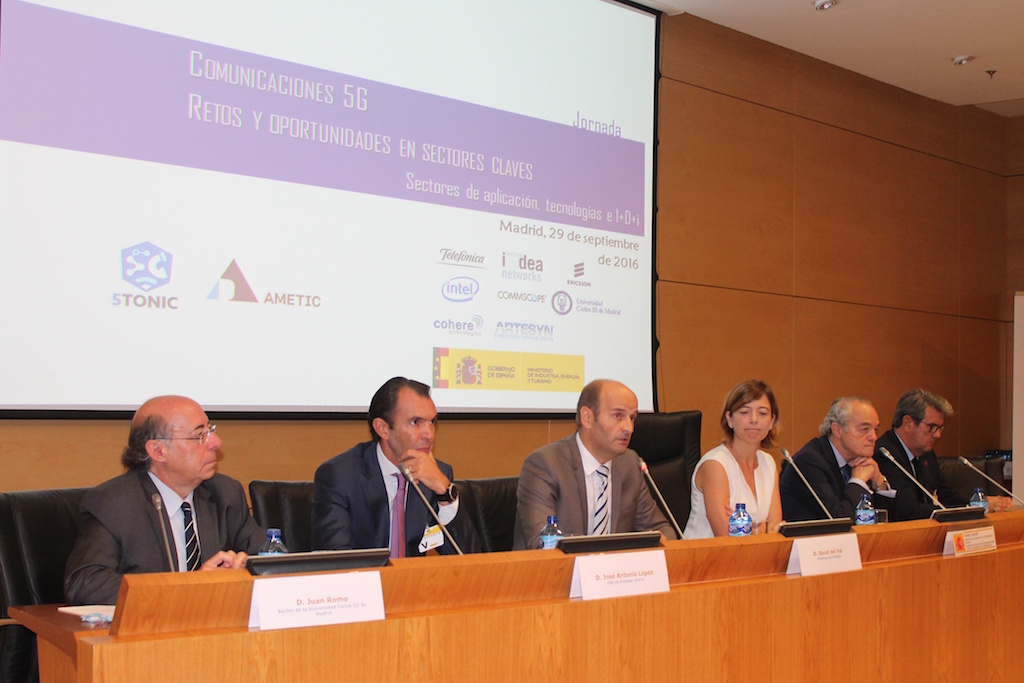
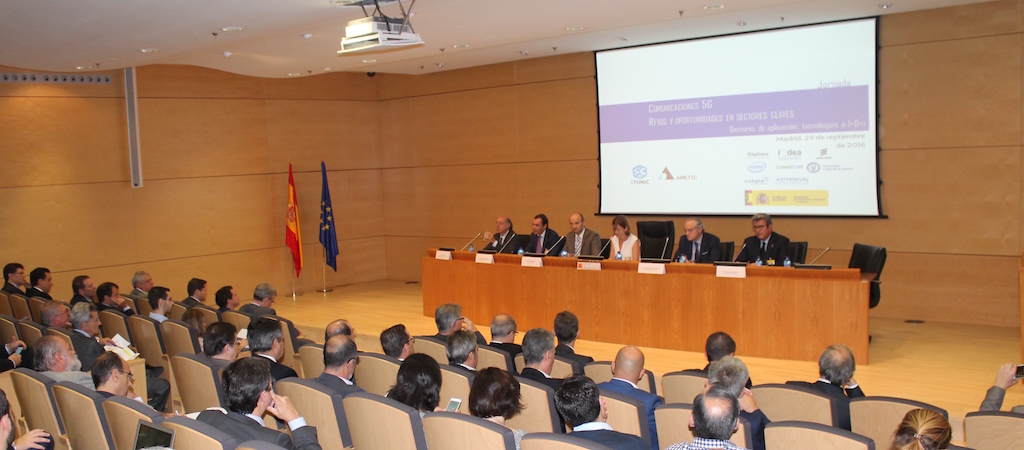
“La siguiente generación de redes de comunicaciones basadas en tecnologías 5G, no sólo tendrá capacidad para conectar, en el plazo de una década, a los más de 7.000 millones de habitantes del planeta, sino que dotará de conectividad a 7 billones de dispositivos multiplicando exponencialmente los servicios y aplicaciones en todos los ámbitos de la economía”, esta viene a ser la conclusión de la jornada Comunicaciones 5G: retos y oportunidades en sectores claves que organizada por AMETIC y 5TONIC, el primer laboratorio de excelencia 5G de España, se ha celebrado este jueves en la sede de la Secretaría de Estado de Telecomunicaciones y para la Sociedad de la Información.
Las tecnologías 5G y sus futuras aplicaciones en los sectores productivos han centrado el contenido de una jornada en la que se ha recordado que la Comisión Europea ya expuso en su manifiesto sobre la siguiente generación de redes de comunicaciones, los posibles casos de uso de las 5G en sectores verticales como salud, transporte, automoción, banca o seguridad. “Dentro de diez años el mundo habrá evolucionado radicalmente. Las tecnologías 5G supondrán un cambio espectacular tanto en el día a día de las personas como en los negocios y empresas de todos los sectores de la economía”, ha señalado José Manuel de Riva, presidente de AMETIC, una asociación comprometida de forma decidida por la transformación digital.
De Riva ha apostillado, “la adopción masiva de las Tecnologías de la Información y las Comunicaciones conduce a una mayor productividad, mejora la eficiencia y, en definitiva, produce un aumento de la competitividad. Los países que invierten en incorporar las TIC en sus sectores productivos progresan a un mejor ritmo que los demás. Las tecnologías 5G contribuirán de manera decisiva a la incorporación de las pymes a los ecosistemas digitales y a la aparición de nuevos servicios y modelos de negocios”.
Para David del Val, Chairman de 5TONIC y CEO de Telefónica I+D, “con 5G las redes móviles inician por primera vez un camino evolutivo con múltiples propósitos como el bajo consumo para IoT, la gestión eficiente de la cobertura o el aumento de ancho de banda para permitir algunos nuevos servicios. Estos caminos a veces no confluyen por lo que va a resultar clave determinar muy bien qué necesidades de nuestros clientes tenemos más necesidad de cubrir. Por eso en 5TONIC vamos a centrarnos en validar la utilidad de la esta tecnología para dar respuesta a necesidades reales. Las actividades que estamos desarrollando en el laboratorio de 5TONIC nos permitirá probar, elegir y priorizar las funcionalidades de las redes y los servicios candidatos a formar parte del futuro de las redes 5G, de forma que el sistema resultante sea consistente y coherente”.
Colaboración
Por su parte, José Antonio López, consejero delegado, Ericsson España, ha asegurado que“5G presenta una oportunidad sin precedentes para que Europa recupere el liderazgo tecnológico. 5G será instrumental para atender las necesidades de la sociedad conectada y hacer realidad la transformación digital del resto de industrias y sabemos que el éxito de esta tecnología depende de la colaboración entre las industrias, academia y gobierno en nuevos ecosistemas. A través de nuestra participación en proyectos como el laboratorio 5Tonic de Telefónica, parte de nuestra iniciativa 5G for Europe, Ericsson no solo optimiza aspectos tecnológicos de 5G, sino que trabajamos estrechamente con diferentes industrias para desarrollar juntos las soluciones del futuro”.
La colaboración necesaria entre los habilitadores tecnológicos y los sectores de aplicación es clave no sólo para el desarrollo de las propias redes 5G, sino para el crecimiento y la competitividad del tejido productivo en su conjunto. España se alinea con la estrategia europea, aporta sus propias prioridades en sectores como el turismo y se sitúa en la vanguardia tecnológica de 5G gracias a iniciativas como el laboratorio de desarrollo e innovación 5TONIC, fundado por Telefónica y el instituto IMDEA Networks y ubicado en la Comunidad de Madrid. Este laboratorio especializado, junto a la capacidad del sector TIC nacional representado por AMETIC y comprometido con las 5G y al apoyo institucional, posicionan de forma excelente a nuestro país de cara al futuro de las comunicaciones.
“Las redes 5G suponen una revolución en las comunicaciones, y tendrán un profundo impacto socio-económico: la Universidad Carlos III de Madrid es líder en investigación y tecnología en 5G, en colaboración con las principales empresas mundiales en este campo”, ha afirmado en su intervención Juan Romo, rector de la Universidad Carlos III.
Durante la jornada, se han destacado los retos tecnológicos y de I+D+i que supone las 5G en un contexto en el que las grandes empresas a nivel mundial ya se están posicionando para aprovechar las oportunidades que provocarán a medio plazo el 5G y la transformación digital de los sectores productivos. La transformación digital es un pilar fundamental dentro del discurso de AMETIC y de su actividad, con grandes resultados en los últimos años donde se han alcanzado grandes logros en temáticas como Smart Cities y desarrollo urbano, Internet 3D, Ciberseguridad o Industria 4.0 y aplicación de tecnología a sectores como turismo, agroalimentación o automoción, situando a AMETIC y al sector tecnológico en el epicentro del cambio económico.
Did you like this article?
Subscribe to our NEWSLETTER and you won't miss anything.
Related articles
 La monetización del universo OTT en 2025: oportunidades y retos
 Oportunidades y retos de la IA conversacional para recomendación de contenidos en las plataformas
 Los retos y oportunidades de la IA, en el 25º aniversario del MAC
 COITT/AEGITT marca retos para 2024: nuevas oportunidades, fomentar las vocaciones…
 La inversión en los sectores broadcast y audiovisual se disparó en 2022
 COITT dará a conocer los retos y oportunidades de la nueva Ley General de Telecomunicaciones en un nuevo evento
 El sector de media and entertainment vislumbra los retos y oportunidades de la pandemia
 Gamelab analizará los retos y oportunidades de la expansión del videojuego como medio
 El vídeo en la nube y su próxima explosión en todos los sectores
 España frente a MEDIA: retos y oportunidades
 La economía digital, clave para el desarrollo de todos los sectores económicos
 Broadcasters y telcos analizan los retos tecnológicos y operativos de la nueva televisión
 Public commitment to R&D&i 2013-2020: challenges and opportunities of the ICT sector
 Broadcast’11 ampliará sus miras hacia tecnologías y sectores emergentes