





Digital convergence, the flight of listeners and the absence of regulation, main challenges for the radio sector
Las Jornadas del Consejo Audiovisual de Andalucía (CAA) dedicadas a la radio celebradas en Sevilla analizan la situación y las perspectivas de este medio de comunicación.
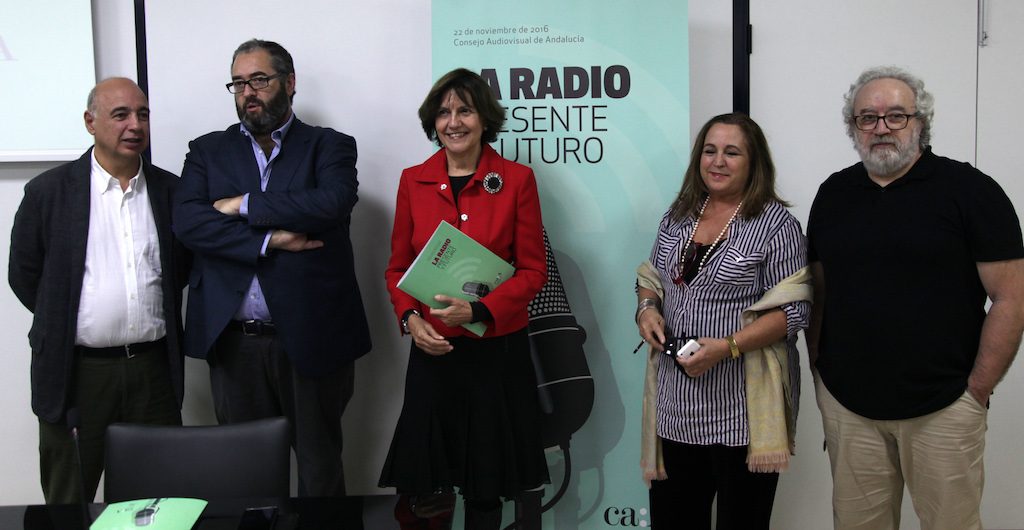
La jornada organizada por el Consejo Audiovisual de Andalucía (CAA) sobre la radio que se ha celebrado este lunes en Sevilla ha dibujado tres grandes retos que afronta este medio de comunicación a día de hoy, y que pasan por la digitalización (nuevos soportes, nuevas vías de consumo), la fuga de oyentes (alejamiento de la audiencia joven), y ausencia de regulación (inconcreción legal sobre sus obligaciones respecto de los derechos de la ciudadanía).
A pesar de estos interrogantes, la radio, como ha recordado la presidenta del CAA, Emelina Fernández, durante la inauguración del acto, mantiene su credibilidad y su prestigio como medio de comunicación. “Existe el término telebasura, pero hay una palabra análoga para la radio, por algo será”, ha subrayado Fernández, que ha expuesto algunos datos del Barómetro Audiovisual de Andalucía 2015 en los que se refleja un incremento del tiempo de consumo de este medio.
No obstante, la presidenta del CAA ha señalado dos cuestiones que suscitan la preocupación del Consejo relativas a la radio, como son la publicidad del juego y apuestas online en las retransmisiones deportivas y los contenidos muchas veces vejatorios de las bromas difundidas en algunos programas despertador. En ambos casos, ha recordado, el CAA ha intervenido con la presentación de alegaciones al Real Decreto de publicidad del juego y apuestas online para que se equipare esta publicidad con la del alcohol y el tabaco. También en el caso de las bromas de los conocidos como programas despertador, el Consejo elaboró una serie de recomendaciones.
La presidenta del CAA ha dado paso a la primera mesa redonda, titulada La radio en el siglo XXI: adaptación y viabilidad en el entorno digital, en la que han intervenido el director de la Cadena SER, Antonio Hernánez-Rodicio, la directora operativa de Canal Sur Radio y Televisión, Inés Alba, el vicepresidente de la Asociación Española de Radio Online (AERO), José María García Lastra, y Chusé Fernández, coordinador de las Escuela de Radio TEA FM.
Hernández-Rodicio ha apuntado a la ausencia de renovación generacional de la audiencia como uno de los dos retos más importantes que enfrenta la radio. “El acceso de la gente joven a la radio venía por la radio musical, de ahí se pasaba al deporte y luego a la información. Esa dinámica ya no existe apenas “, ha señalado el director de la Cadena SER que ha abordado también la adaptación de las emisoras tradicionales al nuevo contexto digital. “A día de hoy, el audio solo es rentable en antena. Tenemos más de 100 millones de descargas anuales en la SER y no se rentabilizan”, ha dicho.
En su opinión, la irrupción de internet no ha perjudicado tanto a la radio como al resto de medios tradicionales, sino, más bien al contrario: “Internet ha fagocitado la prensa papel, a la radio le ha dado una posibilidad interesantísima de duplicar nuestro trabajo sin fagocitarnos. Hay un 69,4% que oye radio mientras navega por internet. Pero un 57% ha dejado de ver televisión y un 38% ha dejado de leer mientras navega. Solo 12% ha dejado de consumir radio por estar en Internet”.
En este sentido, ha definido los cuatro pilares sobre los que, en su opinión, se sostendrá la radio en el futuro: ser más social (redes sociales), el tiempo real, la movilidad y el audio. Así, ha revelado que el 25% de los usuarios de cadenaser.com procede de alguna red social. También ha indicado que, actualmente, la audiencia de radio se compone de un 7% de oyentes de radio digital puro y que un 37% de la audiencia de registra un consumo mixto (online y analógica). “Nosotros ya estamos ofreciendo publicidad diferenciada en función de la vía de escucha”·, ha desvelado.
Por su parte, la directora operativa de Canal Sur Radio y Televisión, Inés Alba, ha defendido la cualidad de la proximidad de la radio como una de sus mayores fortalezas, sobre todo en el caso del operador público andaluz, que cuenta con emisoras en las ocho provincias además de delegaciones en Jerez y Algeciras.
Los retos que ha apuntado Alba en este contexto convergente pasan por replantear el modelo de producción contenidos, de edición y de difusión. “Es decir: más recursos o encontrar una nueva manera de poner estos contenidos en valor. Ese avance está en contenidos extras”, ha dicho la responsable de CanalSur Radio que también ha apuntado como clave la capacidad de la radio para generar confianza e identidad. “No perdamos nuestro valor principal por abarcar lo global”, ha zanjado.
Jose María García Lastra, vicepresidente de la Asociación Española de Radio Online (AERO), ha formulado una serie de interrogantes a los asistentes: “¿Qué le está pasando a la radio? ¿Son rentables las emisoras de radio online, son viables, son sostenibles? Parecen la alternativa, pero ¿cómo se sustentan?”. De las tres singularidades de la radio: inmediatez, capilaridad y audio, una de ellas -la inmediatez- ha dejado de ser exclusiva con la aparición de los medios digitales, ha explicado. Así, ha defendido que la radio apueste por lo que le es propio y singular: el audio.
García Lastra ha ofrecido algunos datos para el optimismo en el consumo de radio online y su rentabilidad. No obstante, ha llamado la atención sobre la necesidad de mejorar los sistemas de medición de audiencia de la radio digital y, a su vez, actualizar y adaptar las tarifas de la publicidad de la radio online.
Chusé Fernández, coordinador de las Escuela de Radio TEA FM, ha cerrado esta mesa con una apuesta por la creatividad y la imaginación en la creación de contenidos. Al abordar la ausencia de renovación generacional de la audiencia, ha señalado la necesidad de saber crear contenidos dirigidos al público infantil. Sin embargo, estos contenidos ya no serán exclusivamente radiofónicos, ” Youtube es el principal canal de entretenimiento”, ha remarcado.
También ha apostado por la especialización de las emisoras como vía de supervivencia en el entorno digital. “En la televisión ya existen canales temáticos, especializados, y es un medio mucho más caro”, ha destacado. Chusé Fernández también ha reivindicado la imaginación que, en su opinión, es un componente que la radio ha perdido y que nunca debió dejar atrás.
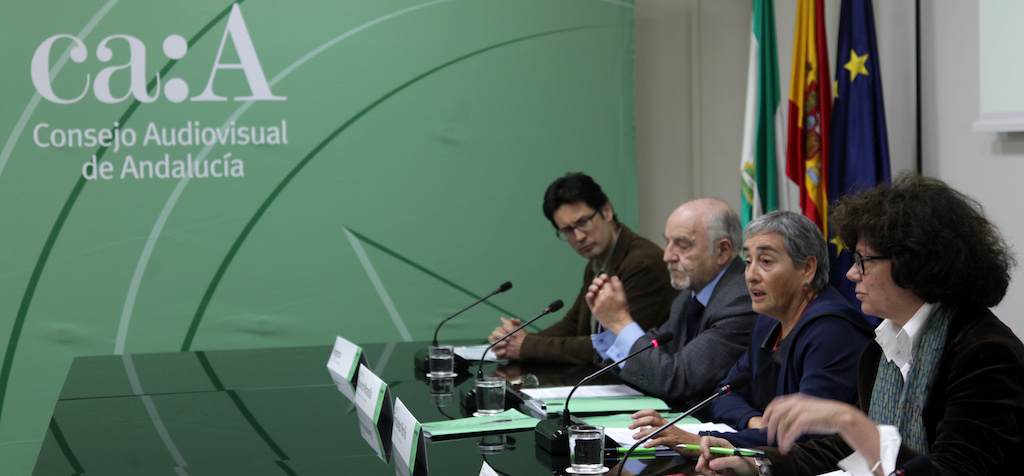
La radio como servicio público
La segunda mesa de esta jornada, La radio como servicio público. Regulación y derechos de la ciudadanía estuvo marcada por la evidencia de una ausencia de regulación concreta sobre la radio, en contraste con el ejemplo de la BBC, una institución exponente de autocontrol y la rendición de cuentas. El colaborador de la BBC en España Guy Hedgecoe explicó que la mayor parte de los ingresos de esta corporación proceden de la cuota directa que abona anualmente cada televidente u oyente con un receptor en su domicilio (145 libras).
En este sentido, explicó que aunque sobre la BBC existen numerosas presiones -del poder económico, del poder político y del poder mediático del ámbito privado-, señaló a la presión de los oyentes como la más decisiva e influyente. Hedgecoe repasó una de las mayores crisis recientes de la corporación, en 2003, a raíz de una filtración sobre la estrategia del Gobierno de Tony Blair en la invasión de Irak y el posterior Informe Hutton sobre lo ocurrido.
Hedgecoe ha recordado que las conclusiones de este informe, fueron consideradas injustas por los periodistas de la cadena, sin embargo, al tratarse de un informe independiente, asumieron sus responsabilidades en forma de tres dimisiones en los altos puestos. El periodista explicó además que a partir del próximo año, la BBC dejará de autorregularse y pasará a estar controlada por la autoridad británica Ofcom. “Entramos en una fase de bastante incertidumbre”, ha dicho.
Para finalizar su exposición, el periodista británico ha reproducido una cita del actor Ian McAllen, para resumir el estado de la BBC. “Todos tenemos una opinión sobre la BBC; todos creemos que podríamos dirigirla mejor, porque la BBC se dirige a sí misma, pero todos los gobiernos tienen miedo de la BBC porque es una buena fuente de la verdad”.
Los catedráticos de Derecho Administrativo que han participado en esta mesa, José María Souvirón (Universidad de Málaga) y Elisenda Malaret (Universidad de Barcelona y ex consejera del Consejo Audiovisual de Cataluña), han coincidido en señalar el olvido de la radio por parte de la regulación y la legislación española y han apostado por su desarrollo normativo a través de la legislación autonómica.
Souvirón, que ha apuntado las escasas referencias de la Ley General de Comunicación Audiovisual a la radio, ha señalado sin embargo que todos los artículos de esta ley que no hagan mención expresa y exclusiva a la televisión deben aplicarse también a la radio. Así, ha defendido que la radio contemple una obligada diferenciación entre la publicidad y el resto de contenidos, ha defendido también el derecho de la ciudadanía a conocer la auténtica situación de concentración de los medios de comunicación y ha apostado por la creación de un consejo audiovisual estatal para proteger los derechos de la ciudadanía.
Malaret, que ha disertado sobre la radio como promotora de la cultura, ha recordado que la radio es el paradigma del medio de comunicación con las funciones básicas: informar, formar y entretener. En este sentido, ha señalado la posibilidad de establecer, a través del desarrollo normativo, una serie de obligaciones de las emisoras para con la difusión de la cultura que existe ya en otros países.
Así ha citado varios ejemplos de países francófonos como Bélgica o la propia Francia, donde existe el establecimiento de unas cuotas de emisión de música en el idioma nativo, o producida en el territorio de influencia de la emisora, así como la supervisión de las condiciones de concesión de la licencia de emisión por parte de la administración competente.
Did you like this article?
Subscribe to our NEWSLETTER and you won't miss anything.
Related articles
 AI, digital future and regulation, thematic axes of AOTEC 2025
 IBC 2024 reveals its program of conferences and sessions that address the main challenges of the industry
 NABiQ returns to NAB 2024 offering a platform to overcome the challenges of the sector
 The Television Academy addresses the main audiovisual challenges in the face of Artificial Intelligence
 UHD Spain analyzes the main challenges of streaming in Ultra High Definition
 Incorporating qualified professionals, one of the main challenges of the sector
 Challenges of a new reality in the audiovisual sector
 The media and entertainment sector glimpses the challenges and opportunities of the pandemic
 Five main predictions for the audiovisual sector in 2019
 The First Video Game Table has been established that will debate the current situation and the challenges of the sector
 Avid Everywhere opens up even more to the main players in the sector
 Public commitment to R&D&i 2013-2020: challenges and opportunities of the ICT sector
 Telecinco premieres 'La Fuga', one of Mediaset's main bets for 2012, filmed with ARRI Alexa
 Digital dividend: new challenges in digital television