





Akamai Improves OTT Workflow Efficiency with CMAF Format
Its cloud transcoding service for on-demand content already supports the CMAF (Common Media Application Format) format, common for multimedia applications
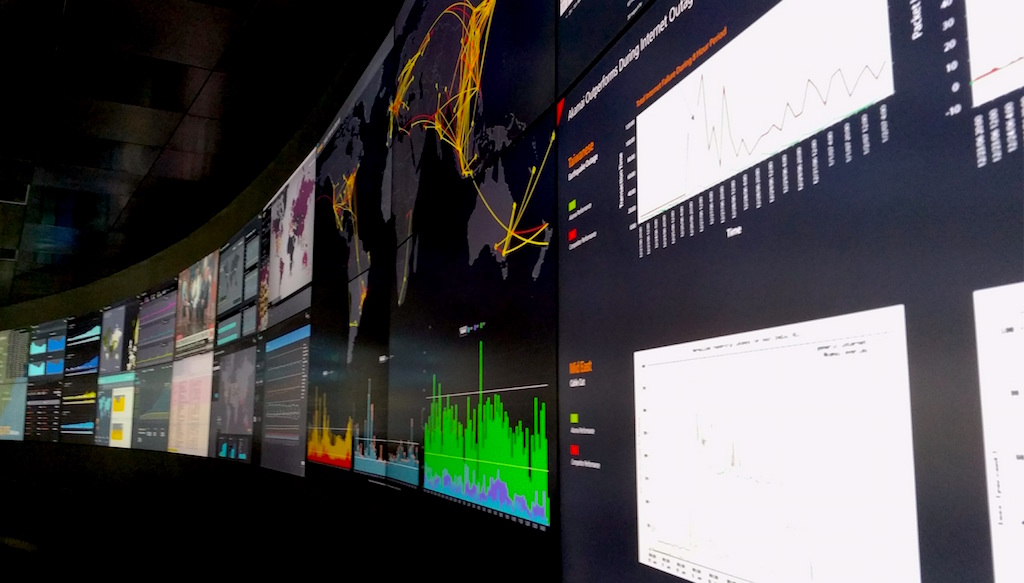
The cloud transcoding service for on-demand content from Akamai As of today, it supports the CMAF (Common Media Application Format) format, common for multimedia applications. The CMAF specification defines a common file format for the delivery of segmented multimedia content, which is currently a draft international standard sponsored by the Moving Picture Experts Group (MPEG). The design of this common file format allows for maximum efficiency in the encoding, packaging, storage and distribution of OTT content across the online video ecosystem.
In order to reach as many viewers as possible, content providers are forced to create and store multiple representations of each title to accommodate various device types and playback formats. Although individual formats are healthy, redundant processing and extra storage requirements introduce a higher probability of errors, increase complexity, and increase costs. The CMAF standard is intended to streamline the entire process by allowing a single file representation to be played on any device.
Sam Rosen, Vice President of ABI Research, highlights that "CMAF technology represents the convergence of the OTT industry towards the use of a single type of file container to distribute media assets to a wide variety of devices, from Smart TVs, laptops and phones to smart watches. CMAF supports common encryption and next-generation codecs, as well as multitrack video and audio along with advanced subtitles, making it easier to launch international services. Content producers, encoders, distributors and “Consumers – everyone benefits from the increased efficiency enabled by the single converged file format.”
CMAF support is initially made available to customers using Akamai's on-demand transcoding services, which are part of our cloud-based OTT workflow solution, Media Services On Demand. In addition to existing support for established formats such as Adobe HDS, Apple HLS, Microsoft Smooth Streaming and MPEG-DASH, a CMAF content preparation option is available.
Will Law, Chief Architect of Multimedia Content at Akamai, acknowledges that "Akamai remains committed to driving the development and growth of the OTT video industry by enabling compatibility with relevant standards, such as CMAF, without neglecting its existing customers, whom it continues to help in technological and commercial matters to distribute high-quality online video at scale. CMAF simplifies the complexities inherent in OTT workflows and allows content providers to reach a larger audience with greater efficiency and quality, but less operating expenses.”
Did you like this article?
Subscribe to our NEWSLETTER and you won't miss anything.
Related articles
 Telemetrics to highlight production workflow efficiency at ISE 2025
 Polygon Labs Improves Ipsum Weather Data Management and Curation Using Vizrt Workflow
 TAG Video Systems adds support for CMAF streaming format
 ChyronHego improves workflow with Camio version 4.8
 An end-to-end HD workflow with Avid improves competitiveness at ITV Daytime
 Sony Announces 4K Upgrade License, Plus Improved Connectivity and Workflow Efficiency for PXW-X70 and PXW-X200 Cameras
 The Look post-producer improves its workflow with Pablo Rio
 EditShare Enhances Your End-to-End Tapeless Workflow Solutions
 Panasonic improves connectivity and agility throughout the entire workflow
 Avid improves file workflow in its solutions
 With Media Composer 6.5, Avid Improves Workflow Speed and Transparency
 NewTek improves workflow with Tricaster 850 TW
 Sony improves workflow in XDCAM
 CNN Chile improves its workflow with DIVArchive and DIVAdirector