





Eutelsat orders ELO, its first low-orbit nanosatellite designed for the Internet of Things
IoT specialist Sigfox will partner with Eutelsat to analyze the spectrum used by the satellite in ISM frequency bands and process the data sent by the objects.
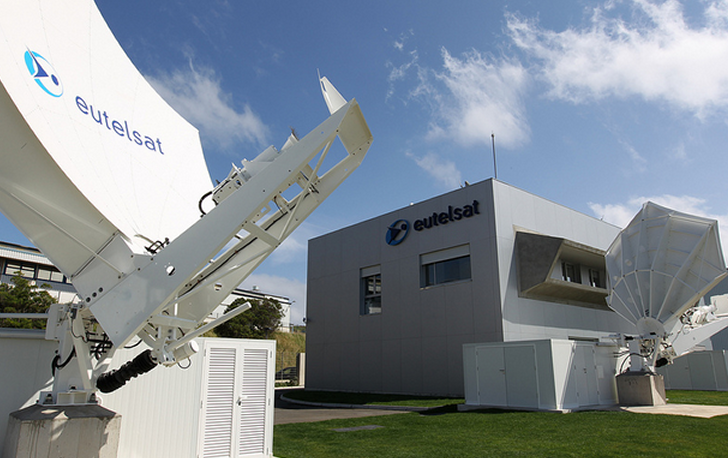
Eutelsat has ordered a nanosatellite from the manufacturer Tyvak International, a subsidiary of Terran Orbital, a leading aerospace provider of microsatellites and nanosatellites. Eutelsat LEO for Objects (ELO) will allow evaluating the performance of low Earth orbit (LEO) for narrowband data exchanges between objects. The satellite operator will rely on Sigfox technology, which operates a unique global narrowband network dedicated to Internet of Things (IoT).
Low Earth orbit is particularly suitable for narrowband networks for objects. It can offer a satellite link anywhere in the world, complementing terrestrial IoT networks without impacting the cost or energy consumption of the objects. ELO, whose launch is scheduled for 2019, will transmit data from objects located in areas that are not covered by terrestrial networks and will offer redundancy within the area that they do cover.
Sigfox will work with Eutelsat in two ways: will analyze the spectrum used by the satellite in ISM frequency bands and will process the data sent by the objects. ELO will also be used to test connectivity in other frequency bands. The synergies developed through the partnership with Sigfox, in addition to other strategic partners in the telecommunications industry, should generate new opportunities for Eutelsat in a rapidly growing market.
Jean-Hubert Lenotte, Strategy Director at Eutelsat, stated that "with the growth of the Internet of Things, new services are being developed in various sectors such as smart cities, mining, agriculture and logistics. We are delighted to be able to explore new territories through the development of this nanosatellite, which once again demonstrates the intrinsic complementarity between terrestrial networks and satellite technology. “By analyzing the compatibility between the LEO orbit and connected objects and working with recognized partners in the sector, Eutelsat seeks to offer an innovative solution that will respond to the needs of future customers.”
Located in a sun-synchronous orbit between 500 and 600 km high, the satellite will collect data from connected objects around the world, equipped with the same omnidirectional antennas already used by terrestrial IoT networks. The data will then be transmitted daily to an earth station, located on the Norwegian archipelago of Svalbard in the Arctic Ocean.
Did you like this article?
Subscribe to our NEWSLETTER and you won't miss anything.
Related articles
 Telemetrics debuts TeleScope, designed to upgrade studio cranes
 'Tierra Baja', first feature film financed by FITE
 Mo-Sys launches VP Pro XR, a media server designed for virtual productions
 AJA T-TAP Pro – Designed to simplify 2K and 4K monitoring and output via 12G-SDI and HDMI 2.0
 NASA recreates the first trip to lunar orbit in 4K
 Eutelsat orders Konnect VHTS, a new generation satellite with the most powerful digital processor ever placed in orbit
 Eutelsat launches its first 4K service with HDR
 Cloud computing, big data, Internet of Things, artificial intelligence and cybersecurity, trends in the ICT sector
 Sky Alemana commissions Qvest Media to design 'El Cubo', its new sports headquarters
 R&D, big data and the Internet of things are the focus of the first day of the 28th Telecommunications and Digital Economy Meeting
 Ultra High Definition and the Internet of Things focus attention at CES 2015
 Cisco Connect 2014 will revolve around the new technologies that will make the Internet of all things possible
 Iber.film.america: first Internet festival of Ibero-American cinema
 Telegenic orders another Nvision Hybrid 8500 matrix for its third 3D unit