





The Eurovision Song Contest dazzles again with a unique show
A diferencia de ediciones anteriores, el escenario no contó con pantallas de vídeo ni fondos con LEDs, aunque la iluminación espectacular volvió a jugar un papel clave. Los sistemas de Riedel facilitaron la intercomunicación y el transporte de señales en el Altice Arena de Lisboa.
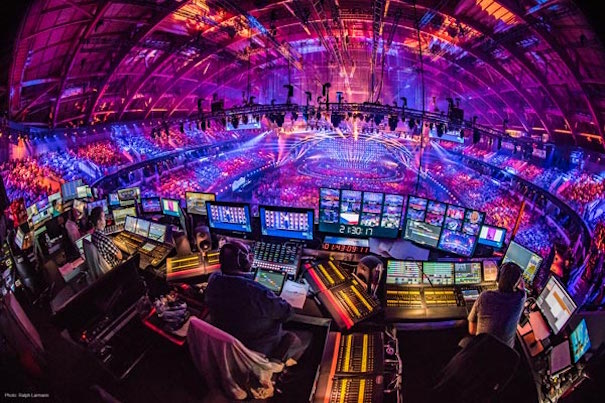
Portugal acogió el pasado sábado por primera vez en su historia el concurso musical escogiendo para la ocasión el pabellón Altice Arena de Lisboa.
A diferencia de las ediciones anteriores, para el Festival de Eurovisión 2018, organizado por la Unión Europea de Radiodifusión (UER-EBU) con la televisión portuguesa RTP como anfitriona tras vencer el año pasado Salvador Sobral, la gran cita musical apostó por una de las escenografías con menor presupuesto de las que se recuerdan. El director de producción técnica de Eurovisión, el sueco Ola Melzig, junto a los directivos de la RTP optaron por trabajar al máximo en lo local, hacer un buen planteamiento y plantear el mínimo alquiler posible.
 La 63 edición de Eurovisión contó con 43 países participantes que interpretaron sus canciones en una gala ante 11.500 espectadores conducida por las periodistas portuguesas Sílvia Alberto, Filomena Cautela y Catarina Furtado y la actriz luso-estadounidense Daniela Ruah.
A cargo de la dirección volvió a repetir Jon Ola Sand, acompañado en la producción por Carla Bugalho y Christer BJörkman con la compañía sueca M&M Production como productora delegada.
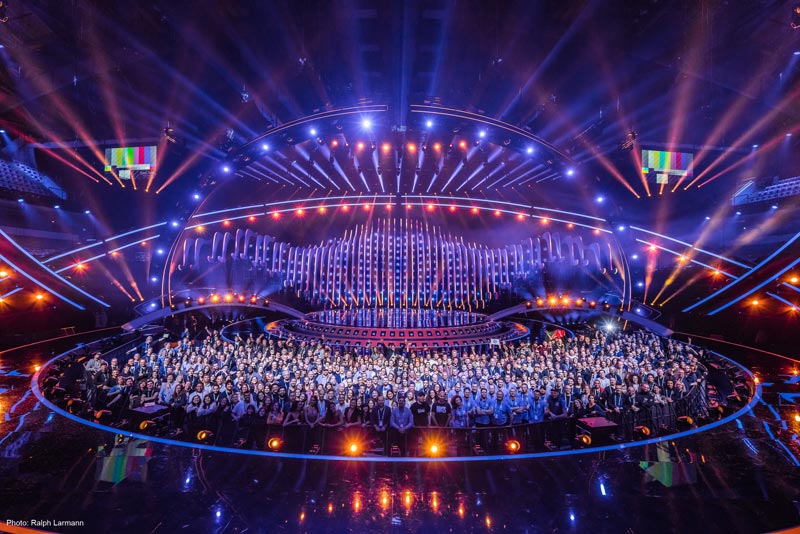
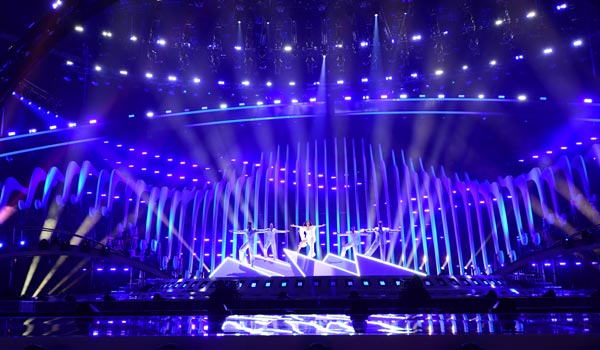
A diferencia de otros años, el escenario no contó con pantallas de vídeo ni fondos con LEDs, aunque la iluminación espectacular volvió a jugar un papel clave. El alemán Florian Wieder fue el encargado de diseñar la escenografía planteada en base a tres estructuras suspendidas inspiradas en la esfera armilar de la bandera portuguesa. El fondo estaba formado por 56 estructuras de hasta 13,5 metros de altura que sustentaban 351 luminarias Magicpanel FX de Ayrton.
En iluminación, M&M Producciones utilizó un total de 14 mesas manejando más de 152.000 parámetros de control y 300 universos DMX activos. También se dispusieron 24 Follow spots controlados por RoboSpot Follow Spot System de Robe. El número total de luminarias fue de 2.632 que precisaron 24 días de programación por parte de seis operadores. En iluminación se emplearon 88 kilómetros de cableado.
En cuanto a audio, desde el techo del Altice Arena se suspendieron una veintena de linearrays con 239 altavoces, empleándose en la producción 232 micros y 15 consolas de audio.
Como ya viene siendo tradición, el festival contó en numerosas actuaciones con efectos pirotécnicos que estuvieron a cargo de la empresa portuguesa Luso Pirotécnia que empleó además de llamaradas en movimiento, bengalas, máquinas de niebla, viento, nieve, Burbujas de humo… y más de 50 kilos de confeti.
Intercom Riedel
En un espectáculo de estas dimensiones, la intercomunicación resulta clave. La organización del festival confió una vez más en las soluciones de Riedel, que desplegó la matriz digital Artist y 175 paneles de intercom conectados a un red de 20 kilómetros de fibra en una topología de anillo redundante. Cada bastidor estaba equipado con una fuente de alimentación redundante y una tarjeta de CPU redundante. La mayor parte de todos los paneles de intercomunicación se enrutaron a través de MediorNet, el sistema de distribución de señales de Riedel.
Para la comunicación entre los diferentes departamentos, Riedel instaló un sistema de radio analógico basado en Tetra con medio millar de radios. Este sistema se empleó principalmente para la producción con configuración de canales semidúplex y símplex. Los canales semidúplex estaban interconectados con el sistema de intercomunicación. El sistema de radio Tetra también se utilizó para la comunicación con las unidades móviles, managers en backstage… En total, Riedel instaló una estación base y dos remotas a lo largo de todo el recinto garantizando la cobertura en todo el recinto.
 El sistema de distribución de señal MediorNet consistió en un núcleo principal de enrutamiento (6 frames MetroN Frame) y múltiples posiciones “satélite” dentro del recinto. Cada posición estaba conectada en topología de estrella a los marcos del núcleo. Los bastidores estaban equipados con fuentes de alimentación redundantes. Cada posición de MediorNet contaba con un mínimo de dos tramas que podían trabajar separadas entre sí aprovechando todo el ancho de banda de fibra. En total, se desplegó para el transporte de todo tipo de señales más de 200 kilómetros de cableado.
Cerca de 2.000 periodistas procedentes de 80 países cubrieron esta edición del festival, cuya organización dispuso de 750 puestos de trabajo, videowalls en varias salas para seguir las distintas semifinales y final y varias salas reservadas para entrevistas.
En la emisión del festival intervinieron dos unidades móviles con una configuración exacta. Una de ellas sirvió la señal emisión mientras la otra estaba lista para salir al aire en caso de fallo como back up. Ambas se conectaban a través de un anillo de fibra óptica que garantizaba una redundancia del 100%. Desde otra unidad móvil se llevó a cabo la mezcla de audio del espectáculo.
Para asegurar la alimentación eléctrica en todo momento se desplegaron quince generadores con una capacidad máxima de 4,4 megavatios conectando los diferentes puntos de acceso a la red con 40 km. de cable.
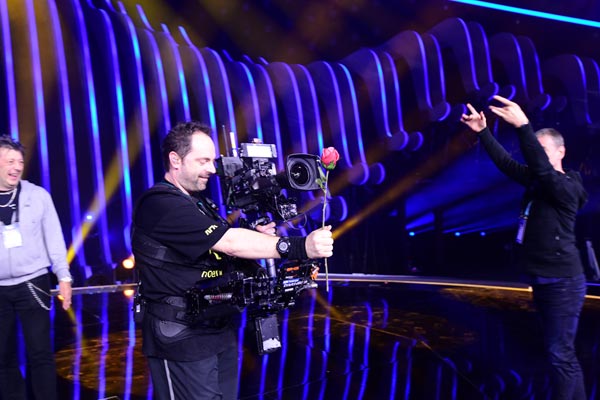
En realización el festival dispuso de una veintena de cámaras (incluyendo una Spider Cam suspendida sobre el techo), dos cámaras robotizadas sobre travelling alrededor del escenario, una grúa con un brazo de 22 metros, dos grúas telescópicas, dos Steadycams, varios drones en exteriores y un equipo técnico de 60 profesionales.
Did you like this article?
Subscribe to our NEWSLETTER and you won't miss anything.
Related articles
 El Festival de Eurovisión 2024 bate nuevos récords en lineal y online
 The 77th Cannes Film Festival once again opts for Christie for the projection in 24 spaces of the festival
 MediaKind turns Chattanooga Film Festival into a unique digital event
 La Unión Europea de Radiodifusión cancela el Festival de Eurovisión 2020
 FICARQ 2017 starts, fusion of cinema and architecture in a unique festival
 RTP inicia los preparativos para el Festival de Eurovisión 2018
 Trade's Master on video for events and shows starts with a unique syllabus in Europe
 The Swedish SVT once again raises the bar in show production with the Eurovision Song Contest
 Eurovisión desplegará la tecnología IP Flex para garantizar la señal durante las votaciones en el Festival
 'Flow', the only Spanish feature film at the Palm Beach Festival
 TVE participa en el especial que preparan la BBC y UER para conmemorar el 60º aniversario del Festival de Eurovisión
 Riedel Mediornet y Artist en el Festival de Eurovisión en Bakú
 The Eurovision Song Contest once again displays a technological showcase
 The NDR turns the Eurovision Song Contest into a unique spectacle