





Invisible infrastructure: the future of live production
Las tecnologías de la nube están cambiando sistemáticamente la forma de producir, distribuir, reproducir y almacenar el contenido, lo que ofrece a las cadenas de televisión y a los creadores de contenido mayor libertad frente a las limitaciones de una infraestructura física costosa.
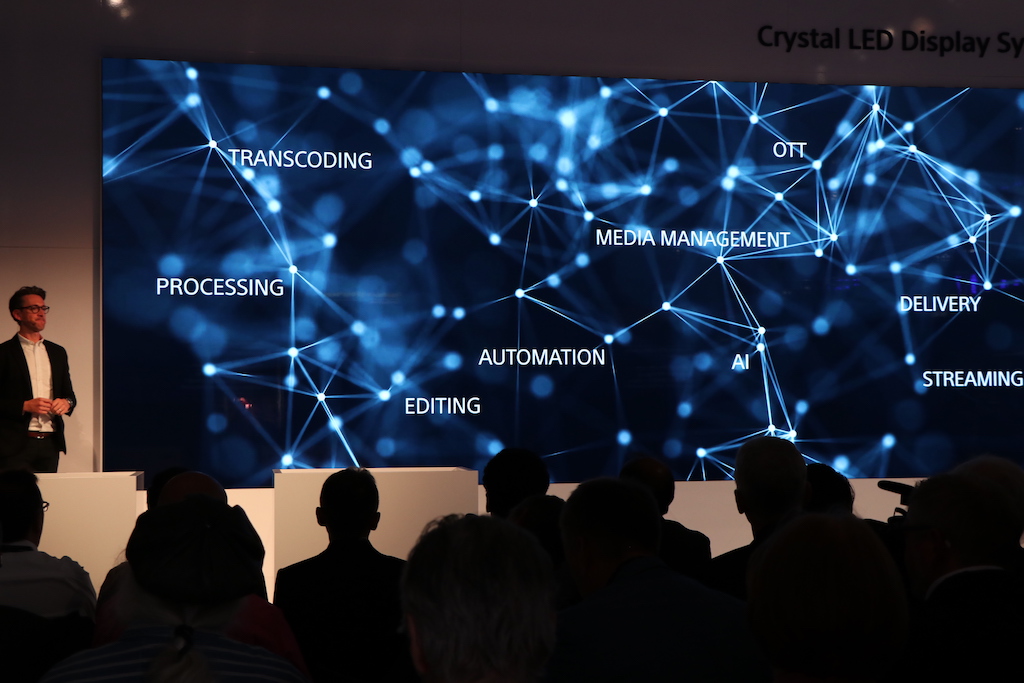
Hay cierta emoción en ver en la pantalla algo que está ocurriendo al momento y en tiempo real en una parte completamente diferente del mundo. Esta es una de las razones por las que los eventos deportivos y de entretenimiento globales suelen atraer a miles de millones de espectadores. Un ejemplo de ello es último Mundial. Se estima que 3.400 millones de personas vieron algunos o todos los partidos en directo en sus televisores, portátiles o incluso teléfonos inteligentes, según la empresa de investigación GlobalWebIndex. Eso es casi la mitad de la población total del mundo.
Pero, a medida que sigue creciendo el apetito de los consumidores de contenido en directo de alta calidad, también aumentan los desafíos a los que se enfrentan las empresas del sector audiovisual para grabar, distribuir y emitir estos eventos en masa.
Hasta ahora, las configuraciones de producción en directo siempre han dependido de la infraestructura física: conexiones por cable, un convoy de unidades móviles, galerías móviles y generadores eléctricos, por no mencionar el ejército de técnicos y creativos con talento. Independientemente del tamaño o la escala del evento, la producción en directo de alta calidad siempre ha requerido un gran equipo y una importante inversión inicial, por lo que se ha limitado generalmente a las grandes cadenas de televisión.
 Cielo nuboso con posibilidad de adopción masiva

Sin embargo, las tecnologías de la nube están cambiando sistemáticamente la forma de producir, distribuir, reproducir y almacenar el contenido, lo que ofrece a las cadenas de televisión y a los creadores de contenido mayor libertad frente a las limitaciones de una infraestructura física costosa. El catalizador de esta transformación es el auge de las soluciones de transmisión basadas en la nube de alta calidad, fiables y asequibles.
Estas soluciones proporcionan a las empresas del sector audiovisual la oportunidad de reducir los gastos y recursos de configuración de la producción en directo, al tiempo que ofrecen escalabilidad prácticamente ilimitada para satisfacer los picos de demanda durante el procesamiento de un contenido digital cada vez más grande y complejo. En resumen, ayudan a aumentar la fluidez de los flujos de trabajo de producción para ofrecer contenido a los espectadores más rápido y de formas más emocionantes.
Muchas organizaciones internacionales ya han migrado con éxito todas o parte de sus operaciones a la nube, con el fin de adaptar su oferta a las necesidades del público moderno. Algunos ejemplos son la cadena suiza SRG SSR, que utiliza una plataforma de producción de informativos basada en la nube en todos sus centros de transmisión de Suiza; también Disney/ABC Television Group, que trasladó todas sus operaciones de emisión a un “control principal virtual” basado en IP en 2015, y por último, Netflix, que completó la migración de su sistema de streaming a AWS en enero de 2016. Esto nos recuerda que, aunque a veces se considera que la producción en la nube es un sistema nuevo y no probado, ya existen precedentes claros de líderes del sector que han adoptado estos métodos con éxito.

Nueva generación de soluciones en nube
A medida que aumenta la adopción de soluciones basadas en la nube, las capacidades de estas soluciones también evolucionan. Gracias a una nueva generación de herramientas de producción en la nube, pronto veremos que las premisas del teletrabajo que ya disfrutamos en nuestra vida laboral diaria se trasladan al mundo de la producción. Los creadores de contenido ya pueden crear y transmitir contenido de calidad profesional desde prácticamente cualquier lugar del mundo. Solo necesitan un portátil, algunos camcorders y un mezclador virtual en la nube.
La posibilidad de crear, colaborar y compartir contenido en tiempo real con equipos de producción de cualquier parte del mundo es un nivel de agilidad que los métodos de producción tradicionales simplemente no pueden ofrecer. Pero lo más importante es que los flujos de trabajo basados en la nube también son más eficientes y rentables. Organizaciones como el Festival de Cine de Locarno se pasaron a una solución basada en la nube y ahorraron un 30 % en comparación con sus flujos de producción tradicionales. Del mismo modo, Red Bull ha implementado recientemente una solución en la nube para grabar y emitir en directo su carrera de motocicletas de Alpenbrevet, que tiene lugar en varias ubicaciones remotas en los Alpes suizos, a través de su sitio web y sus redes sociales.
 El futuro en la nube

Esto no significa en absoluto que la producción tradicional en directo haya muerto; todavía no. Aún existen producciones de gama alta, como los grandes eventos deportivos, donde las soluciones basadas en la nube no serían capaces de ofrecer los mismos resultados. Pero esto no será así para siempre. Las empresas del sector audiovisual y las cadenas televisivas han llegado a una encrucijada. Deben tomar una decisión: adaptarse al cambiante panorama audiovisual y adoptar estas tecnologías innovadoras ahora o mantener la infraestructura física, los flujos de trabajo y los procesos que les han servido bien hasta la fecha a riesgo de quedar obsoletos en poco tiempo. Si bien los flujos de trabajo físicos tradicionales siguen siendo un elemento básico indiscutible de este sector, se puede aplicar el dicho de que “el que no avanza, retrocede”.
Debido a los cambios en los hábitos de visualización, al crecimiento exponencial de la globalización de los medios audiovisuales y a las nuevas expectativas de los usuarios, las empresas de medios de comunicación deben adoptar nuevas tecnologías y servicios que incrementen el valor del contenido y capten la atención del público de formas nuevas y emocionantes para mantener su relevancia. Aunque puede parecer un salto a lo desconocido, las tecnologías de la nube son una parte establecida de la cadena de valor de la producción del futuro. Deberían comenzar a adoptar estas tecnologías ahora si desean mantener su relevancia y seguir siendo competitivas en el futuro.
Nicholas Moreau
Responsable de marketing de soluciones de Sony Europe

Did you like this article?
Subscribe to our NEWSLETTER and you won't miss anything.
Related articles
 Globo transforms its production infrastructure with Grass Valley
 Qvest upgrades Channel 9's broadcast infrastructure and production environments
 Aicox will advance the future of production and post-production in Madrid
 The European Football League prepares a remote production infrastructure in the cloud with AWS
 The Parliament of Catalonia updates its entire production and production infrastructure
 Lawo reinforces its position as a provider of production and IP infrastructure products and services at IBC
 Axon and Arista Demonstrate IP Infrastructure for Live Sports Production
 Avid upgrades Finnish MTV3's news production infrastructure
 Atresmedia expands its telecommunications infrastructure of its production studios with Albalá systems
 Moroccan SNRT centralizes its news production infrastructure with EVS
 Sony reimagines the future of network media production
 Clippn migra su infraestructura de producción y distribución a xN de Dalet
 Crosspoint and Grass Valley anticipate the future of live production in 4K and IP environments
 Seminar on the future of public radio TV, live