





La Cátedra RTVE en la UPM presenta la primera producción y emisión en España de señal UHD1 – Fase 2 completa
Esta experiencia es la primera producción y emisión en España, mediante DVB-T2, de señal de Ultra Alta Definición 4K, incluyendo alta frecuencia de refresco de cuadro, alto rango dinámico, espacio de color ampliado y audio de nueva generación.
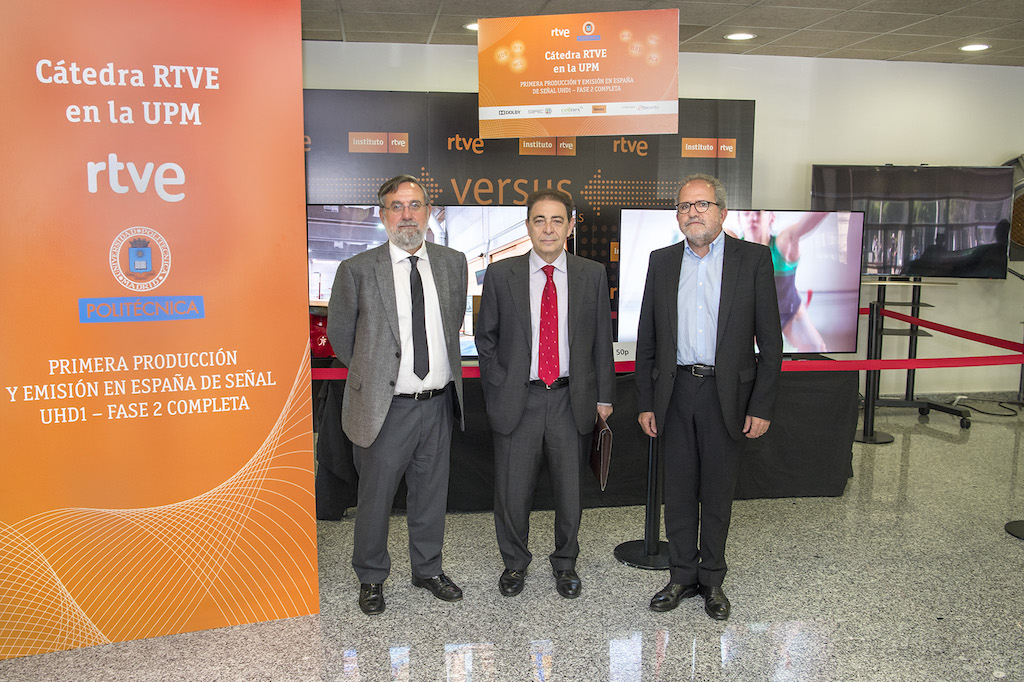
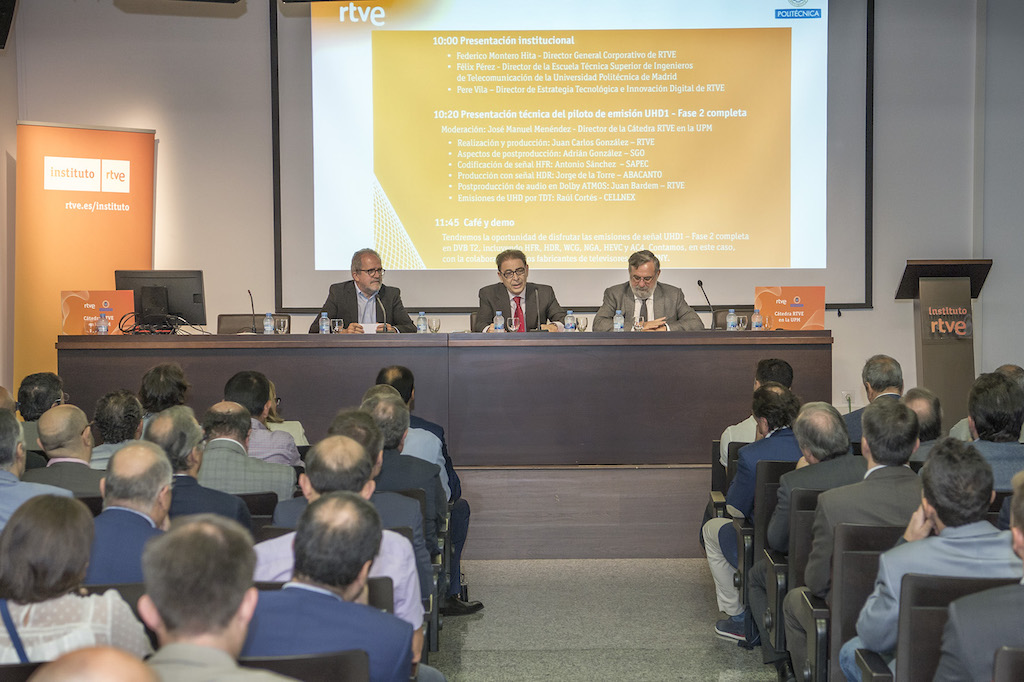
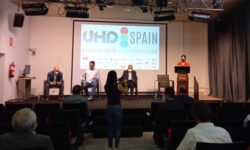
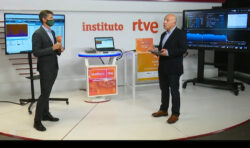
Radio Televisión Española (RTVE) y la Escuela Técnica Superior de Ingenieros de Telecomunicación de la Universidad Politécnica de Madrid (ETSIT-UPM) han presentado este jueves, en el marco de la Cátedra RTVE en la UPM, la primera producción y emisión en España, mediante DVB-T2, de señal de Ultra Alta Definición 4K, incluyendo alta frecuencia de refresco de cuadro, alto rango dinámico, espacio de color ampliado y audio de nueva generación. A la presentación, en el Aula Magna del Instituto de RTVE, han asistido especialistas de RTVE, la ETSIT-UPM, el Ministerio de Economía y Empresa, y representantes de empresas y operadores del sector.
En la inauguración, Federico Montero Hita, director general corporativo de RTVE, ha afirmado que, para Radiotelevisión Española, “este tipo de pilotos consolida a RTVE como uno de los elementos motores más importante en nuestro país en innovación tecnológica en el ámbito de la televisión. Y los trabajos que realizamos con la Cátedra en la Universidad Politécnica de Madrid están dirigidos a fortalecer esta posición en el sector”.
Félix Pérez, director de la ETSIT-UPM ha agradecido el apoyo y la confianza de RTVE en la Cátedra con la UPM, a lo largo de estos casi 4 años. “Somos dos instituciones con fuerte vocación de servicio público, comprometidos con la innovación tecnológica en el sector audiovisual. Este tipo de pilotos facilita la investigación en nuevos formatos de señal y nuevos mecanismos de producción de programas, facilitando el progreso en esta línea tan significativa como son las nuevas señales de TV, y los futuros sistemas de distribución de contenidos audiovisuales, ámbitos muy importantes en nuestros contenidos, tanto docentes como de investigación”.
Pere Vila, director de Estrategia Tecnológica e Innovación Digital de RTVE, ha presentado las líneas estratégicas de la Cátedra y sus objetivos. Entre los fines que persigue, ha señalado, están “adquirir conocimiento en estas nuevas tecnologías como el 4K, con sus nuevos aspectos tecnológicos (HDR, HFR, color mejorado, audio con mayor sensación de inmersión…), el DVB T2, los beneficios de las nuevas redes y la tecnología 5G. Nos planteamos probarlos, en la media en la que la disponibilidad de equipos comerciales nos lo permite, y adquirir experiencia en estos temas. La colaboración con otras empresas es fundamental para lograrlo”.
Durante toda la mañana, los diferentes ponentes han presentado el piloto de emisión de señal de ultra alta definición en 4K (UHD1), emitido mediante DVB-T2 (la futura evolución de la actual TDT).
La señal emitida incluye alto rango dinámico (High Dynamic Range – HDR), que se aproxima más a la sensación de contraste entre escenas claras y oscuras que un observador tiene en la realidad; gama de color ampliada (Wider Color Gamout – WCG), que permite la representación de una mayor gama de colores comparada con la señal emitida actualmente; alta frecuencia de refresco de imagen (High Frame Rate – HFR), que proporciona una sensación más natural de los objetos observados en la pantalla, especialmente cuando estos presentan un movimiento muy rápido (escenas de deporte, acción…) y se observan en pantallas de gran formato, como las utilizadas para visualizar contenidos 4K; y audio de nueva generación (Next Generation Audio – NGA), en formato Dolby Atmos, que permite la organización de los contenidos en objetos, y facilita obtener el máximo provecho y calidad a los dispositivos de reproducción de audio disponibles, proporcionando una mayor sensación de realismo e inmersión en la escena. Se ha utilizado HEVC para la codificación de vídeo y AC4 para la codificación de audio.
La presentación general del proyecto corrió a cargo de José Manuel Menéndez, director de la Cátedra RTVE en la UPM. Juan Carlos González, realizador de RTVE, describió la producción de los contenidos emitidos, que incluyen escenas de los entrenamientos del equipo femenino español de gimnasia artística. Adrián González, de Sgo, detalló algunos aspectos sobre las dificultades encontradas durante el proceso de postproducción. La problemática especial planteada por la codificación de los contenidos de vídeo con HFR fue comentada por Antonio José Sánchez, de Sapec, en tanto que los aspectos particulares que implica la grabación con HDR fue comentada por Jorge de la Torre, de Abacanto. Finalmente, la postproducción de audio, en Dolby Atmos, y sus ventajas fueron comentadas por Juan Bardem, de RTVE, y las cuestiones relativas a la emisión de los contenidos en DVB-T2 por Raúl Cortés, de Cellnex.
La señal DVB-T2 se ha emitió desde la sede de la ETSIT-UPM en Ciudad Universitaria, en el canal 44 de UHF (asignado temporalmente a la Cátedra RTVE en la UPM por la Secretaría de Estado para el Avance Digital – SEAD para sus emisiones de pruebas), además del canal UHD 4K emitido por Cellnex Telecom desde los centros emisores de Torrespaña y San Fernando de Henares en Madrid, por el canal 32; Collserola y Baix Llobregat en Barcelona, por el canal 43; Valencina, en Sevilla, por el canal 36; Mijas, en Málaga, por el canal 26; y recientemente se ha incorporado, con la colaboración de la corporación del grupo Televés, Monte Pedroso, en Santiago de Compostela, por el canal 33.
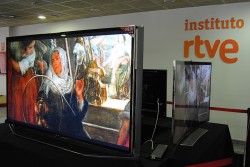
Para poder mostrar la señal emitida, la jornada contó con la participación de los fabricantes LG y Sony.
La Cátedra RTVE en la UPM, motor de innovación
La Cátedra es fruto de un convenio de cooperación firmado en enero de 2015 entre RTVE y la Universidad Politécnica de Madrid para el desarrollo de las telecomunicaciones vinculado a la distribución de contenidos audiovisuales.
Mediante este convenio, se acordó la constitución de la Cátedra RTVE en la UPM, y comenzó una colaboración estratégica entre ambas entidades para llevar a cabo actividades de formación, investigación, estudio y divulgación. RTVE y la Escuela Técnica Superior de Ingenieros de Telecomunicación de la UPM ya habían colaborado puntualmente en experiencias previas, tales como las primeras emisiones experimentales de 4k en TDT o, con anterioridad, en las primeras emisiones en pruebas de Alta Definición en TDT, que incluían servicios interactivos (Campus HD 2006).
En esta etapa se han considerado, como áreas de estudio, aquellas que se corresponden con las tecnologías susceptibles de ser adoptadas por los radiodifusores europeos para la distribución de contenidos audiovisuales. Dichas tecnologías constituyen una evolución de las actuales y permitirán a RTVE, en un futuro cercano, seguir llegando a los ciudadanos, de acuerdo con su carácter de servicio público, a través de todas aquellas plataformas audiovisuales que se utilicen de manera mayoritaria, siempre y cuando resulte técnicamente posible y económicamente viable.
Las áreas de estudio contempladas en la Cátedra son las siguientes:
• Efectuar pruebas de emisión en UHD, con el estándar de codificación de audio/video HEVC y AC4, ligadas tanto a servicios de radiodifusión de televisión digital terrestre (DVB-T2) como a servicios de televisión digital por satélite (DVB-S2), de cara a su futura implantación en todos los casos.• Analizar la problemática particular de realizar producciones y emisiones de señal de UHD 4K que incorporen HDR, HFR, HBD, WCG y NGA, de cara a ofrecer la mejor calidad posible de señal a los usuarios.
• Explorar las posibilidades de producción que ofrecen las nuevas redes 5G, con capacidades de SDN, NFV y despliegue de servicios en el EDGE.
Con esta Cátedra de empresa, RTVE ratifica su compromiso con la innovación, recogido en su encomienda de servicio público, y con la dinamización del sector audiovisual español, realizándolo de forma abierta con las instituciones académicas y con el mundo empresarial, y utilizando todos aquellos estándares que permitan ofrecer, en un futuro cercano, mejoras de eficiencia y de calidad en la distribución de contenidos audiovisuales que sean claramente percibidas por la ciudadanía.La Cátedra RTVE en la UPM cuenta con un Comité Asesor, que contribuye, de manera muy importante, en la determinación de los pilotos en los que se trabaja, y aporta recursos tanto humanos como materiales para la implementación de los mismos. Dicho Comité Asesor está formado, (en orden alfabético) por las empresas Cellnex Telecom, Dolby, Sapec y el grupo Televés. Adicionalmente, la Cátedra cuenta con Abacanto como entidad colaboradora.
Did you like this article?
Subscribe to our NEWSLETTER and you won't miss anything.
Related articles
 UHD Spain y la UPM convocan la II edición del Curso de Producción y Emisión de señal UHD
 UHD Spain y UPM impulsan la II edición del Curso de producción y emisión de señal UHD
 ‘La matemática del espejo’: primera emisión en 4K en RTVE Play de forma simultánea a la emisión en lineal
 La Cátedra RTVE-UPM impulsará la primera emisión TDT 8K en directo del mundo
 UHD Spain impulsa un curso de producción y emisión de señal UHD con la UPM
 UHD Spain presenta la primera emisión simultánea UHD a través de satélite, TDT e internet en España
 La Cátedra RTVE-UPM demuestra con éxito que es posible emitir 8K sobre una red DVB-T2
 La Cátedra RTVE-UPM llevará a cabo la primera emisión mundial en UHD 8K sobre DVB-T2
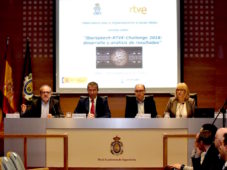 La Cátedra RTVE en la Universidad de Zaragoza presenta los resultados de su primer reto tecnológico a la comunidad científica
 La Cátedra RTVE en la UPM presentará la primera producción y emisión en España de señal UHD1–Fase 2 completa
 ¿Cómo se llevó a cabo la primera emisión en directo en 4K HDR realizada en España?
 La Cátedra RTVE en la UPM incorpora a Cellnex, Dolby y Sapec, que conforman su Comité Asesor
 RTVE presenta una prueba pionera de emisión y recepción en Ultra Alta Definición
 Rohde & Schwarz presenta la primera solución completa para pruebas de interfaces de vídeo y audio MHL