





Un nuevo estudio de NTT revela el atractivo de la inteligencia artificial para ver eventos deportivos
Más de la mitad de las personas de edades comprendidas entre los 18 y los 34 años considera que la inteligencia artificial crea una mayor interacción, pero solo un cuarto de ellas sabe cómo se aplica realmente al ámbito deportivo.
Un nuevo estudio del gigante nipón NTT destaca que las organizaciones deportivas deben esforzarse más por crear los tipos de experiencias que demandan los aficionados con conocimientos digitales.
Solo el 46 % de los encuestados afirmó que su experiencia de datos actual aumenta el disfrute de los eventos deportivos. Este déficit pone de manifiesto la necesidad de soluciones e infraestructuras tecnológicas adecuadas para ofrecer las experiencias sofisticadas que esperan los aficionados deportivos. ¿La respuesta? La artificial intelligence y el aprendizaje automático.
El estudio, que engloba a aproximadamente 3700 aficionados deportivos de todo el mundo, revela que la inteligencia artificial y el aprendizaje automático son formas extremadamente efectivas de crear experiencias con datos más atractivas. Algunos de sus resultados son:
Más de la mitad (54 %) de los encuestados de edades comprendidas entre los 18 y los 34 años considera que la inteligencia artificial puede predecir correctamente los resultados de un evento deportivo.
Aproximadamente el mismo porcentaje (52 %) afirmó que unas predicciones precisas aumentan el atractivo de un evento deportivo.
Sin embargo, solo un cuarto (26 %) de los encuestados de todos los grupos de edad sabe que la inteligencia artificial y el aprendizaje automático se utilizan realmente en los eventos deportivos, lo que representa una enorme oportunidad para crear una mayor interacción.
Según comenta Ruth Rowan, directora de Marketing Global de NTT, “la industria del deporte ansía enormemente poder ofrecer una experiencia de visualización más futurista para los aficionados. Y, al igual que cualquier organización que aspira a prosperar, los proveedores de contenido deportivo necesitan que la transformación siga siendo relevante y competitiva en un mundo que se digitaliza rápidamente”.
“Ya sea a través de analíticas en vivo y mejoras de datos, experiencias impulsadas por la inteligencia artificial o estadios conectados, es evidente que la infraestructura de las TIC, la nube y los servicios móviles tienen un papel fundamental que desempeñar a medida que la industria del deporte evoluciona para satisfacer las crecientes demandas de los partidarios que poseen conocimientos digitales”.
Tour de Francia
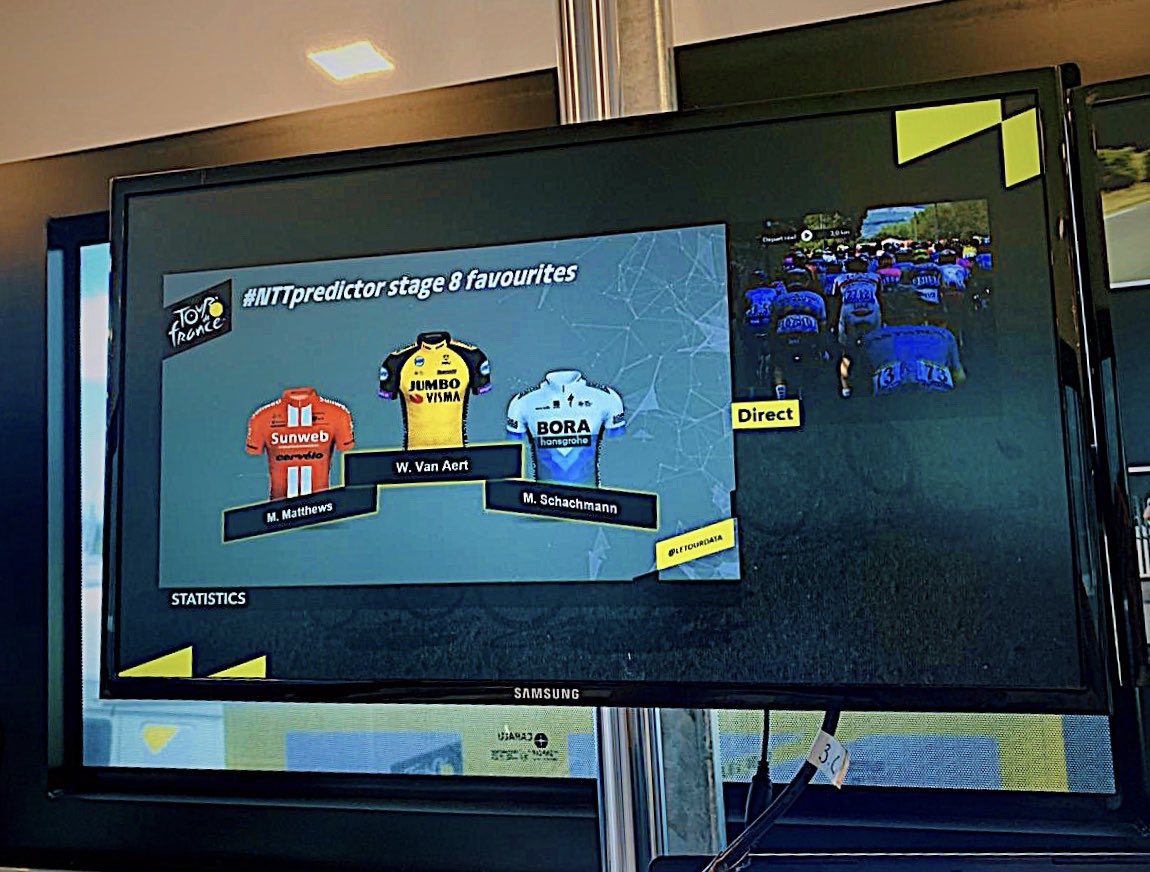
El Tour de Francia de este año constituye otra edición repleta de novedades. Los aficionados podrán disfrutar ahora de las nuevas funciones de aprendizaje automático e inteligencia artificial #NTTPredictor que revolucionarán verdaderamente la experiencia de visualización del Tour.
Le Buzz, un nuevo modelo de aprendizaje automático probado por primera vez en el Tour de Francia de 2019, permite analizar los movimientos dentro del pelotón para predecir posibles movimientos clave como, por ejemplo, la mayor probabilidad de que se produzca una caída, una ruptura del pelotón o un cambio en la dinámica de la carrera.
Las predicciones de etapas favoritas basadas en el aprendizaje automático se probaron con éxito por primera vez en 2017. Este año, se han mejorado para actualizarse en tiempo real a lo largo de la etapa en función de los eventos que estén sucediendo en la carrera.
Por otro lado, el indicador Catch the Break se ha optimizado para representar mejor las diferentes estrategias de la carrera en juego en diferentes puntos de la etapa mediante la creación de modelos individuales de aprendizaje automático para cada tramo de 10 km de la carrera.
Creación de una experiencia más conectada
Ahondando en las preferencias y en los hábitos de visualización de los aficionados deportivos de todo el mundo, el estudio de NTT también ofrece una imagen atractiva de la futura experiencia digital y de los deportes en directo. Una parte fundamental de este panorama son los hábitos cambiantes de los aficionados millennials. Más de la mitad (56 %) de los encuestados de edades comprendidas entre los 18 y los 34 años afirmó estar dispuesto a aumentar el uso de las second screens durante eventos deportivos en directo en los próximos tres años.
Además, el hecho de que el 51 % de los encuestados de todos los grupos de edad opte por realizar el seguimiento de las actualizaciones en tiempo real de un evento deportivo a través de su segunda pantalla (móvil o tableta), con una frecuencia de una o más veces a la semana, indica que la demanda para obtener una experiencia digital y conectada está claramente en alza. La principal motivación para el uso de una segunda pantalla durante un evento deportivo es el acceso a los datos y a las estadísticas (34 %), con cuatro de cada 10 personas queriendo incluso más estadísticas para optimizar su experiencia digital.
Mientras tanto, más de la mitad (55 %) de los encuestados de edades comprendidas entre los 18 y los 34 años afirmó que un mayor número de experiencias dentro del estadio, tales como una conectividad mejorada e instalaciones enriquecidas con tecnología, favorecería su asistencia a los eventos deportivos en directo, lo que demuestra la existencia de un mercado lucrativo para las organizaciones que están dispuestas a invertir en eventos y estadios conectados. Además, el deseo entre los millennials de estar constantemente conectados se extrapola claramente al área de los deportes en vivo, donde casi tres cuartos de los encuestados (73 %) afirma que una conectividad deficiente en un recinto deportivo reduce el disfrute de un evento.
Did you like this article?
Subscribe to our NEWSLETTER and you won't miss anything.
Related articles
 SNRT prepares for its next big sporting events with a new UHD mobile unit
 LTN and Lumen offer a joint offering of production services for major sporting events
 Movistar Plus+ applies Artificial Intelligence to create Flash content
 ASG powers remote workflow for premier sporting events with Dante Connect
 Limecraft proposes the concept of Media Intelligence versus Artificial Intelligence
 RTVE Instituto impulsa un nuevo máster de Periodismo e Inteligencia Artificial
 Jeff Rosica: “Artificial Intelligence is going to be fundamental for Avid”
 Globo opts for the GV AMPP platform to produce sporting and entertainment events
 Friday Night Lights chooses JVC Connected Cam for the production of sporting events
 Seagate y axle ai se alían para llevar la inteligencia artificial al almacenamiento
 Cinfo, Orange and TVG will develop a new project based on artificial intelligence and 5G
 Globecast lanzará en IBC su suite de servicios Digital Media Hub para eventos deportivos y en directo
 IP, artificial intelligence and 360 repetitions, main focuses of EVS for the next IBC
 Sony equips two new Mediapro 4K mobile units for the production of sporting events