





Gonzalo Suárez will receive the Gold Medal of the 25th edition of the Forqué Awards
The award highlights “his innovative and ahead-of-his-time talent, as well as his consistent cinematographic work.”
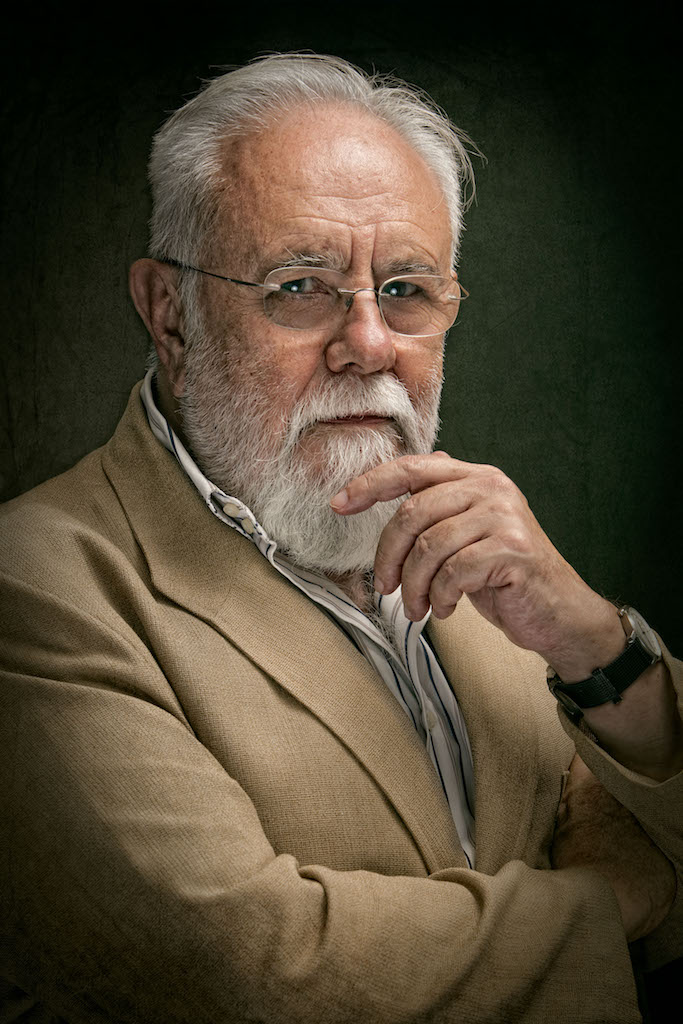
The filmmaker Gonzalo Suárez will be recognized with the EGEDA Gold Medal (Entity for the Management of Rights of Audiovisual Producers) during the 25th edition of the José María Forqué Awards. A distinction that highlights not only his film career, but also his work producing films and particularly “his innovative and ahead-of-his-time talent, as well as his consistent cinematographic work,” in the words of Enrique Cerezo, president of the entity.
The award will be presented to him on January 11 during the ceremony to be held in Madrid.
Gonzalo Suárez owns one of the most important filmographies of Spanish cinema, with more than 25 films as director, screenwriter and producer. With his production company he produced and directed films such as Dithyrambo, Aoom, Parranda, Epilogue, Rowing in the Wind, Don Juan of Hell, The Anonymous Queen, The Detective and Death, My Name is Shadow o The Porter.
“Gonzalo Suárez is one of the greatest exponents of our cinema, inside and outside our borders,” he says. Enrique Cerezo.
His works have been recognized by some of the most important festivals worldwide such as Cannes, Berlin, Rio de Janeiro, Moscow, Chicago, Paris or San Sebastián where he won the Silver Shell as best director. His career has also been distinguished with the National Cinematography Award, the Gold Medal of Fine Arts, he has been named Knight of Arts and Letters of France and of the Order of Alfonso X the Wise, the first time this decoration was awarded to a film director. His films have received eight Goya Awards, including best director.
Prestigious actors such as Keith Baxter, Donald Pleasence, Hugh Grant, Michael Pollard, Javier Bardem, Francisco Rabal, Fernando Rey, Aitana Sánchez-Gijón, Carmelo Gómez, Victoria Abril, Fernando Rey, José Sacristán, Maribel Verdú, Fernando Fernán Gómez, María de Medeiros, Héctor Alterio, Carmen Maura, Fernando Guillén, Marisa Paredes and Charo López, whom he discovered in Ditirambo, considered by some critics to be the first modern film of Spanish cinema.
Gonzalo Suárez thus joins a list of prominent film figures such as Pedro Masó, Elias Querejeta, Eduardo Ducay, José Luis Borau, Fernando Trueba, Agustín Almodóvar, Santiago Segura, Carlos Saura or José Frade.
A reference in cinema and literature
Gonzalo Suárez (Oviedo, 1934) is a filmmaker and writer who is a reference in our culture. In 1951 he began his studies in Philosophy and Letters at the same time that he started in the theater as an actor, playing characters such as Creon from Medea or Prospero from The Tempest, among others.
Influenced by the impressionist movement, he decided to go into self-exile in Paris, where he returned in 1958 and, under the pseudonym of Martín Girard, he practiced journalism. His interviews and reports are a precedent for the so-called “New Journalism.”
It is in Barcelona in the 60s where he published his first books and made his first films. Among his literary works it is worth highlighting Thirteen times thirteen, The rodent of Fortimbrás, Rocabruno beats Ditirambo, Gorilla in Hollywood, The sad murderer, Citizen Sade, The man who dreamed too much, The sole of my shoes, Albatross syndrome y With the sky on your back. His most recent literary release is To the intruding muse (2019).
Its emergence into the arts and letters marked a break with the current canons of the time, a constant that has remained intact to this day; proof of this is his recent film Malinche's dream.
Did you like this article?
Subscribe to our NEWSLETTER and you won't miss anything.
Related articles
 Spanish audiovisual will shine at the 31st edition of the José María Forqué Awards
 The co-founder of Vaca Films, Emma Lustres, will receive the EGEDA Gold Medal at the Forqué Awards
 Gonzalo Suárez will receive the Goya of Honor
 ‘El 47’ and ‘Querer’ win the 30th edition of the Forqué Awards
 José Luis Garci, Gold Medal of the 30th edition of the Forqué Awards
 The Forqué Awards make public the disputed list of nominations for its 29th edition
 Eduardo Campoy will receive the EGEDA Gold Medal at the Forqué Awards
 ‘As Bestas’ and ‘Apagón’, big winners of the 28th edition of the Forqué Awards
 Producer José Luis Bermúdez de Castro will receive the Gold Medal at the 28 Forqué Awards
 The producer José Antonio Félez, gold medal of the 27th edition of the José María Forqué award
 Gonzalo Suárez will receive the Luis Buñuel Award at the 49th Huesca International Film Festival
 Fernando Colomo and Beatriz de la Gándara, EGEDA Gold Medal at the 26 José María Forqué Awards
 The producer José Frade will receive the EGEDA Gold Medal
 The Círculo de Bellas Artes awards the Gold Medal to Gonzalo Suárez