





For the first time, films must incorporate special subtitles and audio description to access aid
The BOE publishes a Ministerial Order establishing measures that streamline and simplify administrative procedures and specific measures to address the economic impact of COVID-19 on companies in the sector.
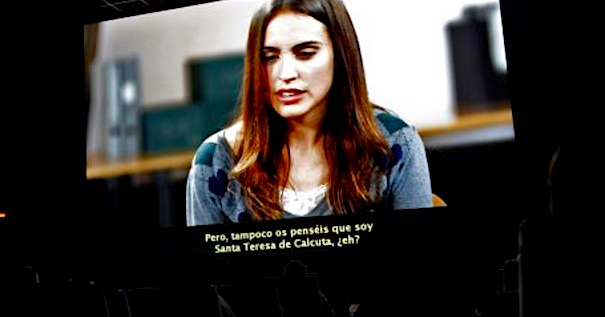
He Official State Gazette publishes this Tuesday, June 30, the Ministerial Order which establishes the new regulatory bases of the State aid for the production of feature films and short films and the structure of the Administrative Registry of Cinematographic and Audiovisual Companies.
In the new regulatory Order, which replaces the one in force two years ago, technical modifications are introduced that simplify and unify the procedures to facilitate the understanding, completion and processing of aid.
In addition, the protection of certain groups is reinforced by promoting the activities they carry out and in relation to the requirements for access to aid.
In this way, the new order enhances protection of authors, by requiring that a certain percentage of the price of the script be paid before payment of the aid. In addition, support is given to films of cultural interest with difficulties in finding financing, increasing the amount of aid for this type of projects.
On the other hand, co-production projects are promoted with foreign companies in which Spanish participation is a minority but that present a clear cultural interest. This is intended to promote the internationalization and professionalization of the sector. To this end, in addition to facilitating access to aid, a reserve of a minimum of 5% of the selective aid allocation has been made for this type of projects and, in general, the minimum project budget has been lowered to 150,000 euros to be able to participate in international co-productions with Ibero-American countries.
In addition, progress continues both in promoting gender equality and in equal opportunities and non-discrimination.
Universal cinema accessibility
The Ministerial Order takes an important step towards universal accessibility of Spanish cinema making it mandatory, for the first time, that cinematographic films include special subtitling and audio description as universal accessibility measures to access general and selective aid for the making of project-based feature films.
This requirement is added to the already existing obligation, to access aid for the production of feature films, to have at least one person with a disability employed in the company or incorporate into the project with a degree equal to or greater than 33% recognized by the competent body, except in the case of documentary or experimental projects.
Facilities to access aid
Regarding the specific measures by help lines, highlight the innovations adopted in the selective aid for the production of project-based feature films, which changes the call system from single to open call system as well as the elimination of existing restrictions on the maximum cost of the project,
Likewise, in order to speed up the assessment procedure, an objective pre-assessment is established, with a minimum access score and the obligation to provide certain documents at the time of submitting the application is eliminated.
A series of specific measures to address the economic impact of COVID-19 in companies in the sector. They are mainly aimed at making compliance with the obligations consisting of accrediting the development of a certain activity more flexible when it affects the year 2020; increase the amount of aid from 20% to 40% that companies that are beneficiaries in 2020 of general aid for the production of project-based feature films may receive as a first payment to provide greater liquidity to the sector; and strengthen support for the financing of certain movies who have received general or selective aid for the production of feature films in 2019, who have a special cultural and artistic value and who request the certificate of Spanish nationality in the years 2020 and 2021, increasing the maximum intensity of public aid that they can receive up to 75% of the recognized cost.
Did you like this article?
Subscribe to our NEWSLETTER and you won't miss anything.
Related articles
 Ooona partners with Audio Description Associates to promote training and certifications in audio description
 Canon updates the firmware of the EOS C500 Mark II to incorporate new Cinema RAW Light recording formats
 The ICAA launches the first line of aid financed entirely with Next Generation funds
 The ICAA grants aid of 15 million euros to 47 projects for the production of feature films
 Cellnex joins forces with Deutsche Telekom to add 3,150 sites in the Netherlands
 Culture allocates 40 million to aid the production of feature films on the project
 Phabrix and Riedel join forces to incorporate new functionalities in their Sx TAG IP test and measurement equipment
 Culture calls for aid for the organization of film festivals and competitions in Spain
 Mo-sys proposes a system to incorporate virtual audiences in the stands
 Blackmagic Design updates the operating system of its HyperDeck Studio recorders to incorporate new functions
 The first call for aid for pilot projects of 5G technologies has been resolved
 Subtitling and audio description at the VI AMADIS Congress
 La Moderna and Expressa Radio sign an agreement to incorporate interactivity in their online stations
 The use of tablets to access the BBC iPlayer increases