





Hispasat joins the 3GPP and promotes the role of the satellite in the development of the 5G ecosystem
The satellite is called to play an important role in the extension of 5G to guarantee its implementation regardless of geographical location.
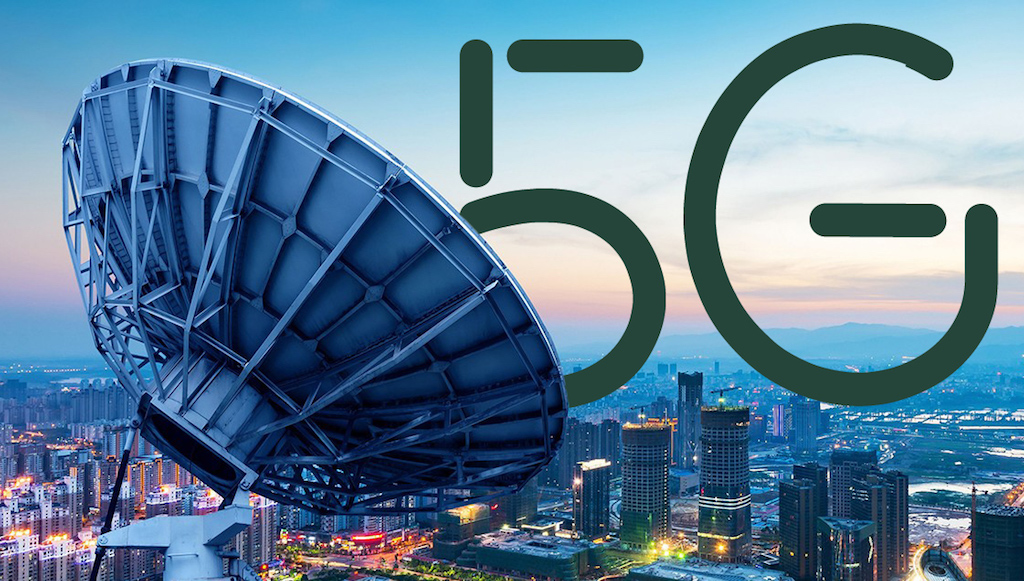
Hispasat has joined the group 3GPP (3rd Generation Partnership Project) in order to work on the satellite integration into the 5G ecosystem that is being defined. The project encompasses seven communications standards development organizations and is responsible for the standardization process of mobile technologies, from 3G to 4G and now 5G. In this way, the operator will work to ensure that the satellite plays a leading role in ensuring that 5G technology reaches any point on the planet and is available to users regardless of their geographical location and the deployment of terrestrial infrastructure.
5G has been defined from its origin as a network of networks, the result of the confluence of different technologies towards a convergent scenario. If previous generations (2G, 3G, 4G) focused on connecting people, 5G aims to connect objects and people at all times wherever they are, both with other people and with other objects. To efficiently achieve this ambitious goal, a combined use of various fixed, terrestrial and satellite technologies will be needed.
Each of them will fulfill its function, but not in isolation, but integrated with the others and combined with them to provide the most appropriate response to the coverage and capacity requirements of this new technology at each time and circumstance. The 5G infrastructure must, therefore, be an orderly ecosystem: a network of networks made up of complementary layers based on the strengths of each technology, including satellite. Only in this way would a global and viable commercial development of this new standard be guaranteed.
The satellite, therefore, is called to play a essential role in various use cases of 5G technology. For some years now, high-throughput satellites (HTS) have significantly increased the capacity of satellite connectivity services. In addition, thanks to innovation, user equipment is experiencing significant improvements in cost and efficiency, both in network platforms and in terminals.
All of this means that communications satellites have optimized their competitive advantages and offer 5G networks key characteristics to promote their rapid implementation.
Thus, its global coverage allows it to provide high capacity services anywhere on Earth, however remote it may be; Its robustness guarantees its users connectivity resistant even to natural disasters, whether they remain static or travel aboard a means of transportation; and facilitate the distribution of data or audiovisual content to many users at the same time in a very efficient way. In addition, its installation is very quick and does not require civil works, which makes it easier to extend the 5G network to the most complicated or distant areas in much less time.
Thanks to this, the satellite can contribute to the deployment of 5G in diverse use cases: extend your coverage in rural or remote areas; guarantee passenger connectivity on board airplanes, ships or land vehicles; favor the development of Edge Computing solutions through the broadcast distribution of data to the network nodes, or even to the user terminal itself; establish trunk links in mobile networks to connect remote 5G base stations; act as a complement to terrestrial networks to avoid congestion or guarantee continuity in emergency situations; or connect objects globally and in isolated areas using IoT solutions via satellite.
In short, the role that Hispasat and other satellite operators can play in the 3GPP working groups is of special importance to achieve the greatest efficiency of the 5G ecosystem. "We have to ensure that each 5G application works on the most appropriate technological platform in terms of technical requirements and cost efficiency for each situation. Otherwise, it would cause an unnecessary increase in economic resources and the complexity of the architecture," he says. Jose Luis Serrano, Innovation Manager at Hispasat. "In the satellite sector we have been working for years on various axes to offer an optimal service for any user, anywhere. Achieving full integration of the satellite into the 5G ecosystem is already one of our main avenues of innovation, and we believe that it will be key for 5G technology to achieve its objectives," concluded Serrano.
Did you like this article?
Subscribe to our NEWSLETTER and you won't miss anything.
Related articles
 SES promotes a satellite distribution platform specialized in sports
 Live via satellite from El Escorial… with Hispasat
 The satellite, a key element in the 5G ecosystem
 Hispasat enters satellite-based VOD with Quadrille
 Hispasat advances the future of satellite television at IBC
 The Hispasat 30W-6 satellite, once again ready for launch
SpaceX postpones the launch of the new Hispasat 30W-6 satellite
The Hispasat 30W-6 satellite, once again ready for launch
SpaceX postpones the launch of the new Hispasat 30W-6 satellite
 Hispasat demonstrates the possibilities of 4K HDR and IP transmission via satellite
 Nace la Alianza SAT>IP para impulsar el papel de la televisión por satélite en entornos multipantalla
 SSL will build the new Hispasat 1F satellite
 SES exposes in Malaga the importance of the satellite in the audiovisual ecosystem of the future
 Hispasat connects the 2013 Vuelta a España via satellite
 Hispasat launches its tenth satellite into space
 Successful launch of the Hispasat 1E satellite