





Así se encuentra el espectro radioeléctrico para móviles en América Latina
Ningún mercado de América Latina alcanza el 50% de los requerimientos de espectro para un entorno de mercado bajo planteadas por la UIT.
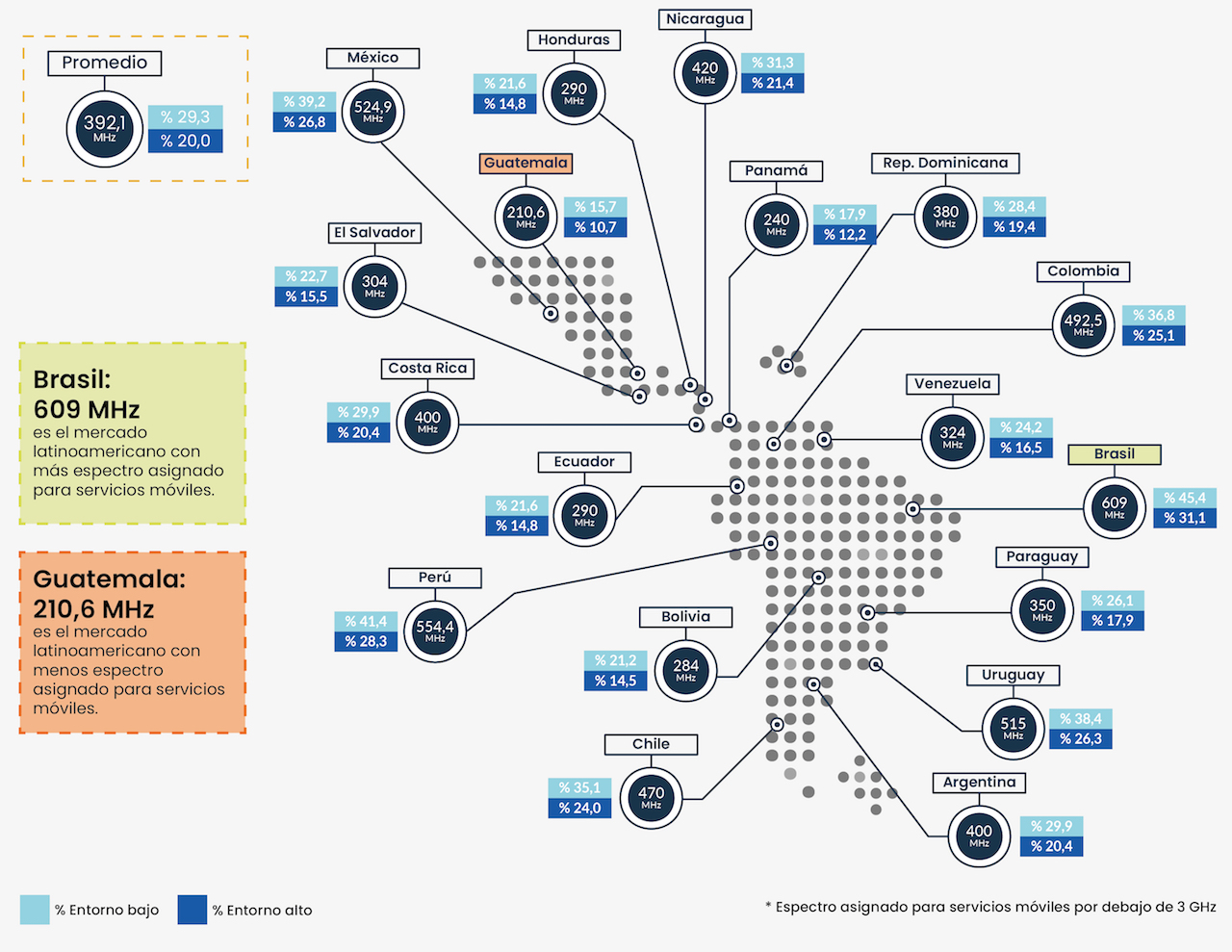
Brasil, con 609 MHz entregados para servicios móviles, es el país que mayor cantidad de espectro radioeléctrico ha habilitado a los operadores, según una infografía de 5G Americas realizada con datos del documento Análisis de las Recomendaciones de Espectro de la UIT en América Latina, publicado recientemente. No obstante, las frecuencias entregadas en el mercado brasileño no representan ni siquiera el 50 por ciento de lo recomendado por la Unión Internacional de Telecomunicaciones (UIT) para un escenario de mercado bajo, e incluso menos (31,1 por ciento) para un escenario de mercado alto, para el año 2020.
Otros países que han entregado más de 500 MHz de espectro radioeléctrico por debajo de 3 GHz para servicios móviles son Perú (554,4 MHz), México (524,9 MHz), y Uruguay (515 MHz), a mayo de 2020.
El promedio de espectro entregado en los mercados analizados es de 392,1 MHz, que se traduce en apenas un 29,3 por ciento de la sugerencia para un escenario de mercado bajo, o un 20 por ciento para un escenario alto.
En el otro extremo, Guatemala es el mercado que menor porción de frecuencias ha asignado, con tan sólo 210,6 MHz.
Vale recordar que, en su informe M.2290-0, the UIT establece los requerimientos de ancho de banda de espectro para el desarrollo de los servicios móviles IMT-2000 (3G) e IMT-Avanzadas (4G) para el año 2020. Dichos requerimientos consideran un escenario o entorno de mercado bajo y otro alto, tomando en cuenta factores como densidad de usuarios, duración media de sesión, tasa de bits de servicio promedio, ratio de movilidad, y otros.
Did you like this article?
Subscribe to our NEWSLETTER and you won't miss anything.
Related articles
 UHD Spain se posiciona sobre el uso del espectro radioeléctrico
 La banda de 3,5 GHz será determinante para el desarrollo del 5G en América Latina
 HBO Max will develop more than one hundred original productions for Latin America
 América Latina contará en 2020 con menos del 20% del espectro móvil sugerido por la UIT
 Mediapro reinforces its presence in Latin America with seven new mobile units in Chile
 BIT Experience pone sobre la mesa la gestión del espectro radioeléctrico
 Las telcos europeas plantan cara a Bruselas a cuenta del uso del espectro radioeléctrico
 Telefónica and Vivendi launch the first short premium series app for mobile devices in Latin America
 F1 Latin America Channel, the only channel that will offer the entire Formula 1 World Championship in HD for Latin America
La CNMC propone un control más intenso del espectro radioeléctrico para evitar situaciones anticompetitivas
BIT Experience will take the pulse of the thorny issue of radio spectrum management
F1 Latin America Channel, the only channel that will offer the entire Formula 1 World Championship in HD for Latin America
La CNMC propone un control más intenso del espectro radioeléctrico para evitar situaciones anticompetitivas
BIT Experience will take the pulse of the thorny issue of radio spectrum management
 Expertos en el espectro radioeléctrico debatirán la situación sobre redes y servicios en la banda UHF
Uruguay reordena su espectro radioeléctrico para prepararlo para la tv digital
Expertos en el espectro radioeléctrico debatirán la situación sobre redes y servicios en la banda UHF
Uruguay reordena su espectro radioeléctrico para prepararlo para la tv digital
 Latin America: a big market for Grass Valley