





German Parliament moves to protect “cultural frequencies” in the 470 to 694 MHz band
The future of this frequency range will be discussed at the next World Radiocommunication Conference, which will take place in 2023, promoted by the International Telecommunications Union (ITU/ITU).
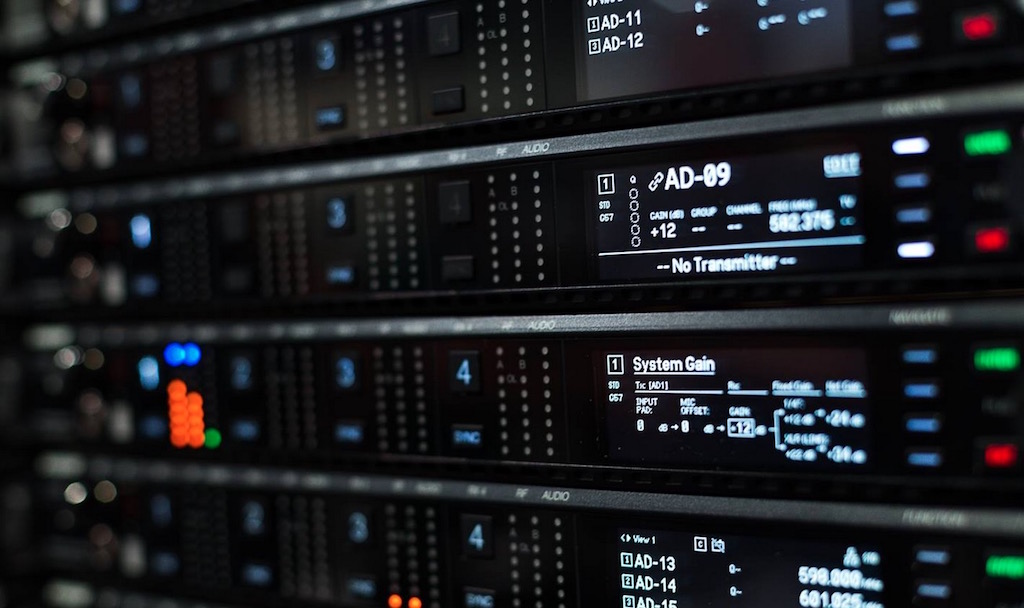
Several parliamentarians from different groups of the Bundestag in German have mobilized to defend the frequencies used by DTT, cameras and wireless microphones in the 470 to 694 MHz band. The future of this frequency range will be discussed at the next World Radiocommunication Conference, which will take place in 2023, promoted by the International Telecommunications Union (ITU/ITU).
Already preparing for this summit, the Federal Agency for Electricity, Gas, Telecommunications, Post and Railway Networks in Germany has commissioned a study on the use of the decimeter wave band. Some pressure groups are calling for culture and broadcasting to give up frequencies and transfer them to mobile telephony.
These frequencies have been reduced twice since 2010 and are now just a shadow of what they once were. On the contrary, mobile telephony has been able to ensure wide frequency ranges that the sector does not fully exploit. The increase in mobile phone use during the pandemic has not revealed any lack of resources.
As far as mobile telephony is concerned, the UHF band would also represent only a negligible addition to transmission capacity. On the other hand, culture and terrestrial broadcasting urgently need this spectrum, which has technical characteristics that other frequency ranges cannot offer.
To date, the UHF band has been guaranteed for culture and broadcasting until December 2030. A juicio de los parlamentarios alemanes no se necesitan más frecuencias de la gama de ondas decimétricas, ni ahora ni en el futuro, para alcanzar los objetivos de banda ancha del Gobierno Federal. Sin embargo, estas frecuencias son extremadamente importantes y son vitales para las industrias de la radiodifusión y la cultura. A pesar de todos los avances tecnológicos, todavía no está claro si la digitalización y el uso de 5G estarán disponibles para la radiodifusión, la industria cultural y la industria de los eventos como una alternativa eficiente.
Estos parlamentarios proponen ahora que el Bundestag reafirme su compromiso de apoyar la cultura y la radiodifusión renovando su promesa de salvaguardar las frecuencias hasta diciembre de 2030. Al mismo tiempo, consideran que la radiodifusión y las industrias culturales y creativas merecen una hoja de ruta para la próxima década.
Con esa hoja de ruta, se pretende proteger a las pequeñas y medianas empresas de radio y también a las emisoras de Alemania. A fin de cuentas, se trataría de preservar la radiodifusión terrestre a largo plazo, aseguran.
Al mismo tiempo, por razones de seguridad, Alemania necesita un canal de transmisión (DVB-T2, tecnología de difusión 5G) que esté disponible de forma autónoma, sin ninguna influencia de terceros. Debemos tomar medidas para evitar la dependencia total de las empresas de telefonía móvil y las redes sociales en aras de la diversidad de opiniones y el funcionamiento de la democracia. Por lo tanto, los sistemas múltiples e independientes son mejores que una monocultura de la telefonía móvil, por el bien de la cultura y la radiodifusión, así como por el beneficio de los ciudadanos y el Estado, afirman los parlamentarios de los grupo políticos SPD, Bündnis 90/Die Grünen, Die Linke y FDP.
Did you like this article?
Subscribe to our NEWSLETTER and you won't miss anything.
Related articles
 Broadpeak Strengthens CDN Security to Protect Large-Scale Video Streaming
 France Télévisions selects Nagravision to protect repeat content on devices
 EBU aggressively defends UHF at WRC-23 forum to protect public service
 Memnon promotes a facility to protect New Zealand audiovisual content
 The reorganization of the 3.5 GHz frequencies, key to the development of 5G, is completed
 This is how the auction of the 700 MHz band frequencies remains.
 The tender for 5G frequencies in the 700 MHz band begins on July 20
 2019 World Radiocommunications Conference identifies additional frequency bands for 5G
 Orange acquires one petabyte MatrixStore expansion to protect audiovisual content from OCS and VOD
 El generador de señales R&S SMB100A, ahora para altas frecuencias
 Recommendations to protect DTT from interference
 Measures to protect the 790-862 MHz band from interference
 Cable operators join forces to obtain mobile frequencies
 Al Jazeera once again trusts the Spanish company SIDSA to protect its new channels