





Spotify plans to reach one billion users by 2030
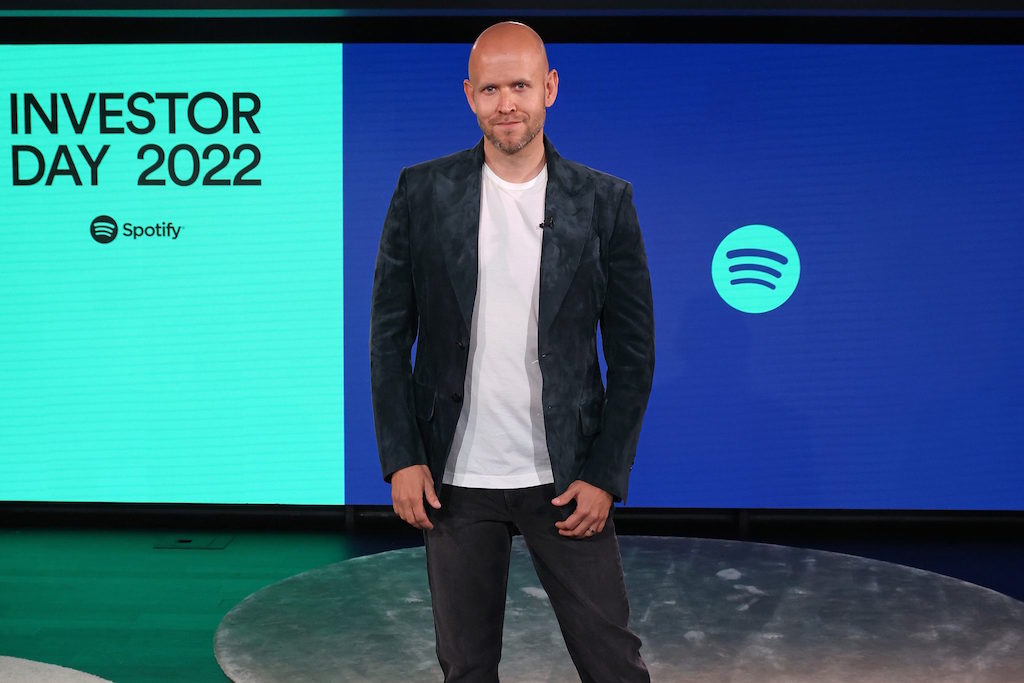
Coinciding with Investor Day, Spotify has announced that its expectations for 2030 are to have more than one billion users who will contribute a turnover of about 93,365 million euros and a gross margin of 40%, which would mean increasing the current size of the company by about ten times.
The Swedish music streaming and podcast company aims to go beyond music and podcasting, describing a reality in which 50 million artists, writers, labels, publishers, studios and other creators will be able to run their businesses and effectively monetize and promote their work to more than one billion users.
At the center is a set of software, services, products and business models tailored to specific verticals and grouped into a single consumer experience.
Daniel Eck, CEO of Spotify, noted that "we are really investing in building a fantastic multi-sector platform that has all the ingredients to become one of the truly unique creative platforms in the world. And based on what we see, we are accelerating our movements to take advantage of that opportunity in the short term. And the opportunity for value creation is very high."
Looking to the future, the company will base its growth on three key pillars:
- Ubiquity, to make Spotify available to anyone on any device. Over the past four years, the Swede has grown from around 250 partners to more than 2,000 today, with integrations ranging from wearables, such as watches, to all facets of connected living, including cars and home appliances. Ubiquity has proven to be a major driver of its users for the platform, with 28% of all our new registrations coming from these partners, up from 14% in 2018.
- Personalization. When listeners are asked what they like most about Spotify, over 81% cite our personalization, or discoverability. Spotify listeners see this as the reason not only to sign up for our service, but also to stay.
- Freemium, with the combination of a free tier with advertising and another premium subscription tier. In this way it establishes a larger and growing subscriber base, present in 65 markets around the world to 183 in just four years.
"We see the opportunity to continue imagining and exploring new verticals on our platform, within audio, but also beyond. And for each vertical, we will develop a unique set of software, services and products and business models that are going to adapt to that specific ecosystem," Ek said.
Did you like this article?
Subscribe to our NEWSLETTER and you won't miss anything.
Related articles
 Starlink closes the year with a record number: 2.3 million unique users
 Connected TV already has 31 million users in Spain
 Mike Blackman predicts that ISE 2022 will reach 50,000 visitors with an impact on Barcelona of 215 million
 DAMA plans to raise 27.2 million euros in 2022
 Confinement boosts Netflix subscriptions with almost 16 million new users
 Amazon Fire TV exceeds 40 million users worldwide
 Historical record for the CCMA portal, which exceeds 3 million unique users
 'eSports' reach 4 million followers in Spain and the figure is expected to rise to 7 million in 2020
 Wuaki.tv closes the year with close to two million users
 RTVE.es closes 2013 with 17.5 million users
 Sirius XM Radio now exceeds 25 million users in the United States
 China Mobile users who consume video exceed 50 million
 DAB+ in Germany now reaches 40 million users
 Telecinco.es, six million unique users