





GatesAir demostrará la segunda generación de los transmisores DAB Maxiva MultiD en NAB 2023
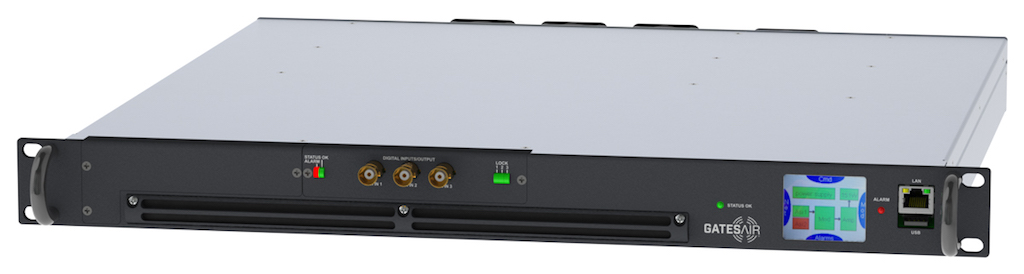
La filial de Thomson Broadcast, GatesAir, presentará en NAB 2023 la segunda generación de Maxiva MultiD de transmisores de radio multicanal DAB/DAB+ con nuevas ventajas como una mejor gestión de la potencia y el ancho de banda, conectividad y funciones de supervisión y control.
La serie MultiD es fruto de la ingeniosa labor de ingeniería del equipo de GatesAir Europa, que desarrolló la serie para reducir los costes y la infraestructura de la radiodifusión DAB multicanal por emplazamiento.
El sistema MultiD original integra tres transmisores independientes dentro de un único chasis 1RU, en lugar de requerir un transmisor independiente para cada canal más un combinador externo y hardware auxiliar.
Además de un excepcional ahorro de espacio, MultiD introdujo nuevas eficiencias para las emisoras DAB mediante entradas de servicio y motores de procesamiento de señal independientes, y un único modulador para tres servicios de radio DAB dentro de una misma banda de canales (10A, 10B y 10C, por ejemplo).
Estas y otras ventajas, como la potencia de RF ajustable para cada transmisor, se trasladan a los sistemas MultiD de segunda generación con notables mejoras. El nuevo diseño del sistema MultiD añade capacidad para un cuarto servicio DAB y elimina las limitaciones de emitir todos los servicios dentro de una única banda de canales DAB. Esto significa que los clientes de MultiD ahora pueden emitir cuatro servicios de radio DAB independientes a través de canales separados (como 10A, 10B, 11A y 11B). Esto resulta útil, por ejemplo, para los radiodifusores a los que no se asignaron todas las licencias dentro de un canal determinado.
La potencia de salida por canal también puede adaptarse ahora a las especificaciones de cada cliente. El sistema MultiD original tenía un tope de 150 W, lo que limitaba a los usuarios tres servicios DAB a 50 vatios cada uno. Con el nuevo diseño modular, las emisoras DAB pueden pedir ahora un sistema MultiD de 1,5 kW para soportar tres servicios de 500 W, o un sistema de 1,2 kW para soportar cuatro servicios de 300 W.
También es posible establecer distintos niveles de potencia para diferentes servicios DAB. Con una flexibilidad de salida de potencia tan excepcional, los sistemas MultiD se pueden configurar ahora para dar servicio a prácticamente cualquier combinación de niveles de potencia para hasta cuatro servicios DAB. La posibilidad de dividir la capacidad del sistema también es útil para los sistemas MultiD que comparten distintos inquilinos, algo habitual en los túneles de carretera, donde los radiodifusores pueden consolidar eficazmente los recursos para garantizar una cobertura coherente de sus emisiones más importantes.
The arquitectura multiportadora de MultiD proporciona las mismas ventajas de alta eficiencia incluso cuando se da soporte a más de un arrendatario o se emite a través de más de un canal DAB. Esto incluye una considerable reducción de la huella al eliminar la necesidad de combinación de RF externa.
MultiD combina internamente señales de RF de bajo nivel y, a continuación, genera y retransmite todos los servicios DAB independientes a través de un único amplificador. La arquitectura racionalizada sólo requiere un filtro pasabanda y un conector de antena de RF para la transmisión a los oyentes.
La arquitectura puede simplificarse aún más mediante funciones avanzadas de red IP y conexiones de un solo cable. Los nuevos diseños de sistemas MultiD incorporan cuatro entradas EDI independientes para contribución y distribución IP. Los usuarios pueden seleccionar entre conexiones basadas en IP (EDI) y heredadas (ETI), lo que proporciona flexibilidad para transportar señales utilizando tanto conexiones IP como de microondas. GatesAir también ha añadido una interfaz de usuario HTML5 segura para supervisar y analizar de forma remota la salud y el rendimiento de la señal desde cualquier navegador.
Did you like this article?
Subscribe to our NEWSLETTER and you won't miss anything.
Related articles
 The Valencian Yuvod will demonstrate its 100% cloud-based video platform at NAB 2023
 Avid demostrará en NAB 2023 la próxima generación de sus servidores Nexis
 MRMC demostrará en NAB 2023 tres nuevas soluciones para estudio y producción deportiva
 Marshall to demonstrate two new 4K60 PTZ cameras at NAB 2023
 Xchange: el MAM de segunda generación completamente basado en Web de Primestream
 Egatel demostrará el ahorro energético de sus transmisores en IBC 2016
 Tedial demostrará Evolution, su nueva generación de MAM, en BIT Experience
 Los transmisores de alta potencia de GatesAir permiten a la brasileña Nova FM ganar en cobertura y eficiencia
 HP lanza la segunda generación de sus estaciones all-in-one Z1
 Harris evoluciona su serie de transmisores digitales Maxiva UAX
 Second generation of on-demand TV on Televisió de Catalunya
 Mission 2, Quantel's second generation Media Asset Management
 XpanD launches its second generation of 3D glasses
 Sony EVI-HD3V y EVI-HD7V: segunda generación de videoconferencia HD