





Processing and post-production farms: a destiny that cannot be escaped?
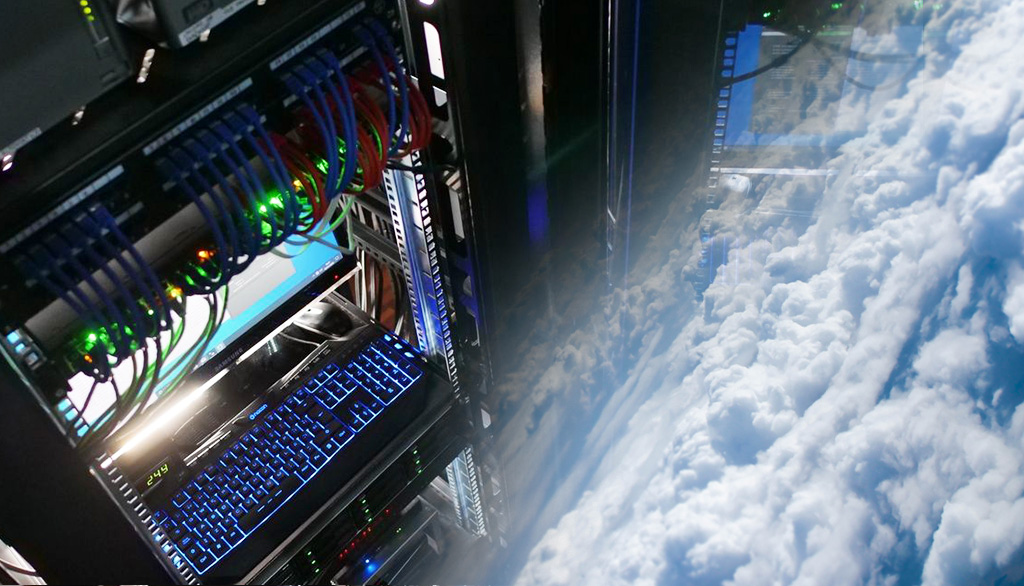

Jaume Campos, VFX supervisor at Onirikal, analyzes how the growing demand for visual effects and the increasingly demanding resolutions are proposing unprecedented challenges to production studios, which see processing farms as a solution that, for now, does not adapt 100% to the idiosyncrasies of the Spanish industry.
Over the last few years, there has been a evolution in the use of the visual effects in our industry. All productions, even the smallest ones (and the ones you least think about), end up having visual effects, whether for things like erasing background elements or adding more complex elements.
This trend responds to a natural evolution of the industry. Post-production allows for much more control, which also brings significant cost savings. If you set fire to an element being filmed, you cannot control what that fire does, where it goes and how long it lasts. However, in post-production, if you want, the effect can go to the pixel. Furthermore, the progress of technology has allowed gain realism in each element. Before you could notice the typical post-produced bookstore fire, but now the result is different.
 The higher the resolution, the greater the technological needs.

The improvement in the quality of post-production processes has led us to the obligation to increase processing force of our machines. “In the old days” you could make an investment in buying equipment that could last you five or six years without any type of problem. Now the curve is much more exponential, which causes computers to fall behind faster.
When we buy workstations (render nodes) for our render farm In Onirikal, we know that it is very likely that in two years its performance fall in half compared to new equipment. Obviously, no matter how much technology improves and software is optimized, we need best computers that process much faster. It is a complex world: a company can improve the performance of old tools, but it will most likely also add new processes that will require greater resources...
This growing demand is linked to the fact that productions are increasingly more resolution. Six years ago everything was done 2K; four years ago, in 4K, and now, it is common to find productions 6K, which involves working with much larger file sizes, 6,000 x 4,000; and that makes it slow down the processes, since you must be much more precise.
Is it viable to outsource processing?
Given this greater need for processing, there are alternatives for studies. Among them, apart from improving the render farms, includes the possibility of outsource processing or rendering. However, it is something more complex than it may seem.
The reality of post-production studios is that we each have built our own pipeline: a combination of software, plug-ins, versions and even unique internal developments that, in order to outsource these processes, have to fit with the suppliers' offer. Only the pioneering studios, the largest and most economically powerful, can afford to be up to date with the latest version of everything that comes out. This brings problems to small or medium-sized studios like us. The objective will be to get the renders out as quickly as possible, but if there is a problem with the compatibility of the plug-ins, the offer of the farms or it is necessary to cache some element in a file, it ends up being a problem.
There are difficulties, but I would say that yes or yes we will reach a point where many studies will be forced to use these roads.
There are difficulties, but I would say yes or yes we will reach a point in which many studies will be forced to use these routes. If today you have a production with 6K files and your time is limited, two options will appear: either you undertake an investment of several thousand euros in computers to expand the render farm (which will possibly be obsolete in a couple of years), or it is outsourced.
A separate issue are the 8K productions or even more. We did a job for the Barcelona Wax Museum for an initial attraction of 32K resolution. We were able to manage this project, which was very demanding, since everything was 3D, since we had a lot of time ahead of us. But if the project was for a period of a couple of weeks, yes or yes you have to take it outside.
 The Spanish reality
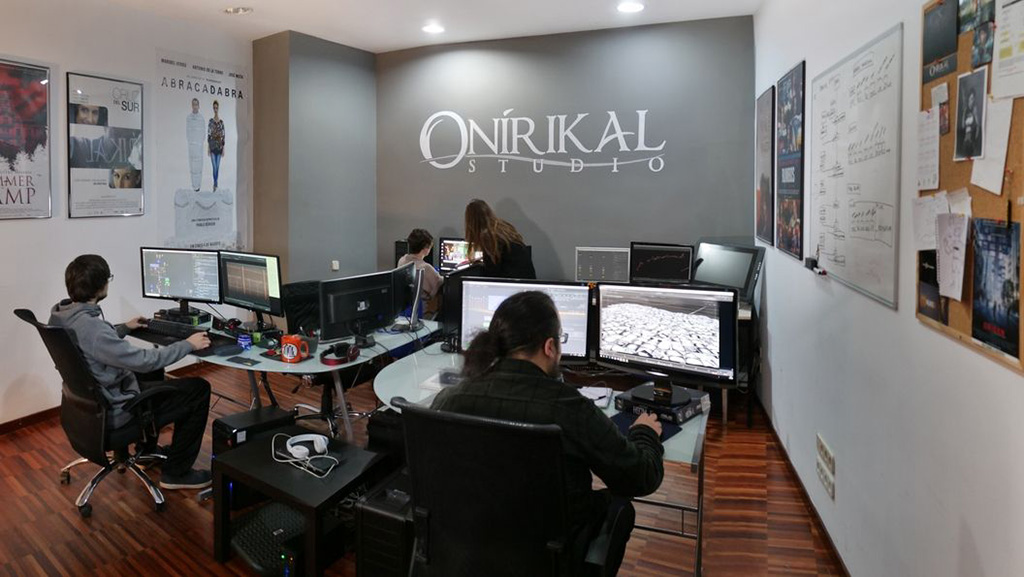
On paper, the decision to outsource These processes seem simple, but it all depends on each project. At the national level, unfortunately, most of the productions They don't allow you to make these types of decisions. These projects require their cost and you have to be very sure that you will be able to get everything right or you will not need new versions of each render.
I don't think it's the farms cloud those that have to lower their costs, but it is very important that the productions here understand what it is greater investment needed in the visual effects and post-production processes. The processes are increasingly slow, tedious and punctilious; They require a lot of time and effort.
In recent years, at Onirikal we have not had to resort to render farm external, but there have been projects in which at some point the option has been presented to us. The costs, the reduced investment in productions, the compatibility problems with the pipeline and even confidentiality contracts (or NDA) of the productions make difficult the implementation of processes that, even so, are reasonable from the point of view of the evolution of technology. However, they will come. Will we (industry, studios, production companies, cloud providers) be prepared when this transition is practically mandatory?
Jaume Campos
VFX Supervisor at Onirikal
Did you like this article?
Subscribe to our NEWSLETTER and you won't miss anything.
Related articles
 Andalusia consolidates itself as a destination for filming
 Generative artificial intelligence and copyright: can the art style be recreated?
 Virtual production vs. chroma: can only one remain?
 How can IP help overcome broadcast challenges?
 The industry can now present its “technical papers” for IBC 2023
 The Canon EOS R5 can now record in 8K ProRes RAW with the Atomos Ninja V+
 Albalá supplies new modular signal processing systems to Euskal Telebista
 Can the online experience surpass that of traditional television?
 Amberfin announces new driver for transcoding farms
 What is LTE? How the HD Ranger+ can identify interference in TV systems
 Processing, monitoring and correction of loudness with the new Axino de Miranda
 Totem Help: digital signage can also save lives
 Bmcoforum aims to demonstrate at IBC that multiplatform consumption can be more natural
 Final Destination 4: death in 3D… shot with the Sony F23 and F950