





Are we already living in the era of immersive audio?
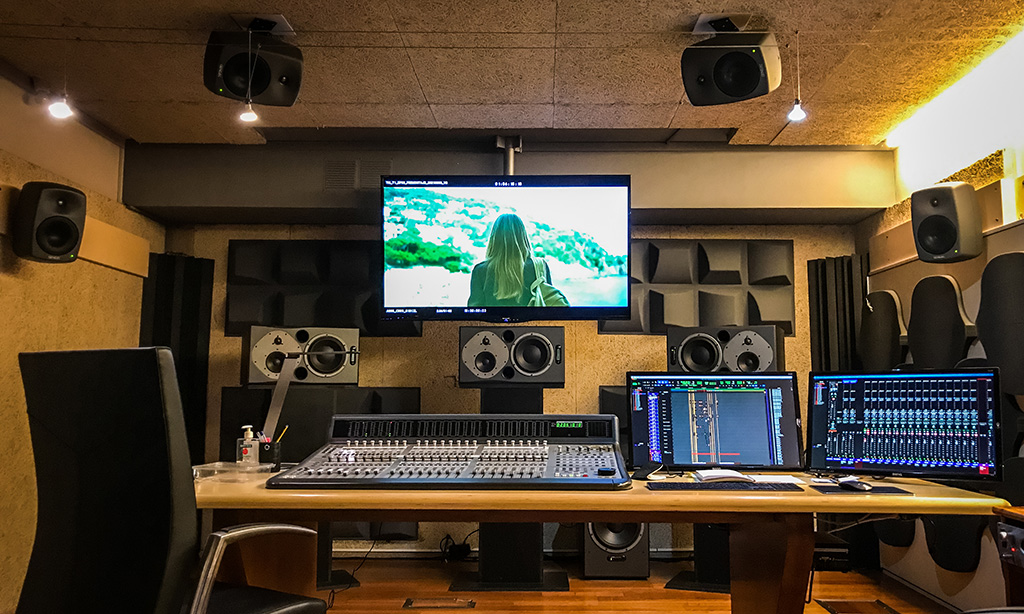

In this Tribune, Albert Manera, head of the sound post-production company The Chameleon Sound, analyzes the phenomenon of immersive audio in film, television and broadcast. To do this, it addresses such determining issues as the influence of OTT platforms or the standardization of the Dolby Atmos system.
El Camaleón was founded in 1993 because of my passion for sound, basically. The company began at a time when the computers in sound post-production. It changed everything! The days of the moviola are over, which had at most three or four tracks: dialogue, effects, music... It was a technological leap that has marked our entire career.
Since then, we have dedicated ourselves mainly to films. Of course, stereo existed, but we were still working on mono projects. I remember the case of Justin, a murderer of the third age, which we mixed into a single channel in 1994.
Later, as the years went by, this format was forgotten to give way to stereo and 5.1, which already gave us all the sides and a more enveloping sensation. Now, we produce everything with Dolby Atmos. It is not only the future, but also the present.
Immersive: a boost from platforms
Historically, very few producers have been interested in sound in Spain. What happens is that it is true that, when leaving the platforms streaming like Netflix, Amazon, Movistar Plus+ o HBO, there has been some interest in the sound having a certain quality. This has made producers interested in having better quality in their productions.
The plataforma de streaming, if you don't understand the dialogue or if the international band is not well done, they will return the project until it's perfect.
The demands of these platforms are very high. The originals made in Spain compete with international projects prepared for other countries that compete on the same platforms. This has made them increasingly open to having better budgets and putting more logistical resources in place so that we can do our job well, which has opened the door for us to try to do things better every day. In the end, the streaming platform, if it does not understand the dialogues or if the international band is not well done, will return the project to you until it is perfect.
This also extends to films that are released in theaters, since many of them have the participation of the platforms. To this day, I do the same type of sound design for a series than for a movie. The level of demand is the same.
 Dolby Atmos: world standard
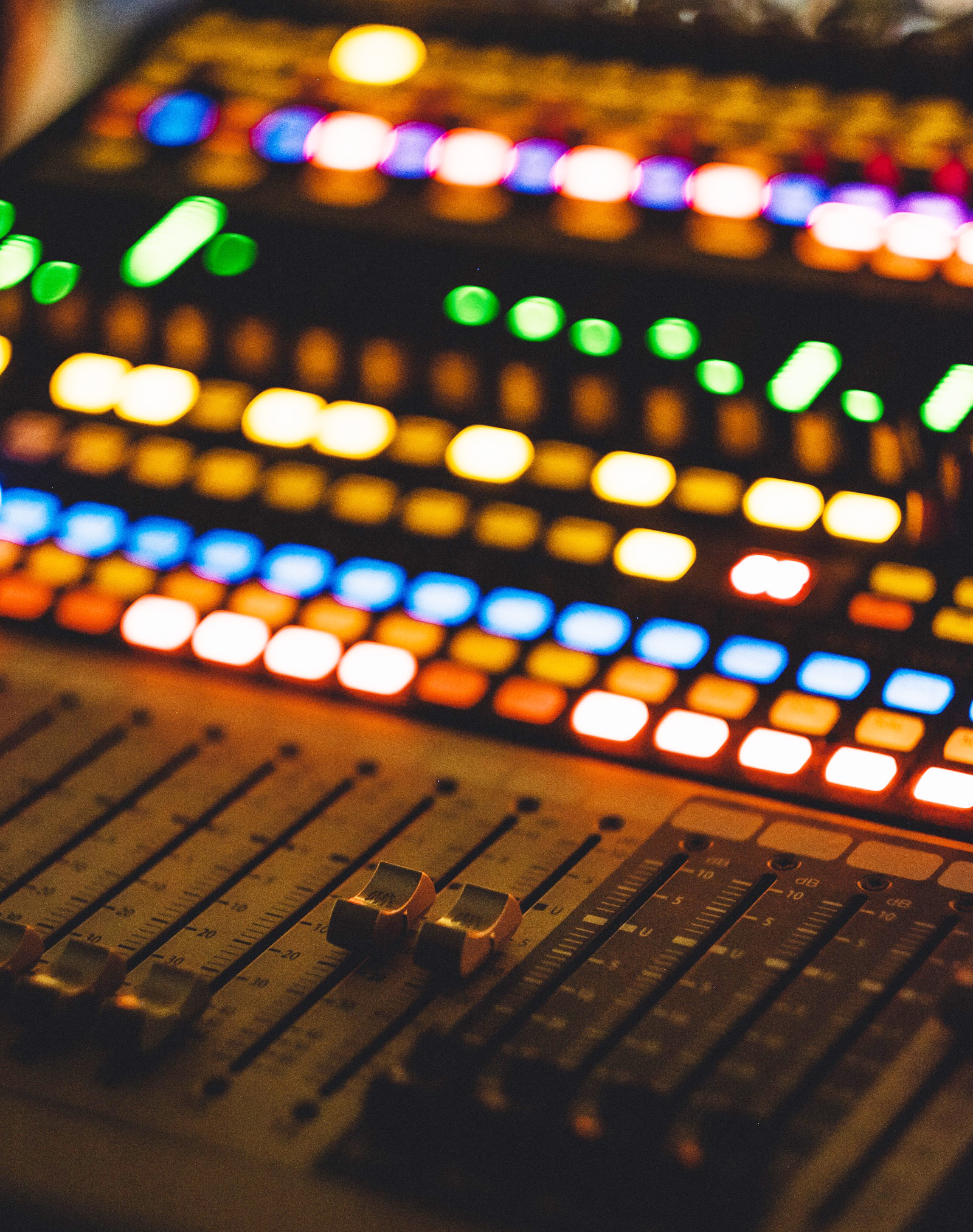
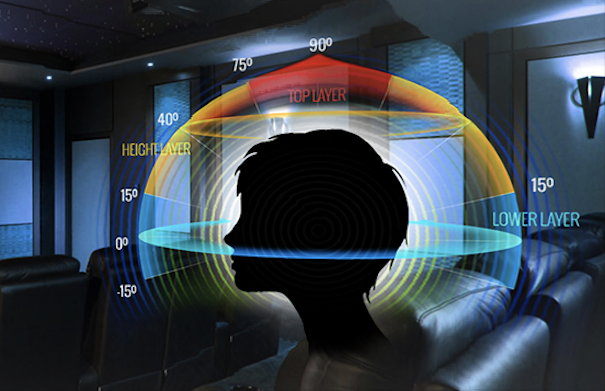
At Camaleón we have invested a lot in Dolby Atmos Home, the format most requested by both Netflix and Movistar Plus+, HBO, Amazon. In fact, we mixed Centaur, one of the first Netflix productions in Spain with Dolby Atmos.
All series are worked in Atmos, although the platforms also ask you for a reduction to 5.1 in the delivery of deliveries finals, as well as a selection of steams: mixes music dialogues and effects separately to make versions in each language.
Today, whether we like it or not, Dolby Atmos is becoming a global standard. I am not a big fan of exclusive things, since variety is the key, but the truth is that this is a brand that offers guarantees and the appropriate distribution channels. Furthermore, at El Camaleón we have the render the Dolby, a wonderful machine that has a very good logarithm that makes you reduce Atmos to 7.1, 5.1 or stereo. This process used to be very complicated, but now everything is semi-automated and is capable of managing phase, compressions...
The immersive in broadcast
Movies and series are definitely betting on immersion. Regarding television, I am one of those who thinks that everything is changing. My children consume audiovisuals, but they don't watch television: they watch YouTube, social networks... In this sense, everything is changing a lot, and changes will come quite quickly.
Nowadays people like to see images of one brutal quality. Why not with sound?
I don't know what will happen with linear television, and therefore I couldn't say if immersive will make it to a normal television program. But I do see the immersive system in sports programs. Dorna Sports, organizer of MotoGP, uses hundreds of microphones and is already working on immersive microphones, something we were able to learn since I was mixing the series MotoGP Unlimited for Amazon.
The arrival of immersive audio to these formats will not only bring an immersive channel, but a range of possibilities very big. The day will come when a broadcaster offers the possibility of only hearing the atmosphere of a football stadium in immersion, or can select the microphone of a specific curve to hear the sound of the motorcycle. Nowadays people like to see images of brutal quality. Why not with sound?
 Whoever tries it, stays with the immersive
A few months ago one of the producers of other, a series we are doing for Amazon Prime Video. He asked me: “But hey, Albert, why do you want to do Dolby Atmos”? So I picked it up, I put the iPods and the iPad in and his face said it all. He returned a few days later, and I already wanted everything in immersive.
It doesn't have to be an action movie to make immersive audio. Immersive provides cleaner dialogue, clearer effects and more complete environments. The viewer who consumes immersive content thanks to his sound bar or headphones will enjoy it. You get the viewer to enter that set of images and sound, and travel with it. I don't know anyone who has tried it and didn't like it.
It is not necessary let it be one action movie to make immersive audio. The immersive provides cleaner dialogues, clearer effects y more complete environments.
Frankly, we are already fully in the world of immersive audio. We professionals are pushing it a lot, and the platforms and producers are realizing that we have to provide the means, because the viewers appreciate it... and that is the point at which lies everything.
Of course: the Immersive audio is a plus. I always say that the sound of Apocalipsis Now It was shot with equipment from its era and still sounds great. What matters is the content and the passion you have for your work. But, even so, it is very clear to me that the immersive audio is now herein.
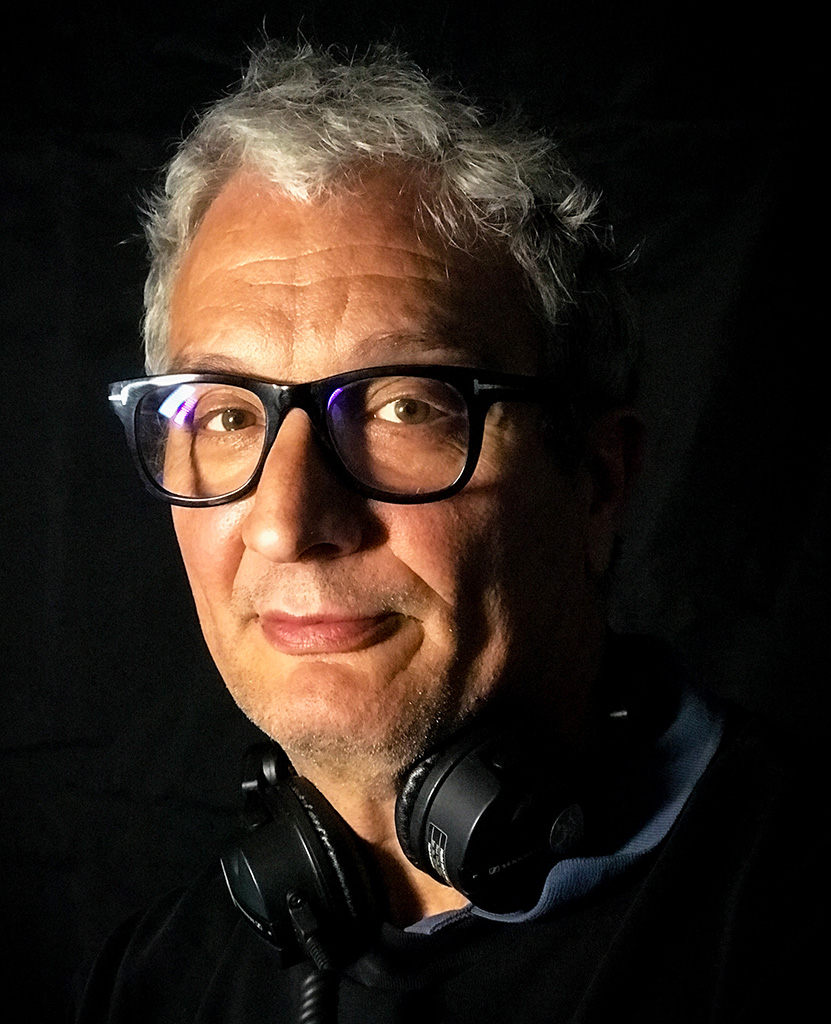
Albert Manera
Responsible for The Chameleon Sound
Did you like this article?
Subscribe to our NEWSLETTER and you won't miss anything.
Related articles
 Audio-Technica demonstrates the potential of immersive audio at IBC 2024
 Focusrite acquires Innovate Audio to make TiMax the benchmark for immersive audio
 Audio-Technica BP3600 microphone now compatible with SPAT Revolution immersive audio software
 Immersive audio pickup comes to NAB 2023 with Audio-Technica's BP3600
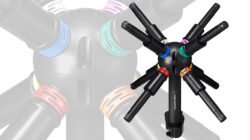 Audio-Technica presents the BP3600, an immersive audio microphone with eight modules
 OBS confirms 5.1.4 as immersive audio standard in the 4K HDR Summit
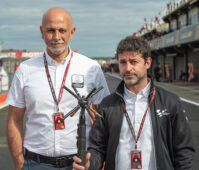 Dorna Sports bets on immersive audio in MotoGP with the 8.0 Concept microphones from Audio-Technica
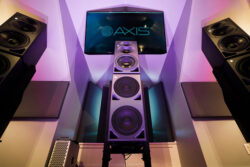 Axis Audio studios (Nashville) are committed to immersive audio with Neumann monitors
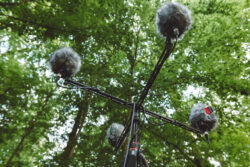 Sonosphere captures the sound of nature in immersive audio
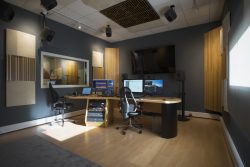 Audio Lisbon immerses itself in immersive audio with Genelec
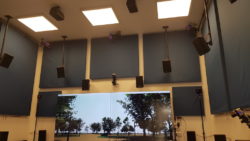 Martin Audio helps researchers at the University of Campania experiment with immersive audio
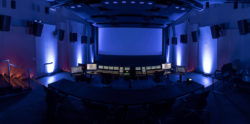 Nugen Audio makes immersive audio projects easy at IMN Creative
 Genelec and IDA Audio develop an interesting immersive audio experience
 Sennheiser unveils Ambeo 3D, its commitment to immersive audio