





Hangman Creates Collaborative Post-Production Flow with DaVinci for 'Life in Six Strings'
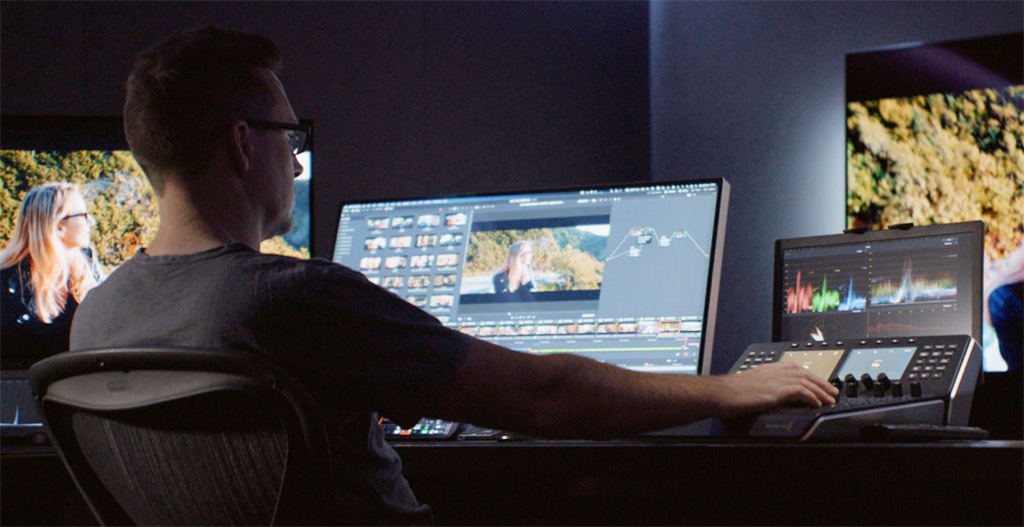
La serie documental de AXS ‘Life in Six Strings’ fue postproducida por el equipo de Hangman, el cual decidió establecer flujos colaborativos basados en el software DaVinci Resolve de Blackmagic Design.
En cada uno de los ocho episodios de Life in Six String, la periodista Kylie Olsson presenta entrevistas íntimas y espontáneas con guitarristas mundialmente famosos. El programa de conversaciones, que se desarrolla en las casas de los músicos o lugares de interés, presenta una apariencia casi cinematográfica que contradice es estilo improvisado de esta producción. Esto se debe en gran medida a la labor estética y de posproducción desempeñada por James Tonkin, fundador de la productora Hangman: “Me convocó la creadora de la serie (Olsson) para que me desempeñara como director de fotografía y supervisara la posproducción. Filmé los dos primeros episodios y definí el estilo y la estética de la serie, y también me encargué de todos los aspectos de la posproducción en Hangman, desde la recepción de los copiones hasta la entrega del producto final”.
The vision of Tonkin estuvo influenciada por la película A Star Is Born, por la que el director siente una gran afinidad, que lo condujo a utilizar un objetivo anamórfico y a captar tomas extensas valiéndose de un estabilizador, además de planos de recurso sosteniendo la cámara con la mano. La serie también presenta escenas personales que se desarrollan dentro de automóviles, las cuales se grabaron con cámaras montadas de una manera especial, de modo que no fuese preciso manipularlas. A su vez, el equipo de producción seguía al vehículo principal desde uno secundario: “Fue rápido y fluido, y filmamos todo en un mismo día. Kylie quería poder llegar de visita al hogar de los entrevistados y hablar con ellos. No había tiempo para modificar la iluminación en las casas. Tenía que salir todo a la perfección sin preparación previa, pero en la pantalla, debía lucir con una estética agradable y bien pensada”.
En la etapa de posproducción de la serie, Hangman decidió apostar por DaVinci Resolve Studio y Blackmagic Cloud, softwares permitieron a Hangman implementar un sistema de trabajo colaborativo, tanto en la edición, el etalonaje o la finalización del material, que se masterizó en resolución 4K y se entregó en definición HD: “Es sumamente sencillo. Basta con crear el proyecto, enviar un enlace a un editor y asegurarse de que tenga acceso a los copiones de menor resolución. Puede abrir el proyecto y efectivamente acceder a lo que yo veo (…) Al finalizar el proyecto, Leigh Brooks, el editor, me enviaba un archivo DRT bloqueado y el sonido en formato AAF. Teníamos un episodio de 22 minutos que podíamos conformar y comenzar a etalonar dentro de la hora de haber recibido el material”.
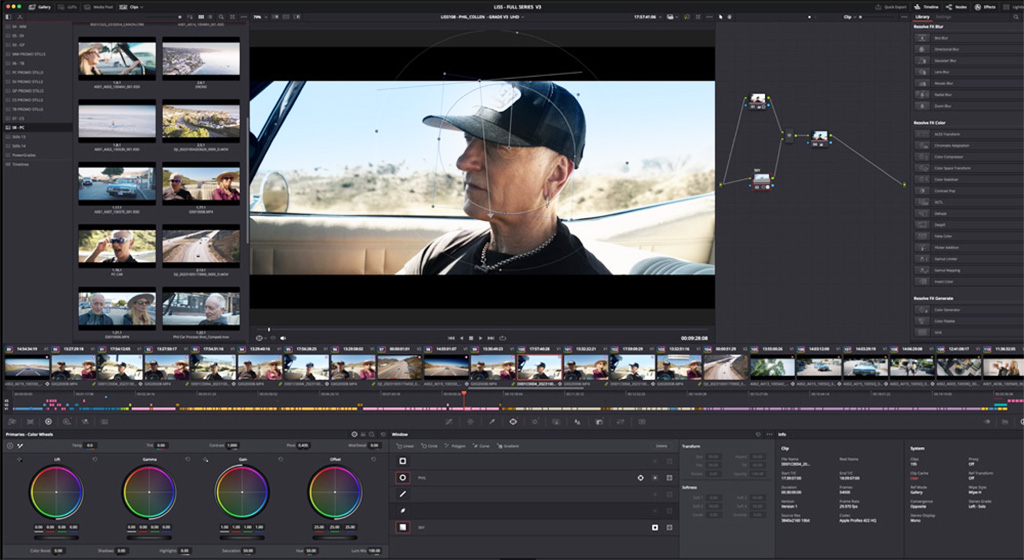
Exprimiendo las funciones de DaVinci Resolve
En las últimas etapas de la posproducción, Tonkin se concentró en el etalonaje, la estabilización, el ajuste de la relación de aspecto y la mejora de las imágenes, trabajando directamente con los archivos originales en resolución 6K y en formato RED R3D. Cualquier inconveniente, por ejemplo, la sobreexposición, se resolvió con la herramienta Magic Mask de DaVinci Resolve Studio: “En el último episodio, tuve que reemplazar el cielo, ya que hubo mucha pérdida de información en las tomas en el automóvil. Usé esta función para identificar y separar primero a la persona, y luego el cielo. Después, apliqué otro nodo para reemplazar este último. Esto me brindó la posibilidad de incorporar una tonalidad subyacente que normalmente quedaría muy brillante y haría que el cielo pareciera blanco”. Por otra parte, el responsable de Hangman añadió una capa de granulosidad para dar una apariencia analógica y cálida a las imágenes, que se condice con el tema de esta serie, la música.
Las herramientas de inteligencia artificial de DaVinci Resolve Studio también ofrecen una función de subtítulos automáticos que hizo que el proceso de posproducción fuese mucho más eficiente, en particular, dado que los episodios se caracterizan por el diálogo: “Cada episodio consiste en una conversación extensa. Sin embargo, las prestaciones de inteligencia artificial de Resolve permiten analizar y transcribir el material en tres o cuatro minutos. Lo miré una y otra vez con la intención de aplicar correcciones, pero, en mi opinión, tiene una precisión del 90 %. Anteriormente, cuando los canales exigían la entrega de subtítulos opcionales, instantáneamente debía dedicar a esa tarea tiempo que podría estar destinando a los aspectos creativos. Pero ahora que DaVinci Resolve puede hacer esto, solo me demora media hora más”.
Echando la vista atrás, Tonkin calcula que dedicó aproximadamente seis horas a la posproducción de cada episodio: “Primero, creaba una copia maestra en 4K, luego la exportaba en formato MXF y definición HD, lista para que fuese transmitida por AXS TV. Esa exportación, junto con el archivo de subtítulos y 14 componentes de audio en varias pistas, que se entregó a través de Media Shuttle, me llevó diez minutos. (…) Para la entrega del contenido, trabajamos con ASX TV, que son excelentes, pero también quiero darle crédito a Kylie, quien logró concretar el proyecto por sí misma. Tiene la capacidad de crear historias maravillosas a partir de las personas que entrevista. La elegancia que hemos podido dar a las imágenes en el etalonaje y la finalización han aumentado el valor de esta producción, pero el contenido es lo que más importa”.
https://youtu.be/_ZZMuFX_xw0
Did you like this article?
Subscribe to our NEWSLETTER and you won't miss anything.
Related articles
 DaVinci Resolve Studio grades, mixes audio and creates the final version of 'Adam Bol'
 Imago VFX grades and creates visual depth of the film 'The Damned' with DaVinci Resolve Studio
 Blackmagic cloud ecosystem allows RKM Studio to create a collaborative workflow for filming video clips
 The Look: Full transition to DaVinci for all your post-production projects
 Siggy Ferstl creates an 80s universe of humor and horror for 'Totally Killer' with DaVinci
 Hangman creates collaborative post-production workflow with DaVinci for ‘Life in Six Strings’
 Kauai Made Films post-produces ‘Too Much Life’ in its entirety with DaVinci
 Bull adopta un flujo de trabajo de postproducción en UHD con Blackmagic
 Terrible Producciones creates a sports streaming workflow with Blackmagic Design solutions
 VRT opts for DaVinci Resolve for post-production
 DaVinci Resolve 12: a tool for video post-production… very seriously
 DaVinci Resolve creates a very Shakespearean atmosphere in 'Macbeth'
 VSNExplorer crea el concepto de MAM descentralizado para optimizar el trabajo colaborativo
 Tedial da un paso de gigante hacia un flujo colaborativo único con su nueva plataforma MEP