





What should an LED screen aimed at virtual production be like?
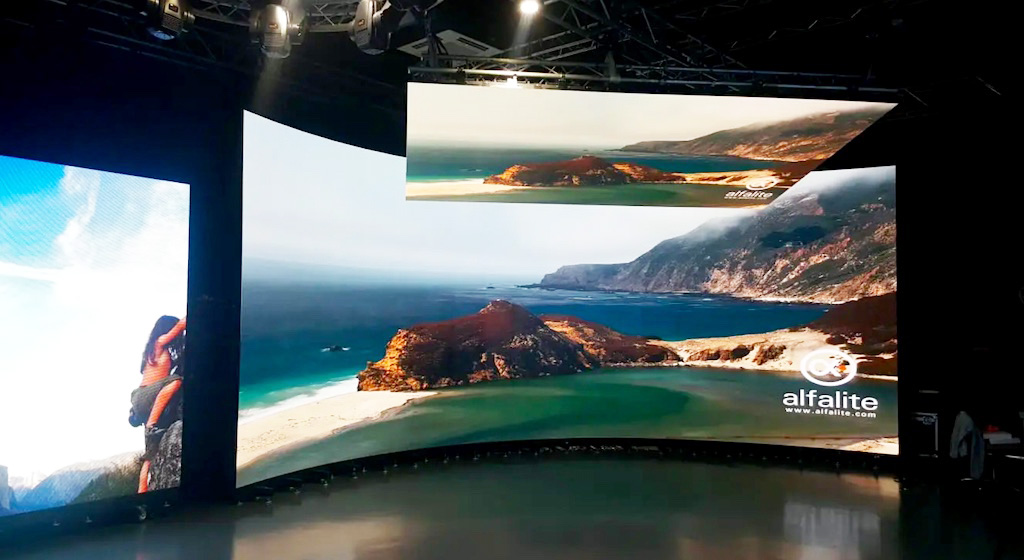

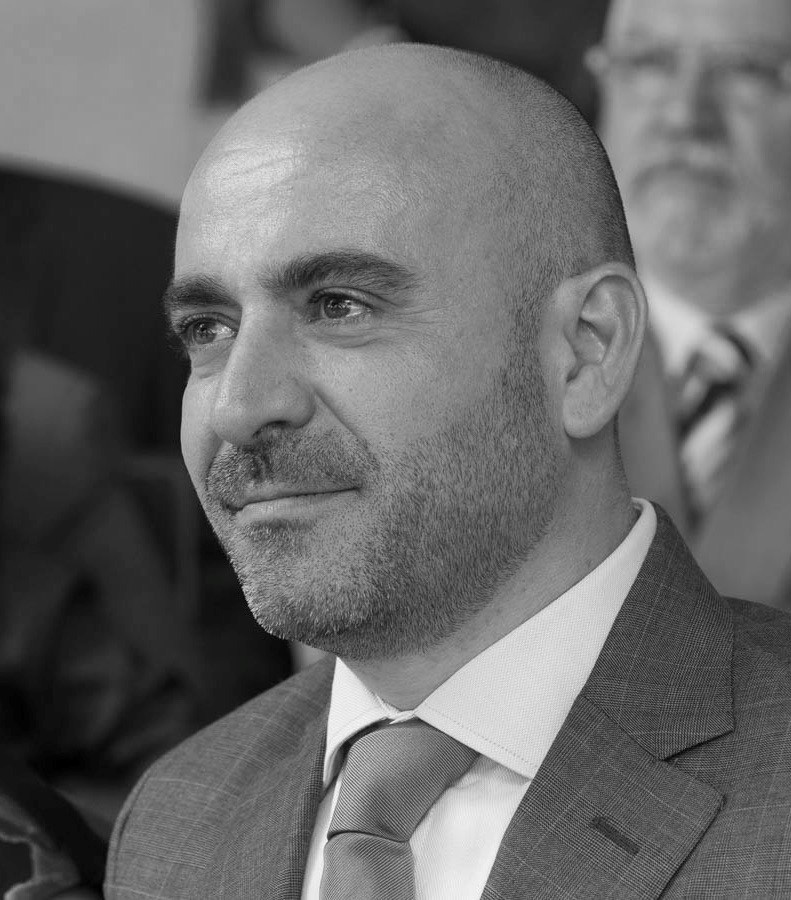
In this Tribune, Luis Garrido Fuentes, executive director of Alfalite, sheds light on the technological features that make an LED display suitable for XR Virtual Production environments, as well as warns about the possible risks that its buyers may face in the market.
We are going through a time in which more and more companies in the broadcast markets, fiction production, advertising, eSports, corporate and the educational one sees the virtual production as a tool to achieve your ambitious goals. However, it is necessary to emphasize that not only not everything goes, but you have to work on a very specific electronic and mechanical design.
Whatever the market to which virtual production technologies are directed, this environment is defined by having a intermediate camera and graphics generation system. These will be supported by graphic systems that release content in real time, which, in combination with tracking and synchronized tracking solutions, will allow cameras to take advantage of the advantages of virtual production. It will be at this moment when you can see with certainty the reliability of the purchased LED screens. And either they have an electronic design developed to offer an absolute reduction in unwanted artifacts such as the moire or the flickering, or the number of aberrations that will appear on camera will absolutely limit creativity of those responsible for broadcast production or directors of photography. These profiles should not be worried about technology, but rather about creativity.
Level mechanic, it is very important that a specific mechanical design be executed for virtual production environments. Most of the LED walls They are curved, and 99% of them are concave. It is necessary to have effective chassis and designs so that this curve is smooth and the angle made up of the straight panels that make up this particular one is not noticeable. polyhedral curve.
Critical pillars when choosing an LED screen for virtual and XR production
Added to the previously described elements are a series of specific characteristics of LED screens for virtual production environments. The brightness must be greater than 1,500 nits for the LED wall and 6,000 nits for the LED Ceiling and LED Totems. In this way, putting the screen to work at a shooting brightness of around 250-300 nits will help avoid some of the artifacts previously described. It is also necessary to have electronics designed to maintain the color temperature of the LED wall regardless of the fact that the brightness varies depending on the scene being filmed, just as it is essential to have a cable-free design to connect the different parts of the panel such as the power supply, hub PCB and modules. Systems must be manufactured with direct and redundant connections, thus eliminating points of failure to be able to offer a reliable product in an environment as demanding as a movie set.
It is critical that the LED screens have a electronic design very efficient and specific to achieve a practically absolute reduction of the moire.
Other keys for the LED world in XR Virtual Production environments are the need for the multilayer that covers the face of the LEDs to offer a high contrast level and pure blacks; be able to work with a color spectrum higher than 86% coverage of REC.2020; have a frame rate superior a 240 Hz; add one refresh rate greater than 7,680 Hz; operate with at least one sweep frequency of 1/16, or submit a low consumption, in which the average consumption per panel at 350 nits of brightness is not greater than 35W.
Beyond these characteristics, there are of critical elements to take into account when making the decision. The most fundamental is to have a electronic design very efficient and specific to achieve a practically absolute reduction of the moire, but a second key is related to the pixel pitch, which are frequently located in these environments between 1.5 and 2.6. In these environments a type of standard technology is used SMD (Surface-Mount Device), but there is a problem: by having a pixel pitch so small, all LEDs are very exposed in corners and sides of the panel, leaving them unprotected and potentially causing incidents in processes such as assembly and disassembly, or changes of props. We have patented a four-layer protection called ORIM (Optical Resine Injection Module): which enables great protection against shocks and liquids, optical properties that offer up to 175 degrees of viewing angle horizontally and vertically, while maintaining its colorimetry, image quality and brightness, also offering dissipation and protection properties against fire, as well as an effective and fast repair process.
Lies in the screen selection process
Paper supports everything. But the reality is that much of the data that defines market screens is all but exact. For example, if at a certain time a user needs a frequency ratio of 11,520 Hz, this will appear in its specifications. Another thing is that this specification is met.
Many times, it has been shown with reports that asian manufacturers they do not comply with those indicated specifications in the documentation, or even situations where it has been discovered that it does not They met CE certification.
Los asian manufacturers They understand business in a totally different way to us, who are a European manufacturer whose 17 years of experience make us more demanding than our own customers. This forces us to be the first interested in the existence of a Minimum law in terms of quality and reliability of the screens. In fact, when the client carries out the analysis of the LED technology that he is going to choose, we always encourage the client to test each of the bidders in audits carried out by independent consultants or laboratories. Many times, it has been demonstrated with reports that they do not meet those specifications indicated in the documentation, or even situations in which it has been discovered that they did not meet the CE certification. We are not talking about unknown manufacturers, but about first swords worldwide in terms of volume of square meters manufactured and sold, and that they are even listed on the stock market.
It is very important that the client defends himself and be aware of your rights. Si no, es posible que una inversión que de por sí es muy elevada se vuelva una auténtica tortura a causa de las incidencias y el bajo nivel de soporte, cobertura y mantenimiento. La tecnología LED en producciones virtuales y de XR ofrece todo tipo de posibilidades, pero es vital que los clientes, sean usuarios directos o empresas de alquiler, empleen todas las herramientas a su alcance para tener la certeza de que está realizando la adquisición correcta.
Luis Garrido Fuentes
Director ejecutivo de Alfalite
Did you like this article?
Subscribe to our NEWSLETTER and you won't miss anything.
Related articles
 Mundos Digitales 2025 opens its doors with virtual production as a programmatic axis
 Grup Mediapro's virtual production set in Barcelona debuts a 210 m2 LED screen
 Wuxi Studios: 44-meter LED screen and Brompton processing for “largest” virtual production set in China
 Sony offers new tools for virtual production both in pre-production and color management
 FOR-A promotes SOAR-A, a software-based line aimed at remote production, at IBC 2022
 Filming begins on 'Objetos', a Spanish-Argentine production directed by Jorge Dorado
 Production begins on ‘Operación Marea Negra’, an Amazon Exclusive miniseries directed by Daniel Calparsoro
 MR Factory relies on Blackmagic Design as the center of its 4K virtual production system
 Live production, playout and targeted advertising focus Imagine's presence in Las Vegas
 HBO Europe gives the green light to a new original production, '30 Coins', directed by Álex de la Iglesia
 Mariano Barroso: "cinema should not defeat television. And television should not defeat cinema..."
 The second screen as an inseparable part of the television experience
 Newtek Virtual Set Editor 2 or how to have a virtual set without breaking your head
 Epson EB-455Wi and EB-465i or how to turn any surface into an interactive screen