





Juan Carlos Tous (CEO of Filmin): “We want to dominate the windows and decide when a film is released”
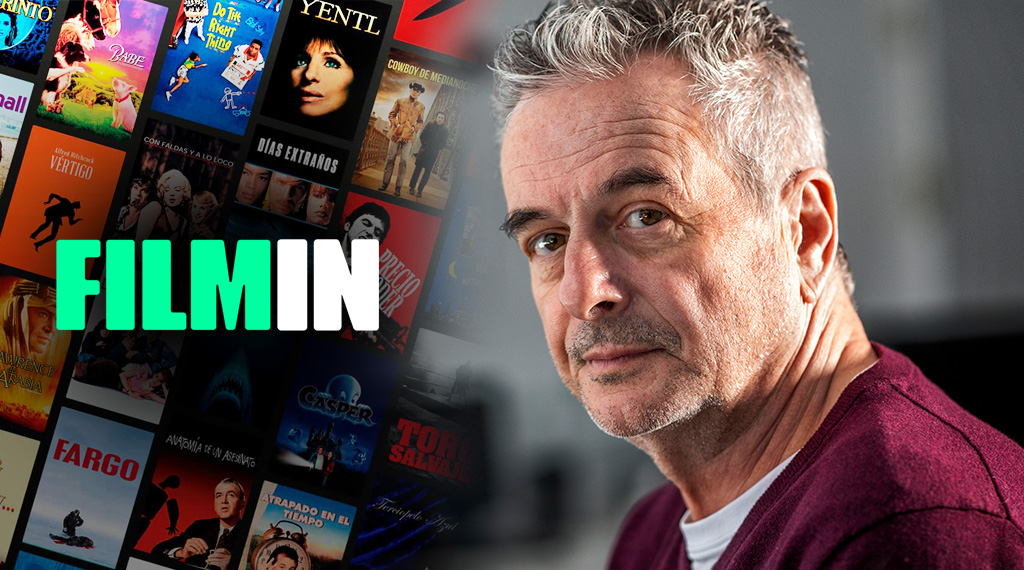

The news of of the movie and the audiovisual industry that surrounds it is addressed by Juan Carlos Tous, CEO of a platform that faces an industry saturated with alternatives, complex exhibition windows and a constant redefinition of strategies to continue attracting subscribers with a focus on independent cinema, the great classics of the seventh art, award-winning series and a growing in-house production.
Possibly, one of the differentiating elements of Filmin with the rest of the alternatives on the market is its editorialization. The company defends that, faced with a “market saturated with platforms” that try to “guess” what the viewer wants to see, its objective is to discover “the cinema that moves us” with a detailed selection of its catalogue. There are no algorithms that are valid in the catalogue, but rather a market knowledge and a type of public nonconformist and follower of a different audiovisual.
In 2006, Juan Carlos Tous (CEO), José Antonio de Luna (director) and Jaume Ripoll (editorial and development director), professionals from Sogecable and Cameo, They drew, perhaps prematurely for the audiovisual entertainment ecosystem, a video-on-demand platform that would allow them to watch movies via streaming from their homes. They encountered important drawbacks, such as the lack of maturity of the company itself. technology or the digital viewer. crisis, the company was forced to look for external financing. In fact, until 2017 it did not make profits.
Currently, the platform is in a sweet moment. Its catalog has gone from 300 films to more than 15.000; The company has strengthened ties with established telecommunications companies such as Vodafone y Orange, increasing its penetration in the state market; In 2023, its net profit has reached 1.5 million euros, although its record stands at the 2.5 million it reached during the pandemic, and it has been ranked as the best valued platform in the Spanish ecosystem, always according to data from the TV-OTT Barometer of Windward.
However, this moment of stability comes accompanied by new demands, a context hyperactive and unstable, and the objective of continuing to consolidate itself among Spanish and Portuguese film buffs. In this interview, All reviews the current status of the platform and allows you to know in detail the latest decisions that have accompanied a of the movie that vindicates, with more arguments than ever, its position in the VOD network.
Dominating a single market space
What is Filmin's position in the overcrowded market of video on demand platforms?
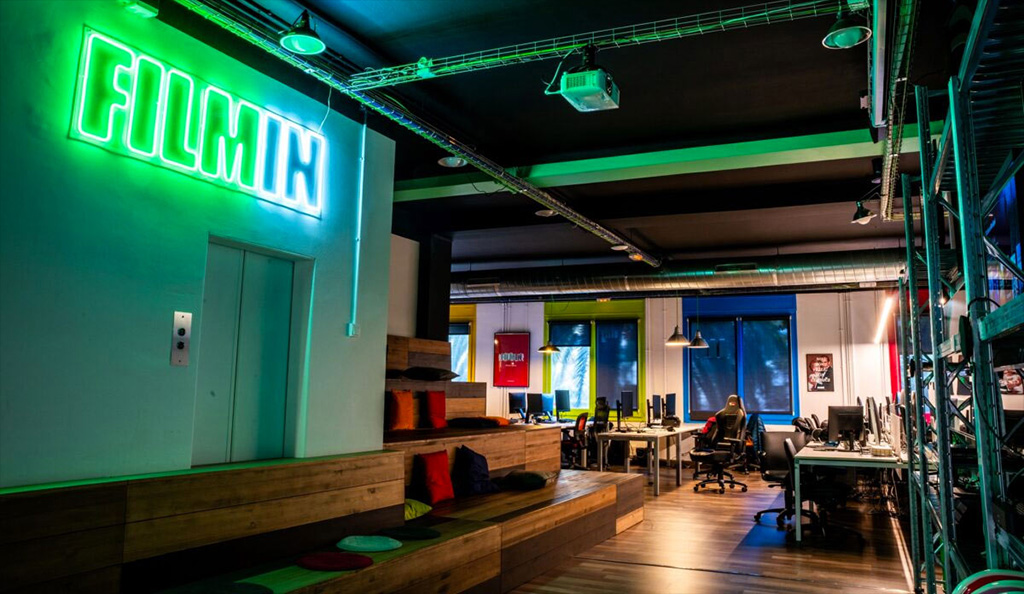
We could say that of the movie It is the small one in a market of giants; he chameleon inside a dinosaur worldurios, as my partner Jaume Ripoll says. We are located in a very competitive market, but in these years we have managed to create a unique and differentiated space that we dominate due to the content we present and the way we editorialize it. He cinema fan has been able to recognize this effort, which has allowed us to establish ourselves. I wouldn't say that we are competing against the monsters of the market, but we do compete in that space.
How would you define that market niche that, as you mention, Filmin dominates?
It is a market space that is not based on blockbuster nor in the continuous presentation of news available to subscribers. In it, we offer movies and series for our subscribers to discover, but also for review. We do not rely on the impact of large productions or the latest Hollywood releases, but in a very varied offering with classics and all types of productions of different genres and nationalities. This diversity generates a unique space in which many of our followers find what they are looking for.
“In these years, we have known how to create a unique space and differentiated we dominate for the content we present and the way of editorialize them. He cinema fan has known recognize this effort”.
At this time of redefining strategies, what actions is Filmin promoting to increase its audience?
We are always looking for new audiences, because we believe that we are not yet at the top of mind of all possible subscribers to VOD platforms. To do this, we try to detect content that we can offer them. For example, we have strategies like the one followed with The substance: we acquire the movie rights, always accompanied by others players of the market, as in this case Elástica.
We try to obtain this type of content so we can dominate the windows and be the ones let's decide when the movie is released, how long it will be and be able to have it on our platform for much longer than what a supplier can offer us, which is usually 12, 18 or 24 months. Since the film is ours for Spanish territory, we can decide on it. We want to have content of this type: that attracts people because they have also been a success in the cinema.
Does the volatility of subscribers on other platforms also extend to Filmin?
We have a very stable audience, given that the type of content we offer is not offered by the rest. There are many people who are fond of cinema who find in Filmin the answer they were looking for. It is true that there are nomadic subscribers that may be moving from one platform to another depending on a season or a premiere, but they also have a faithful platform to which they remain permanently subscribed. And many people decide, thanks to our content, that that platform is Filmin.

The union of cinema and platform, key for Filmin
Filmin shakes up its catalog with different actions such as the celebration of monographs, agreements with majors around film classics and collaborations with film festivals. What are the ways that are working best for the platform to achieve its objectives?
They work very well both exclusive premieres, like the catalog depth. We work to promote this diversity by working with the majors to offer the possibility of integrating some of its great blockbusters classics, but also offering filmographies of different directors or actors. Next, it is very important how we editorialize those productions based on what is happening around us. That immediacy is very interesting and being able to respond to something that is happening around us with our cinema.
On the other hand, we increasingly tend to interact from the platform with the public, a trend that is bringing us great joy: knowing how people approach commenting on a film, rating it or addressing us. All of this, along with the user experience, which we try to make better every day, is what is giving us success.
Independent production often requires the redefinition of distribution windows to balance theatrical exhibition and subsequent distribution. What is your vision in this regard?
We may have options, but who has the power of cinema is the showroom. They are the ones in charge and you have to adapt. If you want to release it in certain circuits, you have to accept that there are four months of exclusive window in theaters. Take it or leave it.
“What we annoys is when a film ends its life in theaters at two or three weeks and you have to wait to be able to release: there the momentum of the marketing and the launch communication”.
The only ones who can put pressure and perhaps manage to modify these timings They are the big distributors, those that have the blockbusters that attract the majority of the public that goes to the movies on a weekend. In fact, you see it: there are films from multinationals that may have a short release and become available on their platforms in just 40 or 60 days. The four month window is very difficult to break, and we are not going to avoid it even if the title is ours.
We are in the sixth week of The substance. Maybe now she's starting to get nominations and that puts her back in the viewer's spotlight. And, if it finally has awards, perhaps it will be relevant again, which will cause this exploitation in cinemas to continue. What annoys us is when a film ends its life in theaters after two or three weeks and you have to wait to be able to release: there the marketing and communication momentum of the launch is lost.
Does the response to this control by exhibition halls involve state regulation or a market agreement?
This cannot be regulated. It is something that has to manage it the market itself. Exhibitors and distributors have to see what the consumer demands and adapt to it.

The value of the original production
Filmin has been promoting original productions since 2015, but they have recently redoubled their commitment in this regard. What is behind this decision?
It's a question of financial muscle. We would very much like to be able to expand our production and be able to produce more than one series, a film or a documentary a year. The thing is, it's very expensive and we're not at that point yet. But we like it: we are film people, we enjoy the process and we believe that it differentiates us from the rest of the platforms.
In fact, that's what all the big ones do: try to have their own exclusive product so that you have to go to their platform. We have done several series like Doctor Portuondo (2021), Self defense (2022) o Selftape (2023), and being able to offer them to our subscribers on our platform for the next few years gives us value. Then we can afford market it with third parties.
“We don't mind having more or less hours of content. The important thing is fall in love with the project: what we are counting, how we are counting it, who is doing it and what quality is going to have.”
Have your productions offered a significant return to the platform, or has their value resided in issues of image and brand strength?
In the end, it is a calculation of many factors. On the one hand, it gives us a brand because people recognize our identity and supplies us with content. But it also offers us distinction: we have decided what series, what film or what documentary we are going to produce, and it will always be within what we believe is our language and offer. Is brand, content and relevance.
In 2023, he commented that Filmin was exploring short content (20 minutes) in response to consumer demand. Does Filmin have among its objectives to bet on content that responds to this market trend?
It doesn't have to. We have examples of everything, but keep in mind that we usually we do not produce directly, but rather we co-produce. They present us with projects and scripts from different people in the market and offer to accompany them on the production journey. We study them, but not depending on their duration. We don't mind having more or less hours of content. The important thing is fall in love with the project: what we are telling, how we are telling it, who is doing it and what quality it will have. The other is secondary.
Quality content with complex technical staging
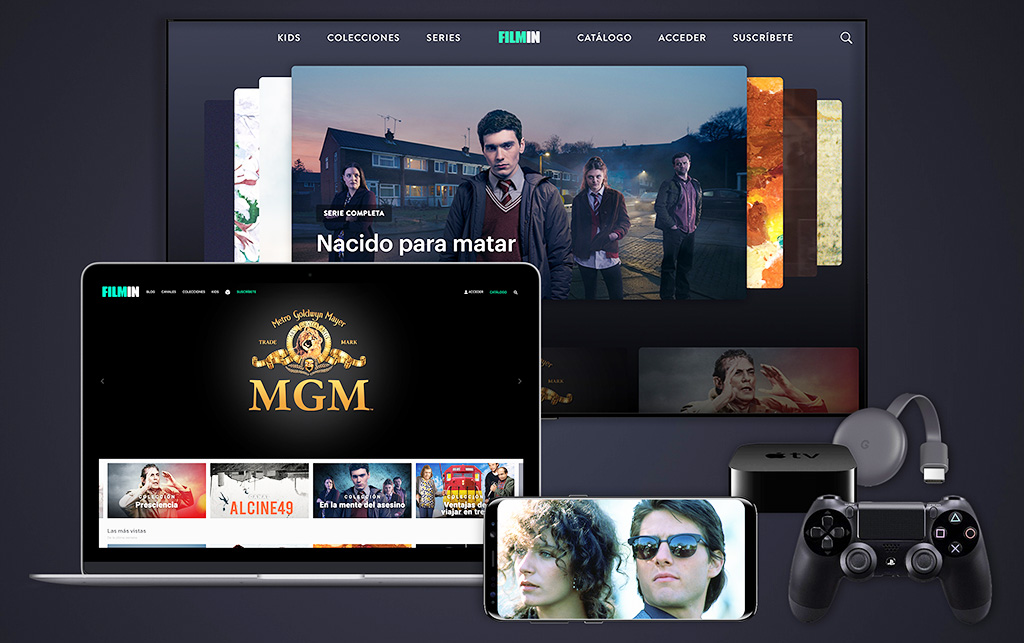
The platforms have decided to put technical elements such as resolution (HD or 4K) or HDR capabilities at the focus of the conversation. Is this universe a priority for Filmin? Are you working on improving the catalog to include more content with these characteristics?
It is something in demand, but people are also aware that, when you are talking about classic movies and series, the quality is what it is. It must be understood that the resolution of these productions will never be the same as that of a film that is new. Of course: in the news we do demand high definition or 4K.
"The resolution It is something in demand, but people are also conscious that when you're talking about classic movies and series, the quality is what it is”.
We try to offer most of our movies and series in high quality, but many times we cannot offer them because our supply is like that. In the end, we are using materials that the holder of the distribution rights provides us. But, in any case, it is important to us and we are interested in improving day by day.
Does Filmin prioritize offering content at low resolution or with limited audio and subtitling options, given its relevance or cultural importance, over homogenizing a higher audiovisual quality standard?
This issue is not only related to audiovisual sources, but also to rights issues. Now we are going to premiere the classic series moonlight, with Bruce Willis, and there is no version with Spanish dubbing. Some gentlemen had given their voice for certain years, these have ended, and the producers decided not to renew those contracts. It may be that by not offering it to Spanish, it ends up harming us, but this is a consequence of the world behind it at the level of rights. In the end, there are some contractual impediments that we must respect, but our commitment is to always offer the highest quality in the maximum content.
Improvement: the only way forward
We already covered the UX and UI of Filmin a few years ago in a report. How does the platform continue to improve these important areas?
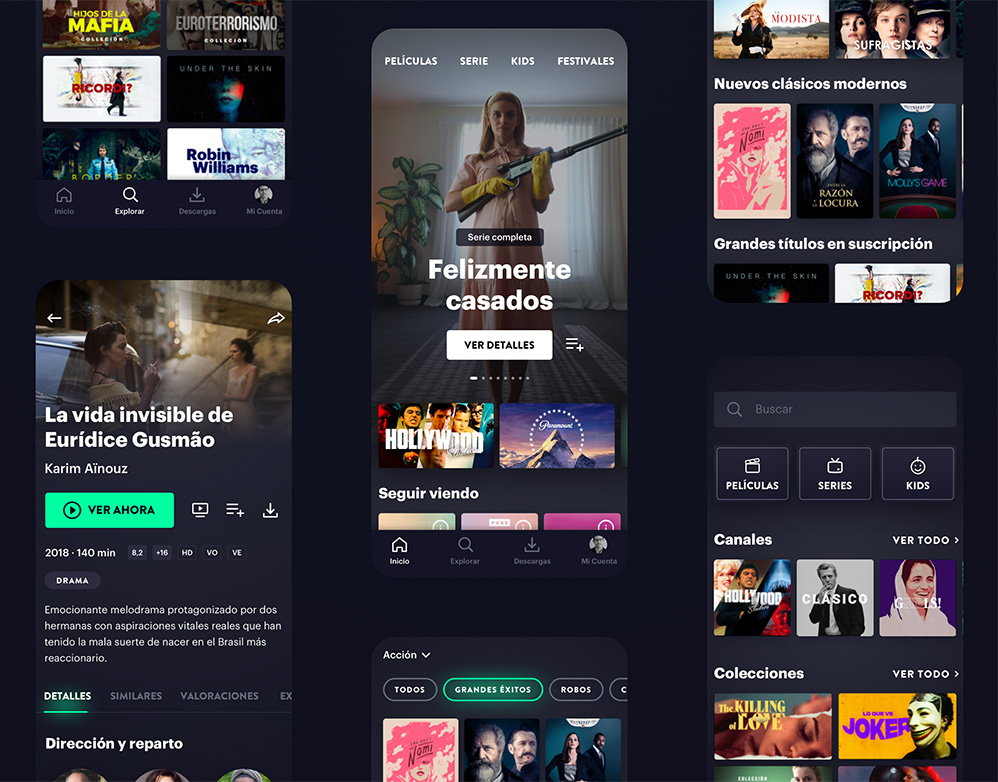
Our subscriber is the axis that moves everything at Filmin. Therefore, we try to ensure that your experience is constantly enriched. We conduct interviews with users and use systems that analyze their behavior, allowing us to discover how they interact and what is most relevant to them. Afterwards, we release improvements every week to our mobile, Smart TV and web applications to improve this experience.
“What most we are concerned is the how accompany our subscriber to discover content that can like and that they can continue to increase their fidelity a of the movie. And that's not something you can do with a uncomfortable platform o problems technicians”.
We are giving some very important qualitative leaps in recent years. We have a very robust application, which is easy to use and moves a lot of information: we not only upload the movie with its file, but we try to have it in different collections so that you can find it in different ways.
What worries us most is how accompany our subscriber to discover content that you may like and that may continue to increase your loyalty to Filmin. And that's not something you can do with an awkward platform or technical problems.
The television models of the large telecommunications companies are betting on functioning as platform super-aggregators. How does Filmin see itself in this type of proposals?
We are so much in Vodafone as in Orange, and we are interested in being part of these plans because they have their audience. There are people who access the platforms through their decoder both to watch television and to enjoy à la carte services. We want to be there, since we must be in all the places where a proposal like Filmin can be offered.
What are your goals for the year 2025? Is there any specific direction, technology or type of content that Filmin wants to focus on in the short term?
We point to a word: improve. We want to improve to attract new subscribers to whom we can teach what Filmin is and who, when they see the experience and discover our catalog, decide that we are the offer they needed. We have to fight to be part of that user's selection of platforms. We know that, both in Spain and in Portugal, where we operate now, we have a lot to grow, and we can only do that through improvement.
An interview by Sergio Julián Gómez
Did you like this article?
Subscribe to our NEWSLETTER and you won't miss anything.
Related articles
 The Rey Juan Carlos University awards TSA a virtual study
 Fujinon optics arrive on the TV sets of the Rey Juan Carlos University
 Telefónica Servicios Audiovisuales renews the studies at the Rey Juan Carlos University
 Audible premieres the sound documentary 'When we were afraid'
 Globomedia will premiere 'Oso' in San Sebastián, a film that reveals the universe of Tous
 Juan Carlos Tous (Filmin): “a great offer and an affordable price is the best way to combat piracy”
 Telecinco premieres 'El Rey', the first biopic about the figure of Juan Carlos I, produced together with Videomedia
 The Cuban “Juan of the Dead”, Goya for the best Ibero-American film
 Xpertia and the Rey Juan Carlos University sign a collaboration agreement
 The 3D documentary film 'Enxaneta' premieres in Paris
 'Insensibles', Juan Carlos Medina's debut film, begins filming
 Juan Carlos Fresnadillo begins filming 'Intruders'
 King Juan Carlos digitizes its video library with ISID and TSA
 Globomedia and Rey Juan Carlos present the seventh master's degree in creativity and TV scriptwriting