





Blood Incantation consolidates itself as a revelation band with 'The Stargate', video edited in DaVinci Resolve
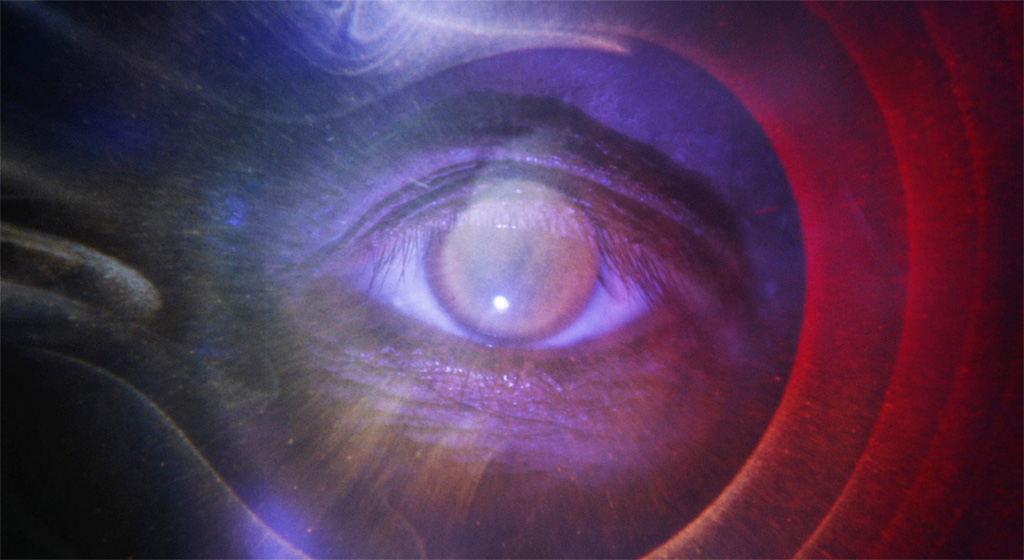
'The Stargate', a 20-minute video clip reminiscent of the great eighties productions that certifies Blood Incantation as a revelation band of the most extreme sounds, has been assembled and graded using DaVinci Resolve software from Blackmagic Design.
Plus one short film than a video clip, The Stargate tells the story of a mysterious object and its victims. Starting in the high middle age and traveling into the voids of deep space, mixes science fiction and folk horror con interdimensional travel and technology from other worlds. Michael Ragen, director and head of photography, was in charge of editing and applying the visual effects, while the colorist Belal Hibri He was in charge of the chromatic correction.
"This film is an exploration of portals, worlds beyond worlds, and places beyond time. Because it is so complex, I first put together all the song editing using text cards in Resolve. Just simple descriptions of what would happen in each shot. This was essential to staying on schedule and filming exactly what we needed with our limited resources and time," explains Ragen, who says that the production and post-production processes were closely united: “Once we started shooting, I alternated between filming and editing, working on visual effects and doing certain temporary color corrections.”
Ragen opted for DaVinci Resolve for functions such as the ability to enter the Color module at any time and make quick adjustments, allowing you to achieve the “right aesthetic” at all times. Also, if you felt stuck while editing, you could change focus easily. This allowed him to offer creative responses to the challenges of this piece: "In Fusion, I used the planar tracking tool to track a part of a face. Then, I used a second shot of that person and stabilized the movement of their head with that feature. Then I took elements of that shot and overlaid them on the first, transforming them into mutants with multiple features," he recalls.
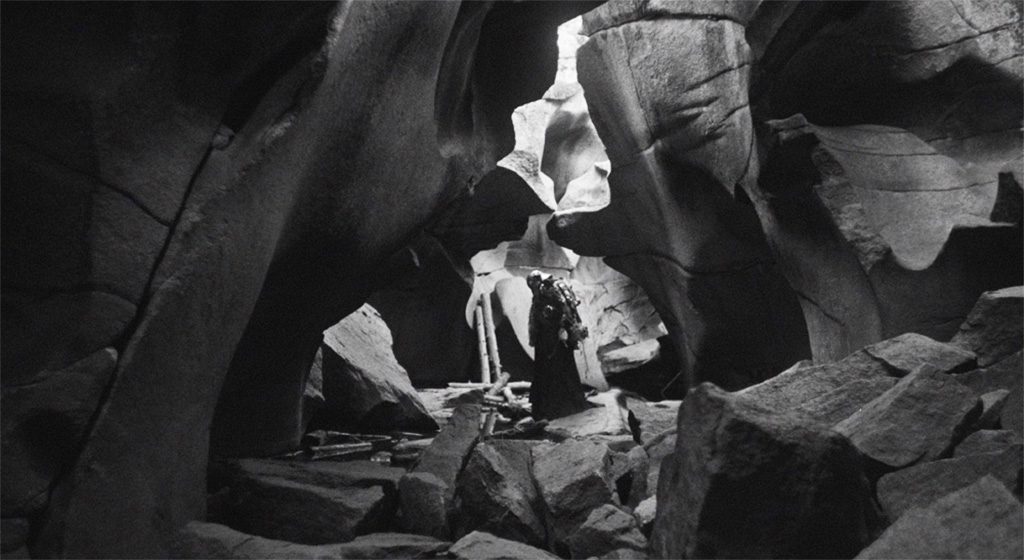
Visual effects, also in DaVinci
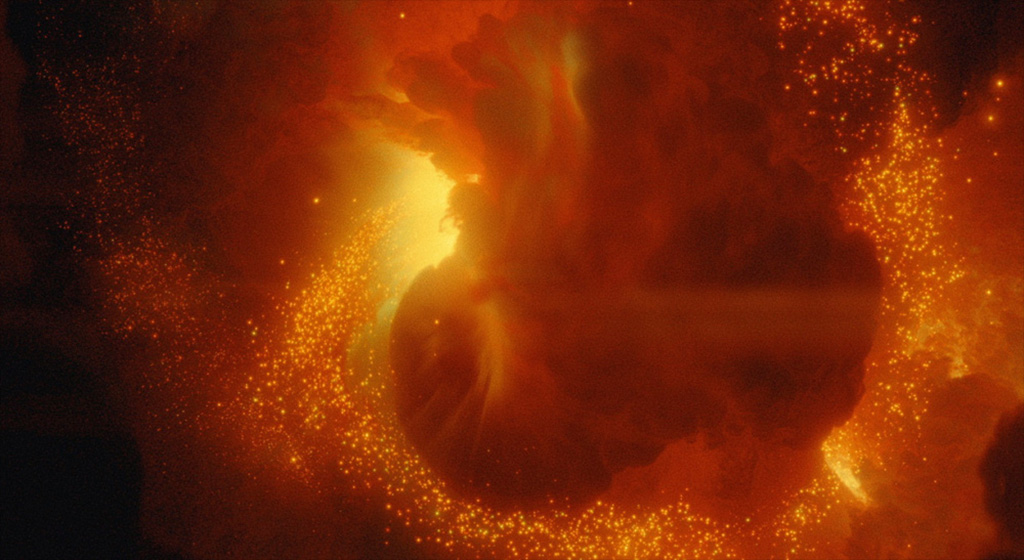
Las space shots of The Stargate they needed to combine traditional compositions con basic elements in 3D, such as fields of animated particles through which the camera moves. “All the natural elements in the space backgrounds were filmed on camera by Chris Parks, who is an expert in fluid effects and has worked on films such as The tree of life. I would capture multiple shots of him and stack or distort them to create a new background in Fusion. Then I added the ship as an EXR or PNG sequence with transparency. The ship itself was something I initially built as a practical mock-up. “I then scanned it in 3D and made additional adjustments with three-dimensional kitbashing in Unreal Engine.”
Some of the additional benefits essential to Ragen's job included the inspector of DaVinci Resolve Studio, with the stabilization function and the resynchronization tools: “In the Color module, I personally never really messed around with the nodes in the temporal chroma correction, but I did end up layering a lot of effects in there, like some of the distortion and notch tools, as well as analog damage.”
Creating the visual epic of Blood Incantation through color
According to the grader of The Stargate, Belal Hibri, Ragen was clear about the way in which structure the video clip: "I would describe it as a raw photochemical look, similar to what you might see in a low-budget 1970s sci-fi movie. This was in line with the analog methods used to record and mix the music, as well as the approach to visual effects. When we got to grading, I basically had to sculpt that look in a way that responded to the density and layers that can be heard in the recording. In addition to the color palette, we used graininess, brightness, halos, and flare in different intensities and styles in order to distinguish the various genres and tonalities of the tracks.”
This aesthetic, together with the theme of seventies science fiction, allowed Hibri to explore up to four types of film graininess, granting that retro feel which matches perfectly with his musical proposal: "Near the end of the video clip, the pilot loses control, and the music and editing become really frenetic. The scene mixes different types of material, from macro photography of Chris Parks to shots of bubbling fluids and shots of the band members melting as they enter the star. We worked a lot to make sure the sequence flowed and maintained the intensity of the moment. We had shots in which we mixed four types of digitized film grain to integrate them with the rest of the edit and keep the energy moving. There is an instance where everything comes together, and it is immensely rewarding when the sound and image synchronize perfectly.
“We were fortunate to work with a band that trusted us so much and gave us the creative freedom to carry out this vision, but at the same time was incredibly involved and collaborative throughout the process. The team we had was also amazing. It really felt like working with a group of friends on something fun, not like an obligation, as challenging as it was. It was a good reminder of what cinema can be when you feel that there is a common artistic goal,” concludes Ragen.
https://youtu.be/6N4rLtjPzH0
Did you like this article?
Subscribe to our NEWSLETTER and you won't miss anything.
Related articles
 Color (Grup Mediapro) consolidates DaVinci Resolve as an editing and grading solution
 The real 'Yellowstone' takes shape with DaVinci Resolve as an editing and grading platform
 DaVinci Resolve consolidates itself as the editing software of the global news agency AP
 From the set to the smartphone: HDR is consolidated as a quality standard in mobile video
 ‘I Am Celine Dion’ (Amazon Prime Video), edited by Goldcrest Post on DaVinci Resolve Studio
 The Goya 2023 confirm Alauda Ruiz de Azúa as revelation director for 'Cinco Lobitos'
 The music video for TikTok’s hit ‘Habit’ by Sekai No Owari was graded with DaVinci Resolve Studio
 SoKrispyMedia produces popular video with Blackmagic Cloud and DaVinci Resolve Studio 18
SoKrispyMedia produces popular video with Blackmagic Cloud and DaVinci Resolve Studio 18
SoKrispyMedia produces popular video with Blackmagic Cloud and DaVinci Resolve Studio 18
 Tones and I’s new music video, ‘Won’t Sleep’ edited and graded with DaVinci Resolve Studio
 After a year of existence, the Contraluz Room is consolidated as the pioneering space in HDR
 Oscar winner Claudio Miranda trusts DaVinci Resolve Studio and DaVinci Resolve Mini Panel from Blackmagic
 DaVinci Resolve 12: a tool for video post-production… very seriously
 DaVinci Resolve 11 and Blackmagic's Cinema Camera, present in 'Wolf Bite', the latest music video from Owl City