





The broadcast horizon passes through the multicloud universe
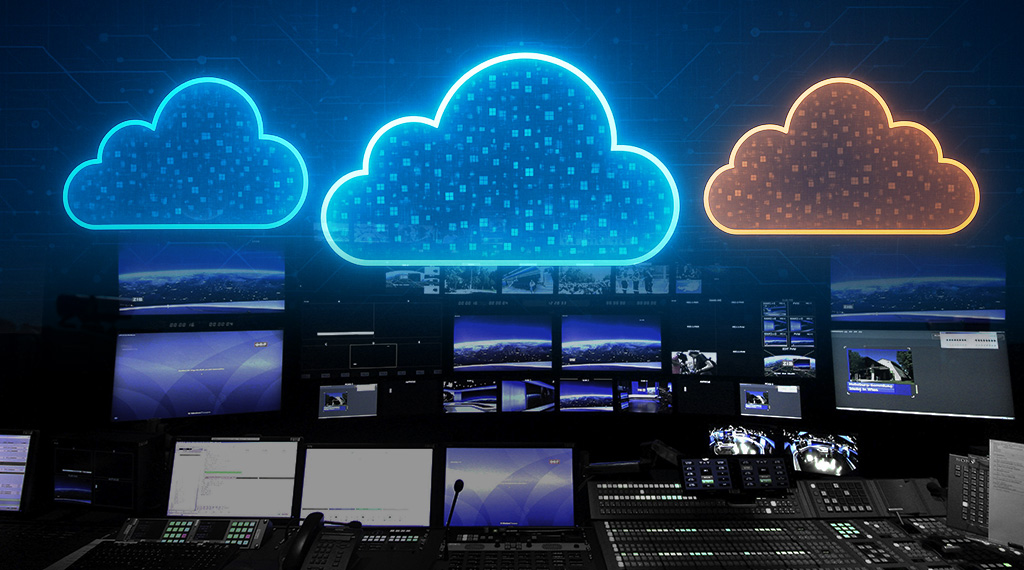

Jon Alexander, senior vice president of cloud technology and product manager at Akamai, analyzes in depth the opportunities of the cloud in broadcast environments, addressing its most pressing challenges and detailing how multicloud strategies allow us to draw an alternative with better performance, versatility and profitability.
First impressions are always more important than we think. The world does not usually forgive an unfavorable first impression, much less when it conditions the future of a complex machinery like the broadcast universe.
 Just as it is difficult to evangelize the benefits of UHD through the display of a mere 4K SDR from a upconversion of inherited material, the cloud environments were presented – perhaps too prematurely – to the Spanish and Latin American broadcast industry. However, for some time now, the panorama has changed.
The cloud has become more smart and profitable. Those prohibitive costs move away to receive new models who accompany the broadcaster in their projects, favoring the implementation of initiatives that we could hardly have imagined a few decades ago: cloud computing, remote AI processes, virtualization of mobile units or the displacement of production processes to the edge.
The cloud and hybrid environments They are already prepared to provide a viable alternative to the industry. However, there are barriers to overcome and strategies that should be rethought to offer the highest possible return on investment to users.

New ways to provide content to users
If there is a perspective from which the cloud is changing the way of understanding the workflow of agents in the audiovisual field, that is it. production and distribution of content with capabilities edge. These new needs, developed over the years, have driven the evolution of cloud services such as Akamai, a company that, among other things, has been dedicated to the content delivery and distribution.
"If you are a user, we will send the content to the points of consumption, ensuring access and protecting users. But we also help our clients produce the content, helping them manage the costs of the process and guaranteeing the quality they need."
“There is a need to offer a real-time content distribution, with low latency, and all this in a unified way. That was the vision we had for cloud computing,” he explains. Alexander, who tells how the company has gone from offering CDN services to move content to end users to becoming directly involved in the content production workflows: "If you are a user, we will send the content to the points of consumption, ensuring access and protecting users. But we also help our clients produce the content, helping them manage the costs of the process and guaranteeing the quality they need."
To offer this type of services, users need cloud solutions compatible with your workflows. Sometimes, vendors have unique workflow alternatives that don't suit broadcasters' particular needs. And, as a result, large resources end up being diverted to adapt to a concrete cloud, instead of squeezing its potential from the initial phases.
“We are becoming more deeply involved in production workflows, but a decision we have made at Akamai since we launched our cloud computing unit five years ago is that we would not build these capabilities ourselves, but instead would enter into partnerships with the best technology providers.”
Akamai, as Alexander explains, designed its cloud strategy thinking about offering different alternatives to different needs. To do this, step by step it has created a careful network of partners that give decision-making power to users: “We are becoming more deeply involved in production workflows, but a decision we made at Akamai since we launched our cloud computing unit five years ago is that we would not build these capabilities ourselves, but rather we would close alliances with the best technology providers, who could use our platform.”
"We work with all these agents to ensure that all the services they integrate work well and that, when scaling, they continue to offer low latency and high quality in a secure way. But, in the end, it will be the user who chooses between solutions that we carefully choose," highlights the company's head of cloud technology.
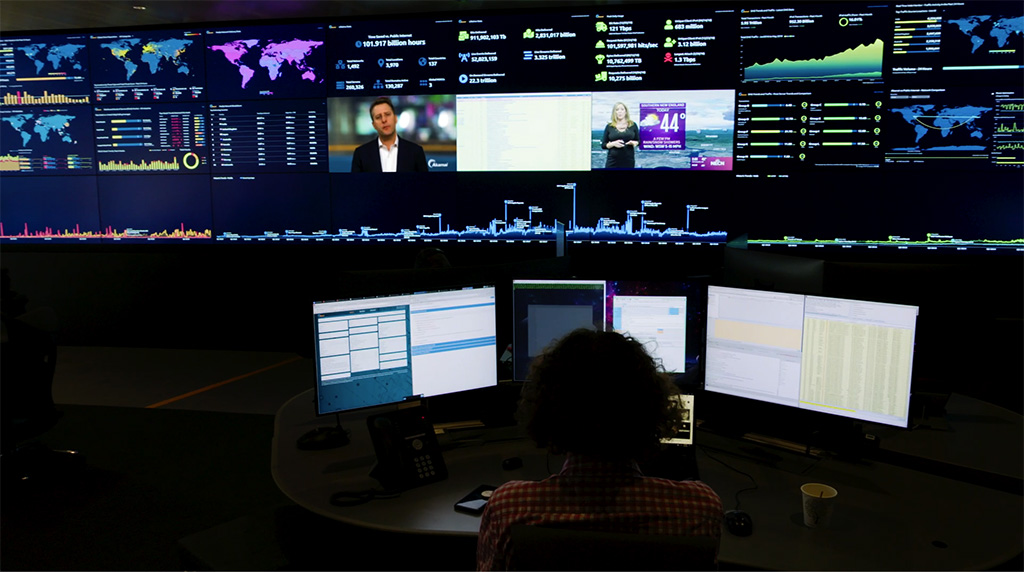
Cost: a barrier that can be overcome with smart alternatives
Today, a vast majority of content is “produces, manages and distributes” from the cloud, consolidating itself as agents in the broadcast field, the most prominent names in streaming and, in general, any type of company whose workflows involve the audiovisual field. This has been helped, according to Alexander, by the choice to deploy the cloud in a way that is closest to their real needs, which multiplies the opportunities in the day-to-day market.
The consolidation of these opportunities and advantages of solid and deeply established processes faces the greatest challenge facing the industry today: deployment and operation costs. "The cloud can be very expensive. And this is one of the challenges that users are facing the most at the moment and why they continue to contact us for help," explains Alexander.
"The cloud can be very expensive. And this is one of the challenges that users are facing the most right now and why they continue to contact us for help."
According to the head of Akamai, today it is “very easy” to start operating in these environments. It is not necessary to make large investments in machinery in advance, but it is simply necessary to pay for use. The most frequent problem appears when users begin to take advantage of the true potential of these services, which drives costs up to “astronomical” levels.
"Regardless of the provider, almost all of our users tell us that the biggest cost they have in their budgets corresponds to the cloud. They find big problems in the way of managing costs, which is leading them to explore options that help them manage them. In short, the consumption model is great, it is very flexible. You can change things very quickly. You can experiment. But the challenge is the costs," explains Alexander.
 To address this issue, which will be delimited in the field of cloud computing by variables such as type of services, duration of use and specific workloads, users can opt for models that go beyond the pay-as-you-go. For example, Akamai offers alternatives such as hourly billing with a monthly limit, which provides predictability to total costs; IaaS (Infrastructure as a Service), which allows you to securely manage the deployment of virtual machines and other infrastructure components, or even a bidding model for unused infrastructure, a process especially useful for non-critical tasks.
However, there is an alternative path that allows you to take full advantage of the potential of the cloud without being limited by closed service portfolios or limited and restrictive billing models. A model that more and more service providers are turning to and that could be key to responding to the growing needs of audiovisual ecosystems: the multicloud world.

The opportunities of multicloud strategies
Whether due to factors as simple as “laziness”, the “convenience” of deployment or “ties” linked to business models, it is common to see how different market agents end up linked in exclusive to different services operating from the same cloud. The benefits of this approach, such as a single, more homogeneous integration or unified billing, can end up generating high operating costs, as well as limited performance in certain facets.
“We are really good in some segments, like our cost of egress (export), which is 80% or 90% cheaper than the average depending on the region. But there are other parts that other companies can be good at. Having that hybrid or multicloud solution is a very effective strategy that must be taken into account.”
"It is necessary to address each of the services individually. To do this, users They should try to choose the right service from the right cloud. Not all clouds adapt to each service," explains Alexander, underlining that these benefits can be materialized in economic and operational advantages. "We are really good in some segments, such as our cost of egress (export), which is 80% or 90% cheaper than the average depending on the region. But there are other parts that other companies can be good at. Having that hybrid or multicloud solution is a very effective strategy that must be taken into account," he explains. For Alexander, this will be one of the big trends that will mark the future of the broadcast field.
Users, increasingly, will demand “choice, portability and flexibility” when selecting which cloud service they deploy.
Users, increasingly, will demand “choice, portability and flexibility"when selecting which cloud service they deploy, and they will be supported in this process in the short term through the decisions that will be promulgated by regulators in different markets around the world, who tend to consider that users are forced to depend on a single provider, which greatly increases their costs. "It is a good thing for Akamai, but having that ability to choose will also benefit the industry and broadcasters," explains the head of the cloud area.
The management of multicloud broadcast infrastructures or processes, far from what it might seem, has established processes y work groups who are actively working to facilitate a convergence that will inevitably take place, driven by manufacturers, regulators and, above all, the drive of the industry itself. Today, the CNFC (Cloud Native Computing Foundation), promoted by the Linux Foundation, has developed dozens of processes what facilitate convergence between the different suppliers.

Innovation (and AI) goes through the cloud
The strategy of multicloud deployment of broadcasters, production companies, platforms and media owners will occur in parallel to the emergence and consolidation of AI applied to all types of processes. Today, users are already actively searching for suitable partners for this type of processes. Flexibility, scalability and cost-effectiveness will once again be the key pillars in making the decision: "The broadcast industry is trying to figure out the right places to use AI. It has already been used in processes such as subtitling, scene detection and metadata, but the industry is experimenting with how it could help build the next generation of experiences," explains Alexander.
Terms like agentic website, las interactive user interfaces, the content customization oh go conversational assistants will require a large capacity of resources delocalized and supplied through cloud environments to enable a transversal and massive vision that is difficult to achieve in deployments on-premises. And, of course, all conducted with different processes of cybersecurity that help enable secure access to content and made available to users without the growing threats of piracy putting the security of the content and the availability of the services in check.
Las immovable structures current ones must give way to a greater flexibility y choice for users, who will be able to decide which service to implement, from which cloud to run it, and which managed services to take advantage of.
However, this vision for the future, which according to Jon Alexander will be a reality in just five years, cannot be carried out without a redefinition of cloud models. The current immovable structures must give way to a greater flexibility y choice for users, who will be able to decide which service to implement, from which cloud to run it, and which managed services to take advantage of, to make their goals a reality without compromising their budget balance.
The new cloud, or multinube, is closer than ever. And, this time yes, it comes to give a realistic response to user needs.
Did you like this article?
Subscribe to our NEWSLETTER and you won't miss anything.
Related articles
 'Caster' brings the reality of the broadcast universe to fiction series with Blackmagic
 Audinate: interoperability between the broadcast and AV universe, at IBC 2025
 Adam Hall: 50 years of history with big changes on the horizon
 The evolution of DTT towards UHD: a day of unity with great challenges on the horizon
 The broadcast industry focuses on NAB 2025 with dozens of new features and uncertainty on the horizon
 Behind the scenes of Mira! Broadcast, the Madrid production company specialized in the eSports universe
 NAB 2024: focus on AI in the broadcast universe with more than 120 conferences
 TikTok, audiovisual and broadcast: a guide to a new universe
 Harmonic expands the horizon of live video
 RTVE and Brainstorm participate in the Visualmedia project of the European Horizon 2020 program
 RTVE and Brainstorm participate in the EU Research and Innovation Program Horizon 2020
 Carmen Vela, Secretary of State for R&D&I, explains the European Horizon 20/20 program in Santander
 Connected television, a new horizon for animation and video games
 Gloway Broadcast Services passes into the hands of Telefónica Servicios Audiovisuales