





'Caster' brings the reality of the broadcast universe to fiction series with Blackmagic
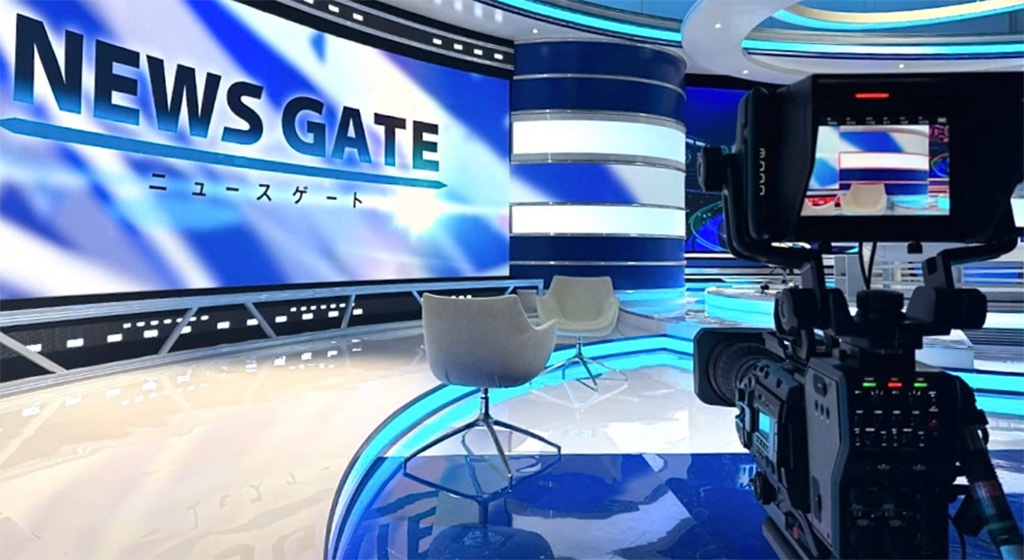
Tokyo Broadcasting System (TBS) employs a selection of cameras Blackmagic Design, as well as the DaVinci Resolve Studio software, to shape the series 'Caster', a drama set in the world of television journalism.
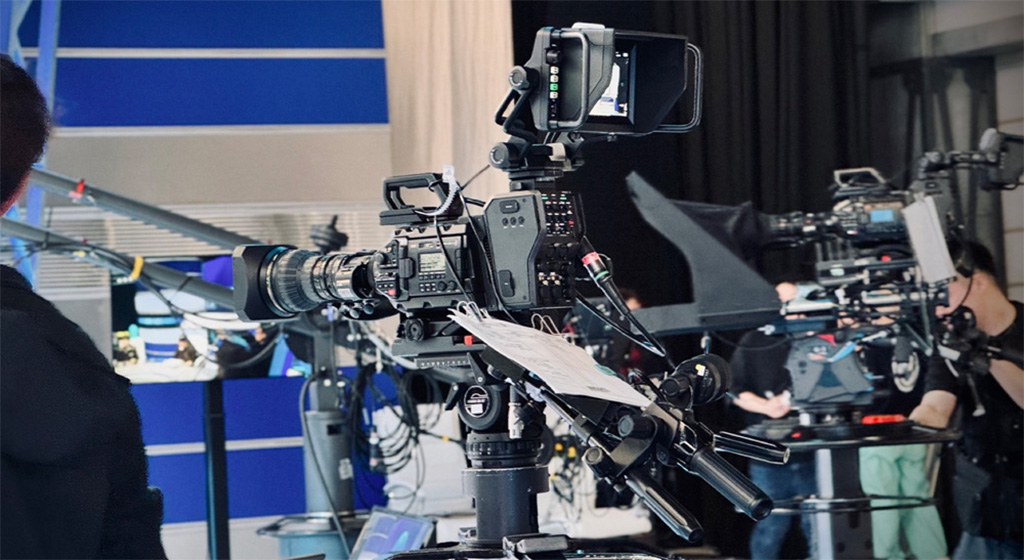
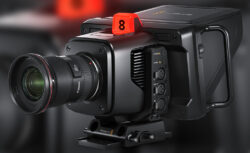
Starring Hiroshi Abe, Mei Nagano and Shunsuke Michieda, Caster reflects real social problems through a fictional narrative. In addition to the Blackmagic Design cameras, which include the Blackmagic URSA Broadcast G2 o to Studio Camera 6K Pro, in the study of the fictional newsreel News Gate were used as devices Blackmagic Focus Demand y Blackmagic Zoom Demand, the viewers Blackmagic URSA Studio Viewfinder G2 y Blackmagic URSA Cine EVF, in addition to the handle Blackmagic URSA Cine Handle. On the other hand, among the equipment used by production there is a mixer ATEM SDI Pro ISO, a device ATEM Camera Control Panel and the converters Blackmagic Camera Fiber Converter y Blackmagic Studio Fiber Converter.
Junichi Kobayashi, who was the director of production and the camera crew on TBS ACT, in addition to being in charge of supervising the filming, explains what it was like to shape this particular set: "We wanted the recording studio of the program within the series to have a slightly futuristic look, so we were looking for cameras that had a look in line with that environment, so we chose the URSA Broadcast G2 and Studio Camera 6K Pro models. Additionally, we used a Pyxis 6K unit as an outdoor camera. Although we used the Pyxis mainly as a piece of props, the studio cameras were in fact used to capture the images that appear in the news of the series.”
The choice of the URSA Broadcast G2 allowed Tokyo Broadcasting System to alternate its use as ENG and studio camera “just by changing the adapter.” Furthermore, as explained Yuki Okita, who is also part of the camera team of Caster, this Blackmagic camera integration process was very “simple”: “For this shoot, we used the Camera Fiber Converter and Studio Fiber Converter, which allowed us to transmit signals such as pilot lights over a single cable; this made installing the equipment incredibly simple.”
Post-production with DaVinci Resolve
To maximize efficiency during post-production, they applied tablas de conversión (LUT) en el estudio y se hizo la grabación de manera externa. La edición definitiva se llevó a cabo en DaVinci Resolve Studio, con los editores Yuya Monden y Tatsuro Kai (TBS ACT), a cargo de la posproducción. Aunque ya habían utilizado el programa para etalonar y hacer ajustes cosméticos, era la primera vez que usaban esta herramienta para realizar la edición completa.
La experiencia, según Monden, was very positive: "With other programs, certain tasks such as applying touch-ups to the skin often take a long time to render, but DaVinci Resolve processed it very efficiently, which significantly reduced the overall process time. For example, when one of the actors' eyes looked reddish, I used the Power Window function to isolate that area and adjust the color to a blue tone, neutralizing the redness. We did many equally thorough tasks, but overall the editing took less time than normal. The ability to test and reproduce the images immediately without having to render them was also very useful.”
"I also repaired shots that contained bad pixels and replaced photos. For a scene where a crew member's reflection could be seen in a window, I copied part of a building that appeared in the same shot and pasted that section over the reflection to cover it. Fusion's tracking tool is very accurate, so I used it to stabilize the images. We didn't do full color grading, but when we needed to apply subtle chromatic adjustments to some shots, we used a device DaVinci Resolve Mini Panel that allowed us to make quick and precise changes,” he adds. Kai.
https://youtu.be/KgPsrLUS230
Did you like this article?
Subscribe to our NEWSLETTER and you won't miss anything.
Related articles
 The broadcast horizon passes through the multicloud universe
 Audinate: interoperability between the broadcast and AV universe, at IBC 2025
 Behind the scenes of Mira! Broadcast, the Madrid production company specialized in the eSports universe
 NAB 2024: focus on AI in the broadcast universe with more than 120 conferences
 wTVision's augmented reality brings Formula 1 drivers to the Sport TV set
 Blackmagic brings the EF mount and a 6K sensor to its new Studio Camera 6K Pro broadcast camera
 Videoreport Canarias brings Pixotope's augmented reality to Televisión Canaria
 Filming begins on “Oliver's Universe”, Alexis Morante's first fiction film
 Samsung brings virtual reality to the Sitges Festival for the second year
 Disability in fiction series
 TVE will broadcast two new fiction series in 2015
 Yamaha carries out one of the most important updates to its CL Series digital consoles
 Christie brings virtual reality to the university
 Fiction series production course at EMediaLab