





Personalization will mark the future of audiovisual content
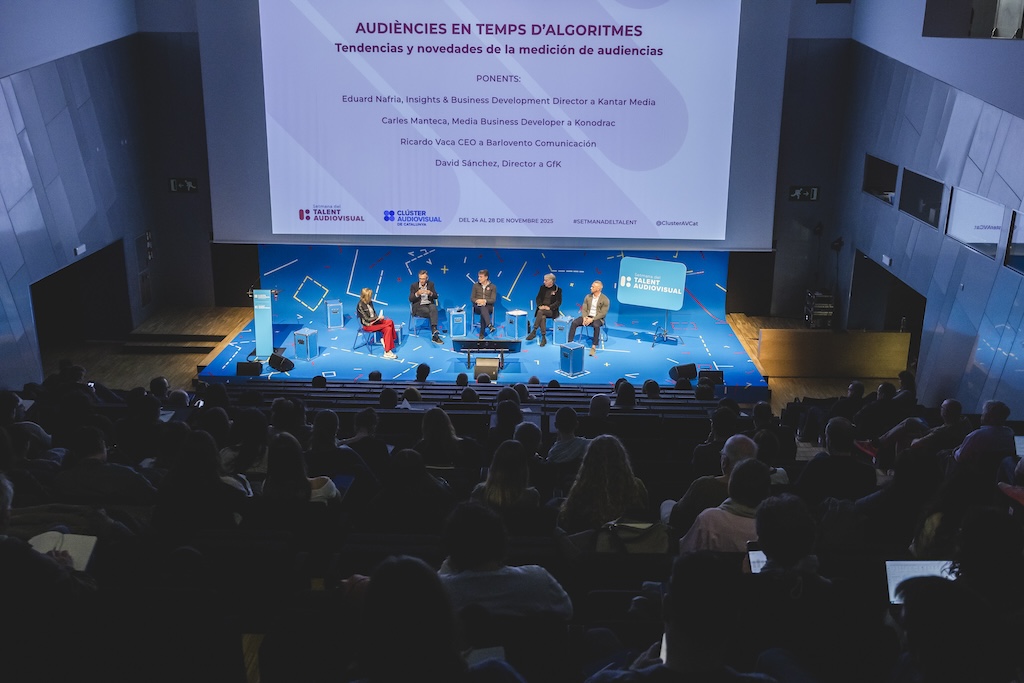
He Audiovisual Cluster of Catalonia reúne en el Disseny Hub Barcelona a expertos de Kantar Media, GfK, Barlovento Comunicación, Konodrac, 3cat, La 2, Betevé y la XAL en la jornada ‘Audiencias en tiempos de algoritmos’, celebrada durante la Semana del Talento Audiovisual 2025.
La jornada celebrada en el Disseny Hub Barcelona y organizada por el Clúster Audiovisual de Catalunya, ha reunido a profesionales de Kantar Media, GfK, Barlovento Comunicación, Konodrac, 3cat, La 2, Betevé y la XAL.
El director del Clúster Audiovisual de Catalunya, Eduard Gil, ha asegurado que “la revolución algorítmica no solo transforma cómo el público accede a los contenidos, sino también cómo la industria debe entenderlo y relacionarse con él”. Gil ha subrayado que este escenario “obliga a los agentes del sector a trabajar con datos más complejos y con una mirada transversal que incluya televisión, plataformas y entornos digitales”. También ha señalado que, a pesar del protagonismo creciente de los algoritmos, estos no deben limitar la calidad de los contenidos: “hay que entretener a las audiencias y, al mismo tiempo, proporcionarles referentes que alimenten la demanda de nuevos contenidos”.
La ponencia de Regina Arenas, jefa del Hub de Conocimiento de la Ciudadanía de 3Cat, ha profundizado en los comportamientos de la generación Alfa, un colectivo que ya supera los 2.100 millones de personas en el mundo. Arenas ha descrito a un público que consume contenidos simultáneamente en varios canales y dispositivos, combina entretenimiento y aprendizaje y tiene la inmediatez como cultura. Además, los Alfa necesitan experiencias híbridas donde la presencialidad aún juega un papel emocional esencial, e integran la tecnología como una parte natural de su día a día. Según Arenas, en un entorno hipersegmentado, entender las motivaciones de los públicos es clave para conectar con autenticidad y desarrollar contenidos que respondan a sus expectativas.
En la mesa redonda Del zapping al algoritmo, con Maties Ramos (3Cat), Laura Folguera (La 2 Catalunya), Georgina Ferri (Betevé) y Miquel Herrada (XAL), se ha defendido un modelo centrado en contenidos útiles, rigurosos y verificados, recordando que el gran competidor es el tiempo del público. Además, se ha insistido en que las audiencias son mucho más que el share: aportan información esencial para crear contenidos relevantes y transformadores.
A partir de esta mirada centrada en las personas, la jornada ha analizado cómo evolucionan los sistemas de medición de audiencias en un ecosistema cada vez más fragmentado. Miguel Ángel Fontal, director general de la AIMC (Asociación para la Investigación de Medios de Comunicación), ha remarcado que las audiencias ya no pueden interpretarse solo desde la televisión lineal. Fontal ha señalado que el consumidor es cada vez más complejo y se mueve entre múltiples canales y dispositivos, y que los datos de audiencia se han vuelto más difíciles de recoger y analizar. Por este motivo, la tecnología y la colaboración son esenciales para avanzar, y la tendencia debe ser la integración de datos.
La mesa redonda Tendencias y novedades en la medición de audiencias ha reunido a Eduard Nafria (Kantar Media), Carles Manteca (Konodrac), Ricardo Vaca Berdayes (Barlovento Comunicación) y David Sánchez (GfK). La sesión ha puesto de manifiesto cómo la tecnología está revolucionando la manera de medir e interpretar el consumo audiovisual. Los participantes han debatido sobre el papel de los algoritmos y la inteligencia artificial, la medición de audiencias en tiempo real y la necesidad de integrar datos procedentes de múltiples canales.
Esta jornada forma parte de la Semana del Talento Audiovisual, que celebra su undécima edición del 24 al 28 de noviembre en el Disseny Hub Barcelona. Un año más, el evento consolida su papel como punto de encuentro entre la industria y el talento emergente, con actividades diversas como conversaciones con creadores, sesiones especializadas y el Pitching Audiovisual Universidad-Industria, que este año reúne 38 proyectos universitarios seleccionados entre casi un centenar de propuestas.
Did you like this article?
Subscribe to our NEWSLETTER and you won't miss anything.
Related articles
 Spanish audiovisual content will generate 1.4 billion dollars in 2024
 VVC vs. MPEG-5 EVC / LCEVC: ¿qué estándar marcará el futuro del broadcast?
 The IP will mark the future in media, sports and entertainment
 27.4 million Spaniards already consume audiovisual content via the Internet
 New forms of production and consumption of audiovisual content, under debate
 Indra leads the ADAPTA project, aimed at the personalization of digital content
 Nuevas soluciones de archivo de contenidos audiovisuales de SM Data
 RAUDOS develops an innovative audiovisual content distribution system
 Contenidos audiovisuales, directamente sobre tabletas, con Tvinci
 Experts in audiovisual content analyze the future of television
 IV Marketplace of audiovisual content
 RAUDOS: Red Interactiva Multiplataforma de Contenidos Audiovisuales
 Máster de Creación y Gestión de Contenidos Audiovisuales Telecinco-UEM
 PRISA will sell audiovisual content in stores, warehouses and supermarkets