





Fujifilm GFX Eterna 55: una cámara para democratizar el gran formato
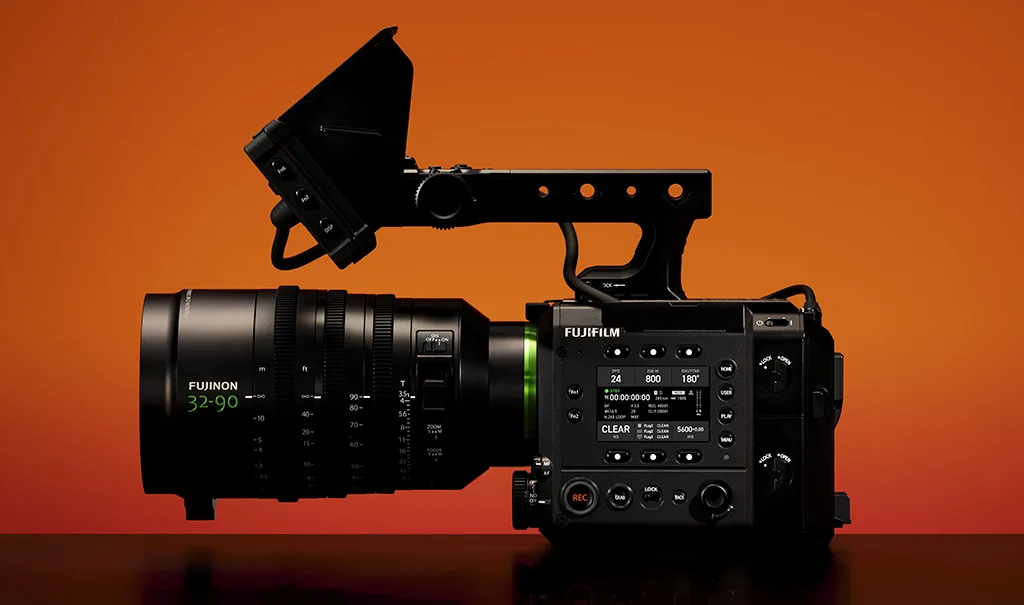

El estreno de Fujifilm en el mercado de las cámaras cinematográficas con la Fujifilm GFX Eterna 55 ha sido motivo de conversación en la industria. ¿Cuáles son las posibilidades de la primera incursión de Fujifilm en este terreno? ¿Qué elementos diferenciales aporta al sector? En definitiva: ¿qué promete y qué ofrece?
La pudimos tener por primera vez en nuestras manos en IBC 2025. El stand de Fujifilm se vertebraba en torno a una serie de GFX Eterna 55, dispuestas alrededor de una arpista que servía como modelo para los presentes. Era difícil encontrar un hueco para comprobar de primera mano las funciones de la cámara. La expectación era alta.
No era para menos: tras profundizar en las opciones de la grabación de vídeo en la gama de cámaras semiprofesionales de Fujifilm, el desarrollo de una cámara específica para vídeo profesional era el siguiente paso natural. Sin embargo, la ejecución ha sorprendido a los usuarios y a la propia industria.
La recepción del sistema, y las oportunidades del mercado, llevaron a Fujifilm a crear una cámara completamente volcada en el cine con un sensor rediseñado desde cero.
The Eterna busca, ante todo, diferenciarse en un segmento con competidores sobradamente establecidos. Su precio es una de sus principales armas, pero también lo son las características que la identifican. Algunas son obvias: no hay más que revisar la hoja de especificaciones del producto.
Otras merecen ser tratadas en detalle. José Márquez, Senior Product & Project Manager – Professional Imaging Marketing de Fujifilm, comparte pequeñas píldoras de la intrahistoria de la creación de la Eterna 55, profundiza en algunas de sus características diferenciales y adelanta los siguientes pasos de una plataforma que promete recibir soporte a medio y largo plazo.
Un desarrollo tras un camino de una década
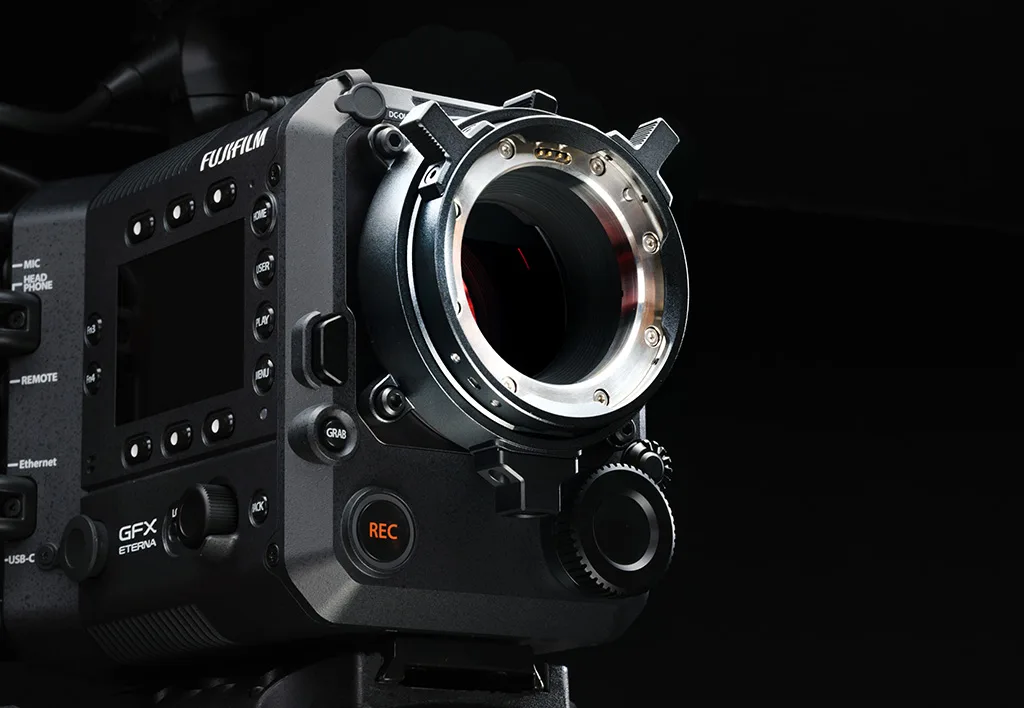
La creación de la Fujifilm GFX Eterna 55 ha sido una decisión ampliamente meditada en el seno de la empresa japonesa. Según explica Márquez, parte del aprendizaje de la compañía con su gama GFX, la cual, recordemos, era inicialmente exclusivamente fotográfica. Todo cambió con el modelo GFX100 II, a solución híbrida de la que ya nos hicimos eco y que destacaba por ofrecer, entre otras características, grabación 8K a 30 fps.
La recepción del sistema, y las oportunidades del mercado, llevaron a Fujifilm a crear una cámara completamente volcada en el cine con un sensor rediseñado desde cero. “Hasta el momento en que no ha estado preparada una solución tan seria como esta, no se ha lanzado”, comenta el product manager sobre una cámara que quiere dar respuesta a producciones cinematográficas, pero también a series, documentales, producciones publicitarias o incluso a la creación de contenido premium: “Con unos 13.500 € aproximadamente, más IVA, cuentas con unas prestaciones de cámara mucho más caras”.
A pesar de la influencia en la decisión de la gran recepción de la GFX100 II, no debe obviarse la extensísima trayectoria de Fujifilm in it mercado cinematográfico. Desde las cintas HDCam y el valorado celuloide Eterna, hasta las series de lentes Cabrio y Premista, la compañía acumula décadas de innovación acompañando cientos de largometrajes, muchos de las cuales son parte imborrable del imaginario popular.
La joya de la corona: el sensor
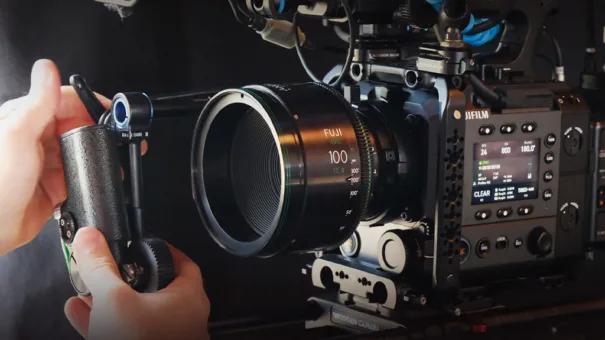
Sorprende en el papel y en el monitor. Si por algo destaca la GFX Eterna 55 es por su sensor de gran formato, con una diagonal de 55 mm and one altura de 33 mm que conforman un círculo de imagen que supera los formatos full frame y Super 35 mm. “Es el más alto del mercado, sin duda”, explica Márquez.
En el rodaje, estas características se traducen en opciones como la capacidad de grabar con el formato GF Open Gate 4:3 en sensor completo, así como recortar la fuente y emplear varios formatos cinematográficos como Premista, 35 mm, Anamorphic (35 mm) y Super35.
Si por algo destaca la GFX Eterna 55 es por su sensor de gran formato, con una diagonal de 55 mm and one altura de 33 mm que conforman un círculo de imagen que supera los formatos full frame y Super 35 mm.
Esta versatilidad ofrece todo tipo de recursos creativos a los directores de fotografía y camarógrafos: “Podemos usar lentes anamórficas con una ratio de compresión de hasta dos”. La amplitud del sensor ha sido incluso reconocida por la propia IMAX, que recientemente ha añadido la cámara a su lista de dispositivos certificados por su capacidad para filmar en las relaciones de aspecto ampliadas exclusivas de la marca.
He sensor está repleto de posibilidades, explica Márquez: “Hay otro recurso muy interesante con este sensor tan grande. Y es que, a igualdad de distancia focal y luminosidad, dada su capacidad de apertura, puedes conseguir un control sobre el desenfoque del fondo muy superior. Esto puede tener una utilidad creativa estética e incluso práctica: si el fondo no convence del todo, existe la posibilidad de desenfocarlo y ya tienes el plano hecho”.
El porqué de su adaptador PL
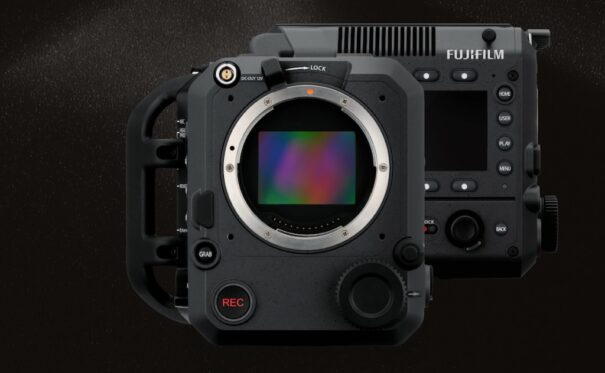
Al listado de características de la GFX Eterna 55, como su motor de procesamiento de imágenes X-Processor 5, sus modos de simulación de película, su ISO Dual con sensibilidades base 800-3200 y su filtro ND variable electrónico, se le une la decisión de incluir junto a la montura GF integrada un adaptador PL G de serie. La decisión no es baladí.
La GFX Eterna 55 se puede adaptar a la “gran cantidad de lentes que hay en el mercado” a través de su adaptador PL G de serie.
Fujifilm no ha ideado la Eterna 55 para crear un ecosistema completamente cerrado que se beneficie de su creciente familia de lentes GF, sino una “opción sensata” que haga que la cámara se pueda adaptar progresivamente a la “gran cantidad de lentes que hay en el mercado”.
Con la utilización del adaptador se pueden conservar los datos de la lente en forma de metadatos para los procesos de postproducción, pero las posibilidades, eso sí, se multiplican con el uso de objetivos propios como el nuevo Fujinon GF32-90mmT3.5 PZ OIS WR, una solución optimizada para la producción cinematográfica con la que se puede controlar el zoom, iris, enfoque o incluso se puede disponer de foco automático proporcionado por el software de la cámara.
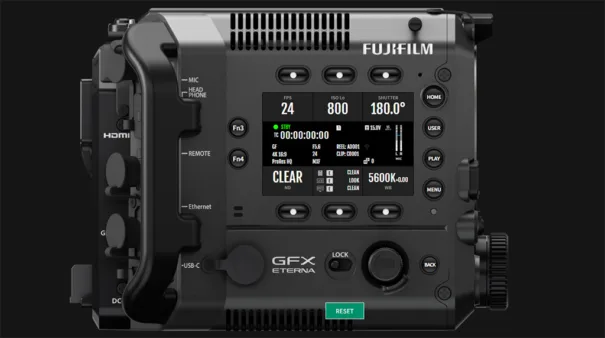
La web de la Fujifilm GFX Eterna 55 cuenta con un simulador que permite recorrer los menús de la cámara y observar sus posibilidades de configuración.
Dos pantallas para facilitar la operación
La industria española ya ha podido tener un primer acercamiento a la GFX Eterna 55 a través de varios eventos en Barcelona, Madrid y Sevilla, así como ofreciendo el dispositivo a directores de fotografía y empresas de alquiler de equipo que ya están probándolo y “sacando sus propias conclusiones”.
José Márquez: “Con este doble monitor puedes tener al director de fotografía y al operador de cámara cada uno al lado de la cámara, realizando ajustes simultáneamente sin tener que andar dando vueltas y facilitando su trabajo”.
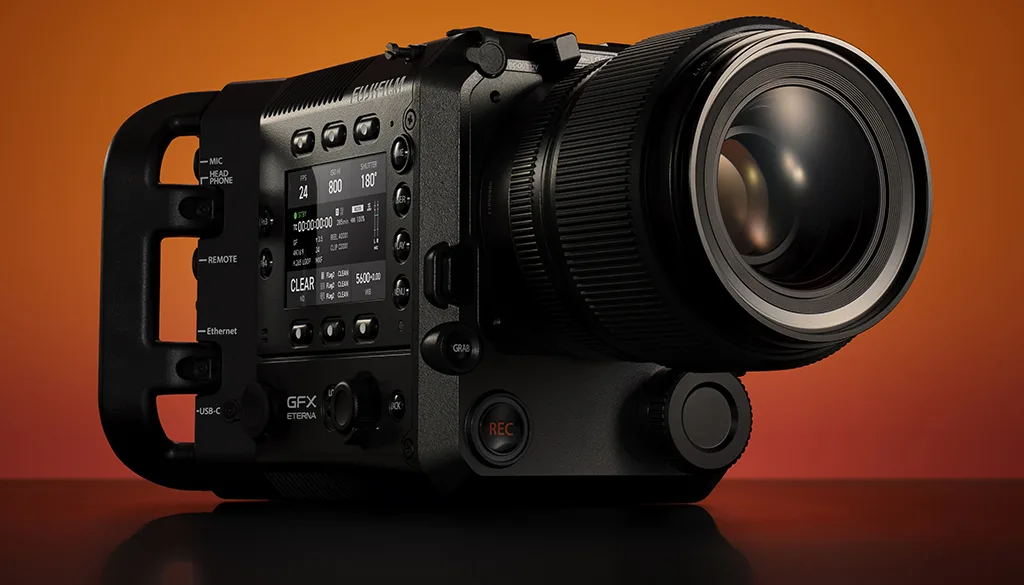
La recepción ha sido muy positiva. Más allá del rendimiento de la imagen, los operadores han destacado su ligereza, que con un diseño de aproximadamente dos kilos permite su instalación en grúas o steadycams; la flexibilidad de su sensor, que permite realizar un encuadre vertical y llegar a los formatos verticales en alta definición, o pequeños detalles operacionales como sus pantallas duales: dos LCD de tres pulgadas situadas a ambos lados del cuerpo que muestran información en tiempo real de elementos como el estado de la grabación, niveles de audio, formatos o exposición.
En palabras de Márquez: “Con este doble monitor puedes tener al director de fotografía y al operador de cámara cada uno al lado de la cámara, realizando ajustes simultáneamente sin tener que andar dando vueltas y facilitando su trabajo”.
El futuro: una evolución que ya ha comenzado
Más allá de su rendimiento visual, la Fujifilm GFX Eterna 55 destaca por responder a algunas de las demandas más acuciantes del mercado. De cara a acelerar los flujos de postproducción y optimizar la colaboración en el set, la cámara cuenta con conexión vía Wi-Fi o Ethernet con servicios como Camera to Cloud de Frame.io, el cual permite enviar los contenidos directamente a un almacenamiento externo.
Atiende a las demandas actuales, pero no elude las futuras. Fujifilm, explica Márquez, mantendrá con la Eterna 55 la misma filosofía que ha acompañado a la serie GFX de cámaras: una actualización continua de firmwares sin requerimiento de pagos adicionales: “Simplemente, si conseguimos añadir nuevas funciones que son interesantes, podrás descargar una actualización que te permita disfrutar de ellas”.
“Me consta que la cámara se ha desarrollado durante años. No va a quedarse aparcada, sino que va a seguir mejorando un producto que ya de por sí marca la diferencia en el mercado. Este es solo el comienzo”.
La cámara apenas ha salido al mercado, pero ya cuenta con unas primeras mejoras que han llegado a raíz del feedback de la comunidad creativa de Fujifilm, como la posibilidad de poder conectar un grabador externo vía SDI o HDMI, y grabar RAW directamente en él. En el terreno del hardware, las mejoras también están en marcha: mientras que Fujifilm ya está desarrollando un visor electrónico, los principales fabricantes de accesorios ya están poniendo a disposición del mercado soluciones para acoplar todo tipo de componentes.
La GFX Eterna 55 no es una mera prueba de Fujifilm en el mundo de la cinematografía, sino una solución creada para dejar huella en el mercado y definir la creación de contenido durante mucho tiempo. Márquez no tiene dudas: “Me consta que la cámara se ha desarrollado durante años. No va a quedarse aparcada, sino que va a seguir mejorando un producto que ya de por sí marca la diferencia en el mercado. Este es solo el comienzo”.
Did you like this article?
Subscribe to our NEWSLETTER and you won't miss anything.
Related articles
 La cámara cinematográfica Fujifilm GFX Eterna 55 recibe la certificación IMAX
 La nueva cámara GFX Eterna 55 de Fuji se estrena en España con un taller práctico
 Atomos enables external 4:3 Open Gate RAW recording up to 48 fps with the Fujifilm GFX Eterna 55 camera
Fujifilm exhibirá en el MicroSalón AEC 2025 la esperada cámara cinematográfica GFX Eterna 55
Atomos enables external 4:3 Open Gate RAW recording up to 48 fps with the Fujifilm GFX Eterna 55 camera
Fujifilm exhibirá en el MicroSalón AEC 2025 la esperada cámara cinematográfica GFX Eterna 55
 Jose Márquez y Santiago Sanz (Fujifilm) analizan la nueva cámara GFX Eterna 55 y el zoom LA30x7.8
 Fujifilm desarrolla la nueva cámara para cine GFX Eterna 55
 Fujifilm lanzará en 2025 su primera cámara de cine digital: GFX Eterna
 Fujifilm lanza la SX1600, cámara de largo alcance con teleobjetivo de 1.600 mm
 Sony unveils its new large format camera for broadcast
 Sony apuesta por la proyección dual 4K para pantallas de cine de gran formato
 ¿Formato grande o pequeño? Elegir el sensor de cámara adecuado para mi producción
 GoPro: una pequeña cámara para un gran mercado
 Petrol Bags launches a bag specially designed for large format camera accessories
 Hollywood rewards Fujifilm for the development of the Eterna-RDI