





Hug Cirici: video as a window to institutional communication
Outside the world of fiction, documentaries and advertising, there is a wide variety of pieces intended for social, political or institutional organizations that present a series of unique challenges. Hugh Cirici, creative director, addresses creativity and technique in an area in which the democratization of access to technology opens the door to great opportunities.
settled in a little town located in a mountainous area of Catalonia, Hug Cirici has been creating audiovisual pieces in which he always tries to achieve a complex balance: transmitting his clients' message and, at the same time, leaving his creative mark. A graphic designer by training, he was one of the founders of LaCreativa, a design studio applied to communication that today continues to develop important projects with a multidisciplinary vision. Progressively, he directed his trajectory towards moving image. "I remember when the Canon 5D came along, you could suddenly shoot cinematic-looking images with an affordable camera. Since then, I I dedicate exclusively to the video,” he comments.
At the time this shift began, and despite continuing to work extensively with the private sector, Cirici already had a solid portfolio of institutional clients. Currently, this area occupies an important part of his calendar: "I come from a small country with a lot of administration, which made it relatively easy to get started in that field. I understood their language and we talked about the same concepts."
Since then, Cirici He has worked for entities such as the Generalitat of Catalonia, the Barcelona Provincial Council, the Barcelona City Council, political parties (“only those with good people,” he points out), associations and public companies on projects that require a different approach than traditional advertising.
The importance of audiovisual truth
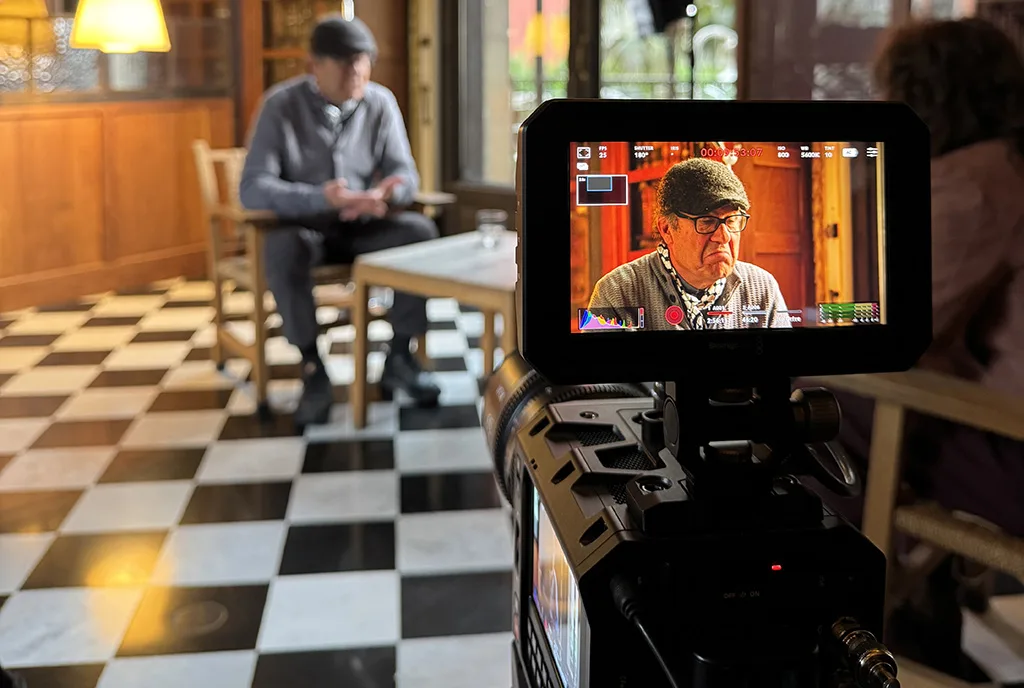
Cirici considers it essential to connect with the values that are transmitted in the institutional communication to be able to shape the pieces he works on. "What makes me most useful in the world of institutional communication? That I connect with the values they want to sell and transmit," he confesses, acknowledging that at times he has had to take a step back when working with agencies with which he did not connect conceptually: “If I don't believe it, I am not able to explain it and sell it to the audience behind it.”
Therefore, the sincerity, the creative points out, stands as the “common denominator” in his work, along with a “modern, innovative and groundbreaking” staging. In his own words: "I always try to go a little further. Search for reality and naturalness, and give it a more groundbreaking point. I can't forget my background as a graphic designer. The content must be elegant, but also communicatively effective.”
When the quality barrier is overcome
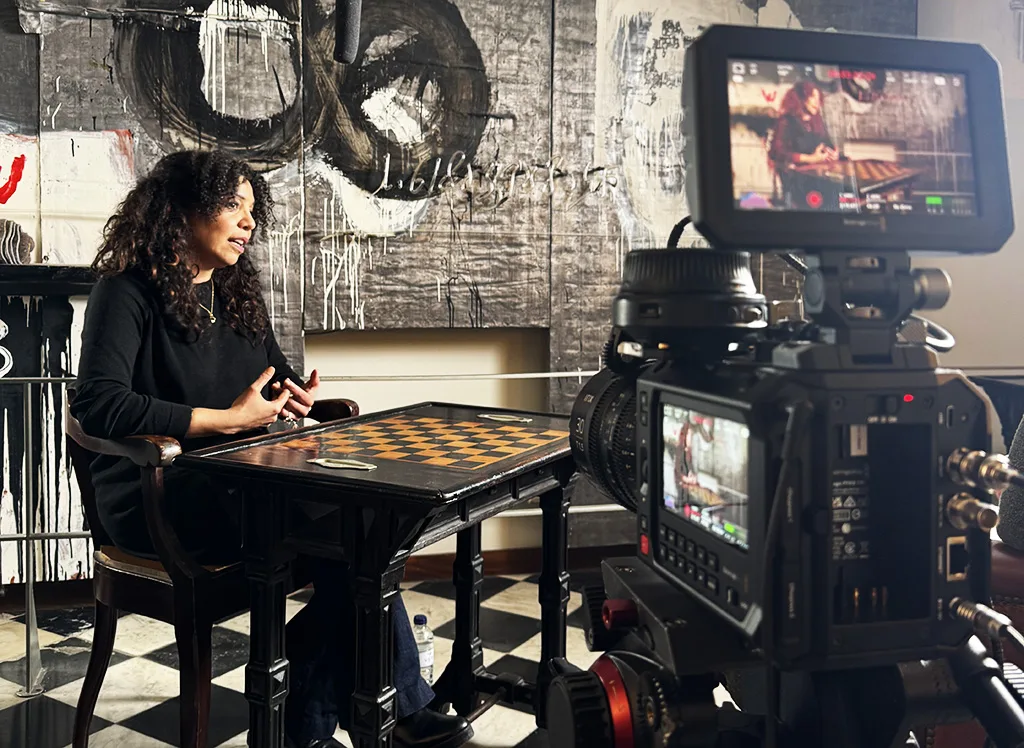
Since its beginnings, Cirici has opted for purchase material instead of renting it. Living two hours from Barcelona, opting for a rental model greatly increases his costs, which is why throughout his career he has accumulated various cameras that adapted to his needs.
"At the moment, I have very rarely made a 4K delivery. The normal thing is HD," he explains, aware that, today, "all cameras offer more than enough quality for what needs to be done." Therefore, when choosing your preferred capture solution, the most important thing is “the capacity you have later to work with those images you obtain.”
Arrival in the Blackmagic ecosystem
Cirici has trusted throughout his career in the More than Video. This relationship, which has spanned more than two decades, continues today, as it is the preferred partner of the Catalan director and producer not only for shooting material, but also for areas such as LED lighting, adapters, tripods, batteries and accessories, among others.
It was the distributor's team that advised Cirici to acquire “the first Blackmagic Pocket Camera 4K that there was in Spain.” Since then, their confidence in the brand has been complete, progressively updating their equipment with other solutions such as Pocket Camera 6K, Pocket Camera 6K Pro o Pyxis: "I don't think about it when a new model comes out, since the cameras work very well. Furthermore, when Blackmagic RAW arrived, it changed everything: it is a spectacular format to work on later in post-production."
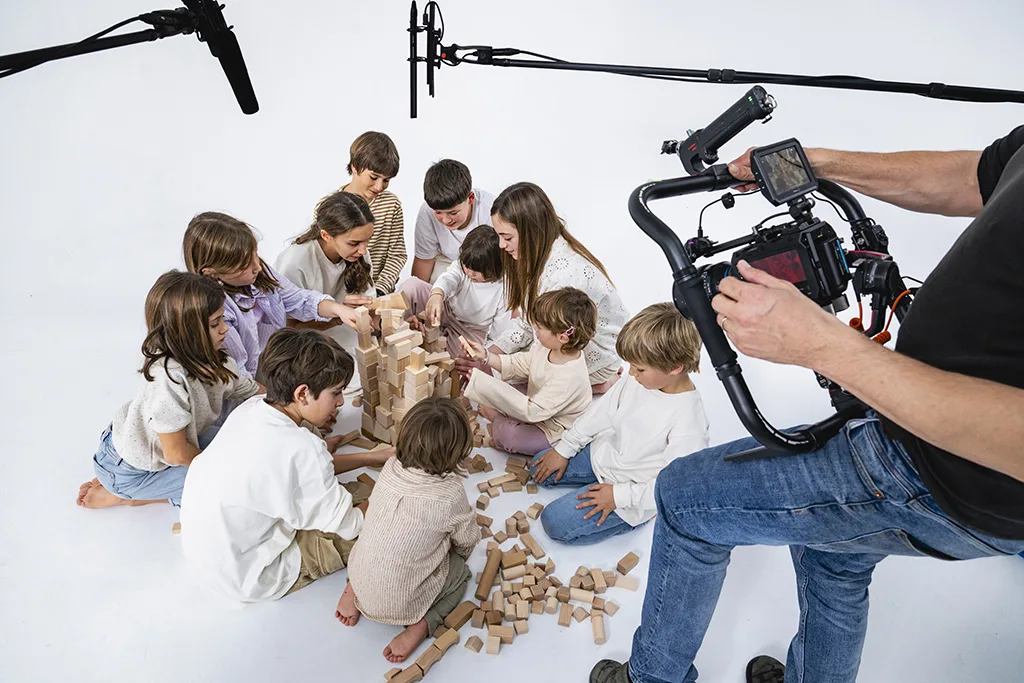
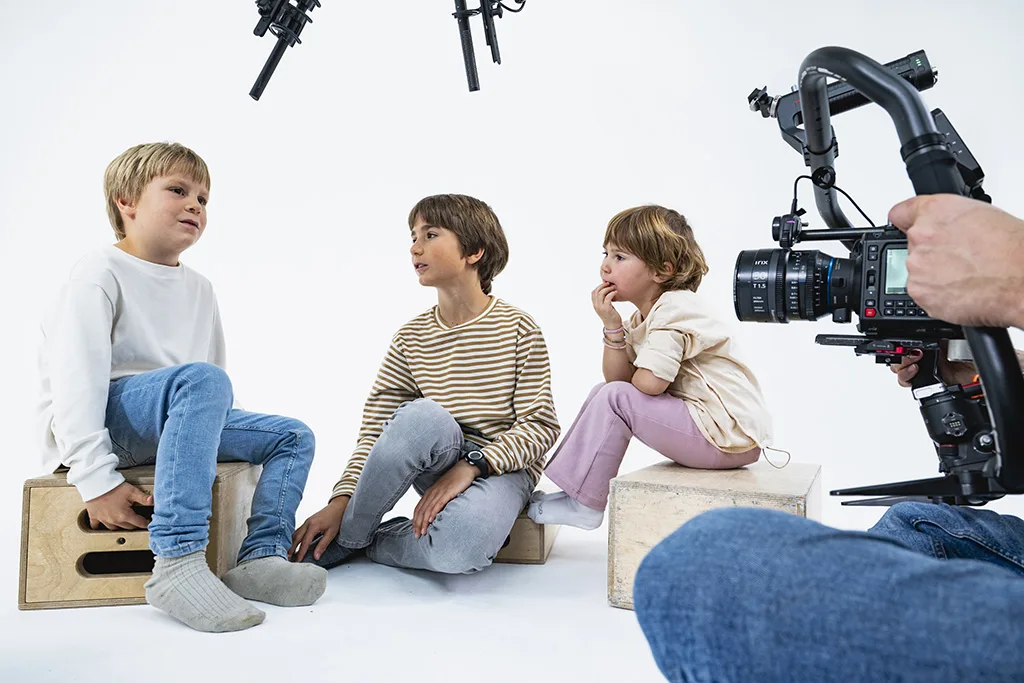
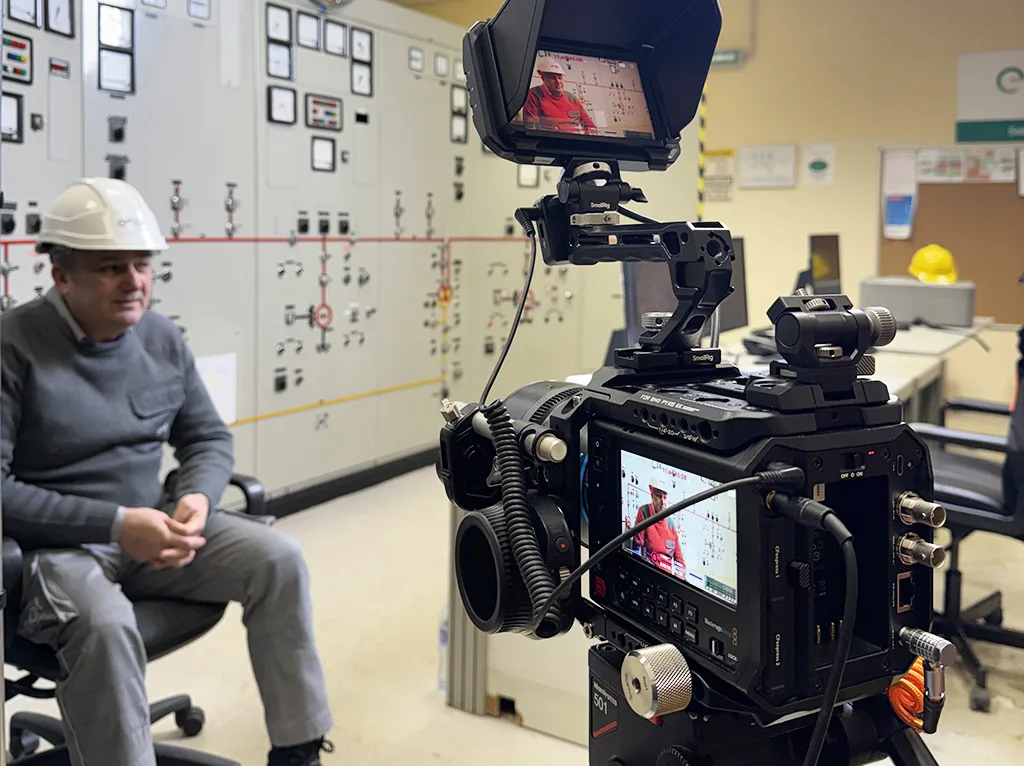
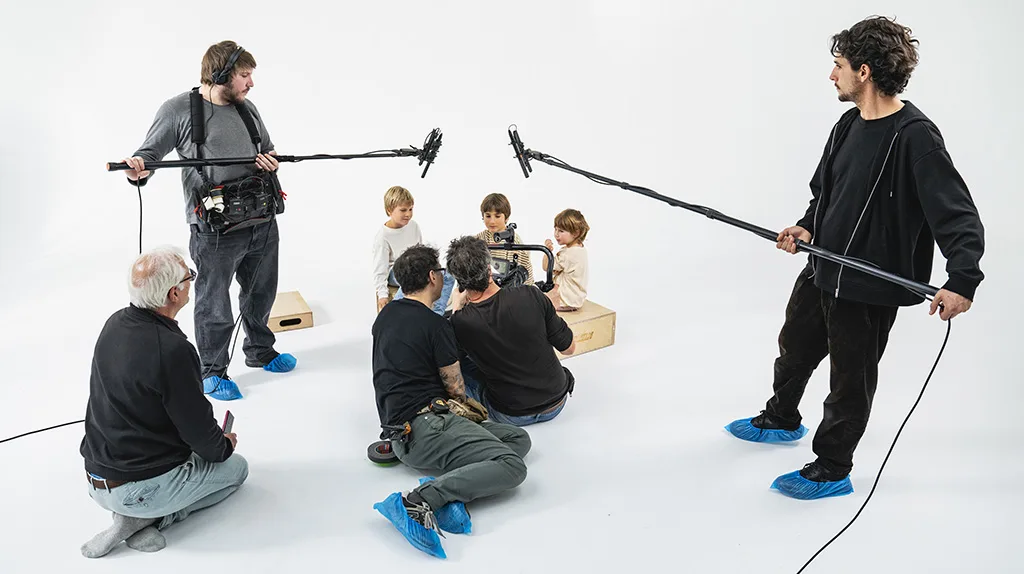
Currently, Cirici uses the model as its main camera Blackmagic Pyxis 12K, a solution that stands out for its ease of mounting on a stabilizer and the versatility it brings to your workflows, since it can be handled by a single operator. The creative director, as it could not be otherwise, also highlights his 12K recording options: "I shot a video of some schools in which I had several children sitting. You don't know what is going to happen or who is going to speak, but with this camera I have been able to have very close-ups. It gives great versatility."
An evolving post-production phase
Cirici confesses himself as a faithful devotee of the creative package of Adobe. Inherited from his beginnings as a graphic designer, today Cirici edits in Premiere, generates graphics and effects via After Effects, and uses graphics exported from tools such as Illustrator and Photoshop.
To work with color, yes, bet on DaVinci Resolve: "There is no way for color to do it in Premiere. The wonder that Resolve does with color cannot be compared. You can put all the Lumetri filters you want, but you can't even come close to how Resolve responds with Blackmagic RAW, says Cirici, even though he is critical of the color system. delivery and the inconsistencies that sometimes occur between the software and external video players.
Cirici, whose work ranges from planning to filming execution, including post-production, also uses the tool to respond to the increasingly frequent demands of video in vertical formats.
Opportunities in immersive formats
Cirici, beyond continuing to take advantage of the different opportunities offered by the Catalan administration, institutions and companies in traditional formats, continues to explore the limits of its Pyxis 12K to apply it to the production of immersive video. And the requirements from museum entities to offer a renewed staging to their visitors are increasing.
It is not an easy task, but Cirici trusts his capabilities and those of its technological ecosystem. The adaptation and evolution has marked his entire career. This time it will be no less: "I have tried a super-angular optic, and from there, I try to make projections on three perpendicular screens or a spherical screen. It is a very big world. It has a lot of future, but I still need to learn many things."
Did you like this article?
Subscribe to our NEWSLETTER and you won't miss anything.
Related articles
 Madrid Film Office returns to Ventana Sur to promote Madrid as a filming location
 RTVE will produce the institutional signal of tribute to the victims of COVID-19
 This will be the information coverage of Spanish Television, as an institutional signal, of the exhumation of Francisco Franco
 Video Advertising Reach (VAR), the first video coverage calculation tool for both television and digital
 The IV Edition of the 'Madrid Cinema Window' begins with Peru and Poland as guest countries
 Secuoya will retransmit the institutional signal of Sierra Nevada 2017
 Gol Stadium joins the Xbox 360 as another window for DTT subscribers
 Extensive catalog of new Video Communication Systems at CAPER 2011
 Video Communication Systems announces the new generation of Aspera Video File Transfer Accelerators
 Avid News in Video Communication Systems
 Video Communication Systems incorporates Aspera
 Video streaming, the democratization of audiovisual communication
 Cisco Prosumer Video or how to optimize business productivity with the help of video
 Argentina's Video Communication Systems celebrates a quarter of a century