





VRT transforms your virtual production with Zero Density technology
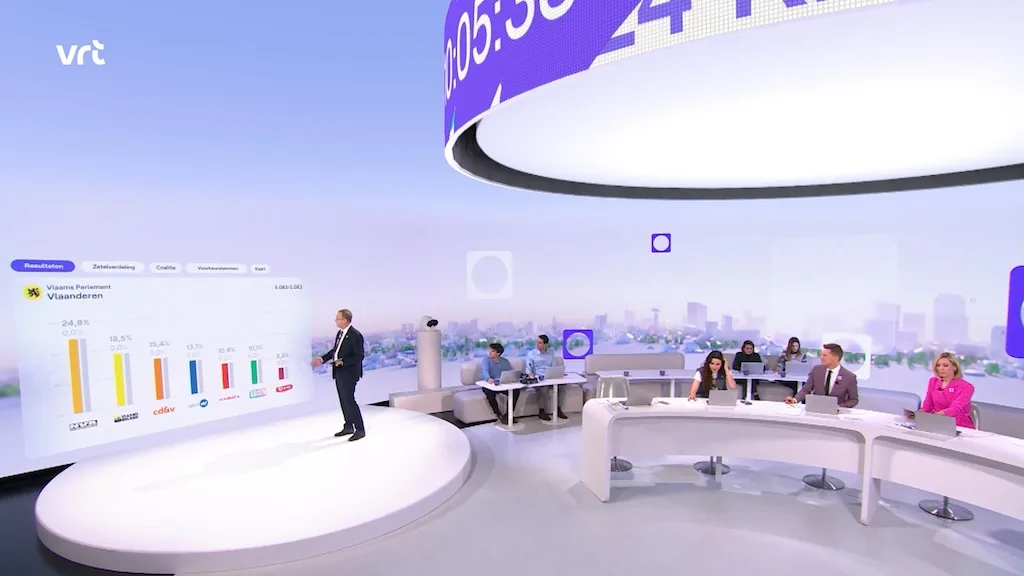
Flemish public radio and television VRT completes the transformation of one of its main production studios into a multifunctional environment based on virtual production technologies, augmented reality (AR), extended reality (XR) and LED stages in a project developed by Zero Density next to DigiNet.
The new facility has made it possible to convert a space that was previously only used two hours a day into an operational center capable of supporting news, sports and special productions throughout the day. The heart of the studio is a large 33×4 meter LED screen with a pixel pitch of 1.8 mm, which serves as the visual core of a studio designed to respond to the growing needs for flexibility and efficiency in broadcast production.
"When we started this project, it was a studio occupied by a physical set that was only used for two hours. The main goal was to make the studio more efficient. We came up with the idea of placing an LED wall inside the studio to make it more multifunctional," he explains. Martijn Rymen, head of virtual production technology at VRT.
To tackle the project, VRT selected Zero Density's virtual production platform as the technological base of the new studio. The solution combines Reality 5 and Reality Hub engines con Unreal Engine to manage real-time graphics, virtual production and immersive experiences tailored to live broadcast environments.
The infrastructure incorporates five EVO Engine units responsible for powering the large LED screen, as well as two cameras with tracking systems to generate augmented reality content integrated in real time on the physical stage. One of the key elements of implementation is Reality Hub, which coordinates the different graphics engines as a single centralized platform accessible through a web interface, simplifying the operational management of the system.
Steven Candries, Director of Operations and Technology at VRT CRW, comments that "we use Zero Density to bridge the gap between the world of gaming and broadcasting. It makes it easier for broadcasters and operators to work in an environment that they know and are used to. That is the added value of Zero Density."
From physical scenery to dynamic virtual scenarios
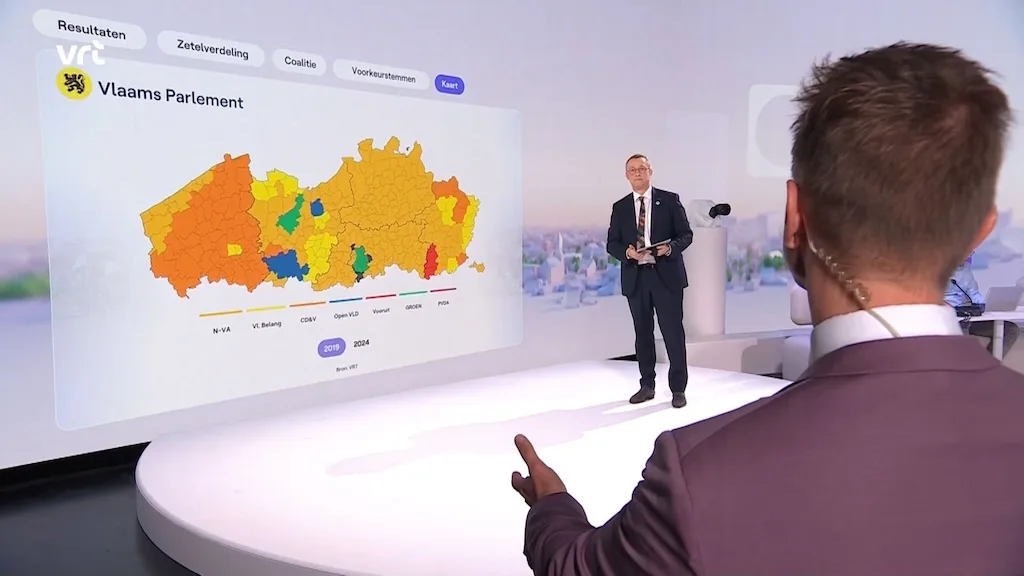
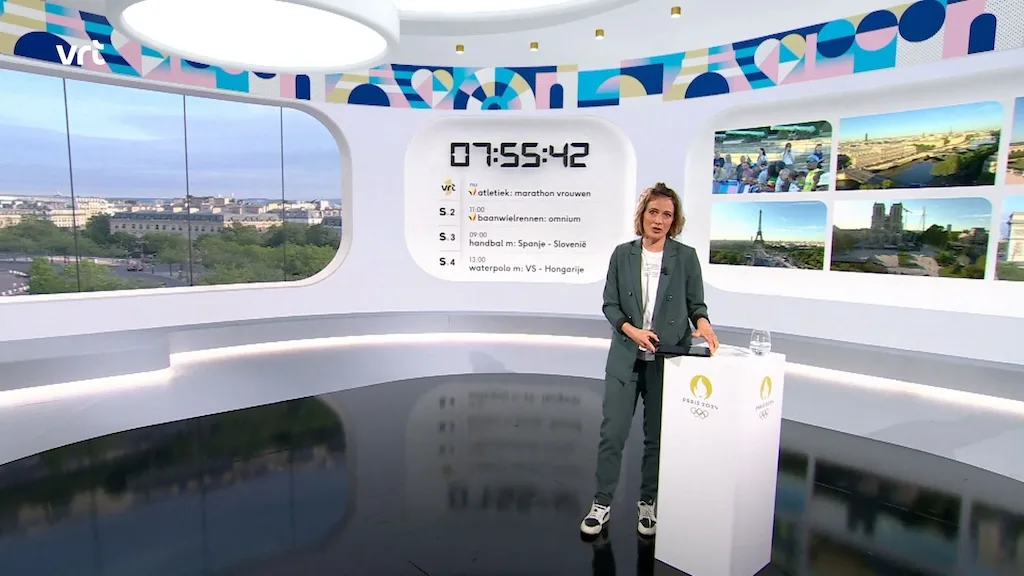
Beyond the technological renewal, the project represents a profound change in the way of producing content. Replacing permanent physical sets with virtual environments and LED stages allows the studio to be quickly reconfigured to adapt to different formats and programs. Since its launch, the space hosts two news programs daily, including the prestigious current affairs program To the point, in addition to having served for the 2024 electoral coverage and for the production of content related to the Paris 2024 Olympic Games.
To manage this new production ecosystem, VRT has created a specialized team made up of virtual set designers, technical artists and video game developers, who work in coordination with filmmakers, physical set designers and motion graphics specialists. The new model also allows you to design and validate virtual scenarios without having to physically occupy the studio, significantly accelerating the creative and production processes.
"Now you can use this type of technology even when the studio is being used for other productions. Even so, you can design your studio, have a preview of it, and that makes you more efficient when creating new projects," says Martijn Rymen.
The combination of traditional broadcast graphics, augmented reality and LED stages is allowing VRT to explore new ways of telling stories and presenting visual information. According to those responsible for the project, augmented reality has become a new narrative layer that significantly expands creative possibilities compared to traditional models based solely on superimposed graphics or full-screen content.
"Before you had overlay graphics, full-screen graphics, and on-screen graphics. Now you have a new type of graphics: augmented reality. That gives you much more flexibility when telling stories. With the LED wall, you can go to the limit. We are only at the beginning of what we can do, and the best is yet to come," Rymen points out.
A platform ready to evolve
The collaboration between VRT, Zero Density and DigiNet continues once the study launch is completed. Among the upcoming improvements planned is a new generation of EVO Engine hardware capable of managing the entire LED display from one single synchronized motor with five 4K outputs, replacing the current configuration based on five independent engines.
Likewise, the network is exploring new motion design and broadcast graphics capabilities on the Reality 5 platform, with the aim of consolidating a unified workflow for all its visual content.
"When clients come to us with virtual production needs, we always know that Zero Density is going to solve their problem. The product is truly cutting-edge and they are at the forefront of new advances. Even now, with the project already underway, Zero Density remains committed to helping us find new ways of doing things," he concludes. Dries Tastenhoye, product manager at DigiNet.
Did you like this article?
Subscribe to our NEWSLETTER and you won't miss anything.
Related articles
 Blackmagic Design technology transforms Sports Illustrated FC studio
 StudioCube Daejeon deploys a studio for virtual production with technology from LG and Brompton
 TV Markíza's star morning format is transformed with Leyard's LED technology
 90% of the feature film 'Daddio' by Dakota Johnson and Sean Penn, shot with virtual production and technology from Disguise
 Reporter TV: AR, VR and XR in election coverage built with Zero Density technology
 Movie People implements a virtual production system based on Sony technology
 Brompton technology powers the new stage for virtual production at NIPA in South Korea
 DIVA-DAG (Tokyo) redefines CG production with Zero Density's Reality Engine
 Brainstorm will show the most advanced virtual production technology at InfoComm
 The Japanese Virtual Line bets on Zero Density's Reality Engine
 Zero Density will install a fully functional virtual studio at IBC 2022
 Zero Density reality of life on the virtual set of Nissan's latest showcase
 Mo-Sys transforms a radio studio into a virtual television set
 HP transforms the customer experience at the point of sale with 3D technology