





Metaverse Stage: travel in space-time, with the Blackmagic URSA Cine Immersive camera
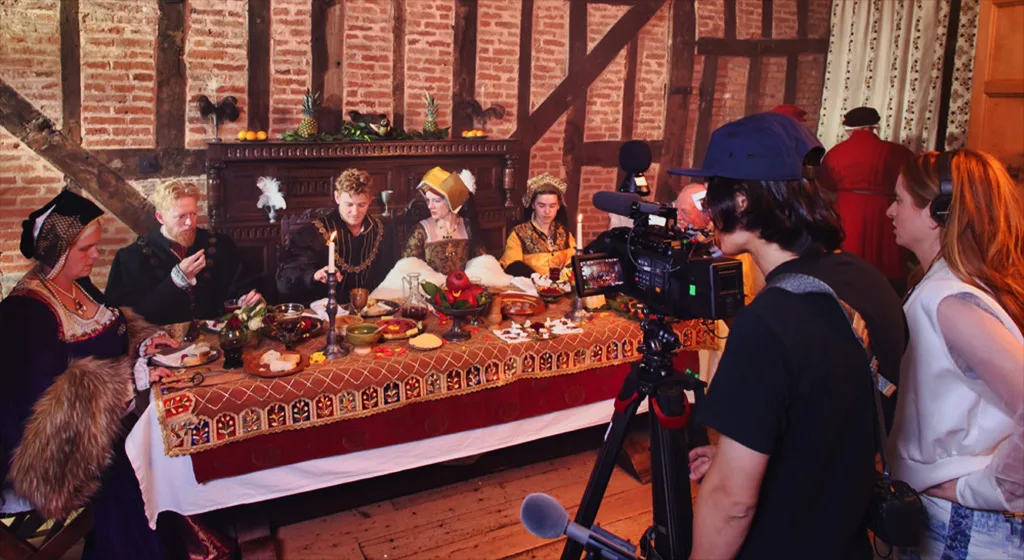
The Ursa Cine Immersive model Blackmagic Design allows the shaping of two immersive pieces, 'Henry VIII in Warwick' and 'Aspen Cowgirl', created by the immersive content studio Metaverse Stage, promoters of the Spatial Film app for the Apple Vision Pro device.
Hugh Hou, producer of metaverse, decided to deploy the capture solution Blackmagic as a main tool due to factors such as its “reliability" and with "bb“It gave us both the flexibility of a true film camera and the ease of use necessary for the realm of immersive productions, delivering consistent color, dynamic range and control, even in unpredictable environments,” he explains.
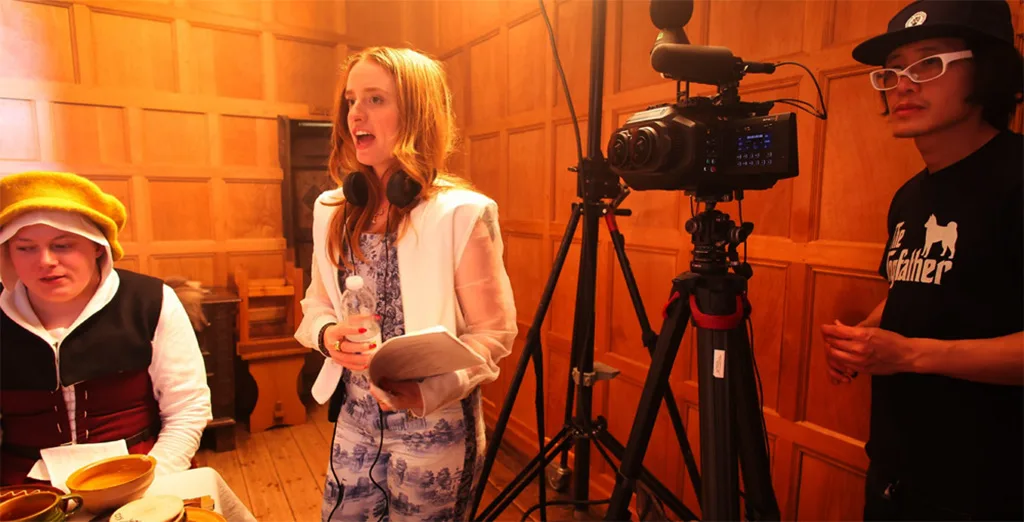
The immersive potential enabled by URSA Cine Immersive It is evident with the short Henry VIII in Warwick, which proposes a journey through time to the viewer, introducing them to the context of the narrative. The piece begins with the ghost of the British monarch addressing the viewer directly, breaking the fourth wall with a Shakespearean monologue, inviting them to sit at his table. Guided by his voice, the audience transports to the past, to a scene from the king's youth accompanied by his Court, where the moment in which the loss of a pendant from the Tudor period occurs, a jewel that was recently found in the county of Warwickshire is dramatized: "It is a story based on a true story, on questions without answers, and the immersive format allowed us to tell it in a way that is both personal and tangible. Everything you see in 3D, in 180 degrees, is real, since the human eye and brain realize when something is not, especially since it has 8k resolution for each eye and a high dynamic range,” he explains. Keeley Turner, director of the documentary.
Filmed in Harvington Hall, a historic site near Warwick Castle, the result transcends its own cinematic nature. "It is an experiment about what narrative can be when technology, history and emotions are coordinated. It shows what immersive cinema is capable of achieving, in addition to being a form of entertainment. It can preserve culture, inspire empathy and make the past live as if it were the present," he adds.
The lighting LED deployed, which helped faithfully reproduce the effect of moonlight or the flickering of candles, was enough for the URSA Cine Immersive to film with a ISO sensitivity between 800 and 1000. “The sensor and cinematic dynamic range responded admirably, giving us clean shadows and detail in the brightest areas,” recalls Turner, who also highlights the camera's false color tool: “It became essential for communicating with our head of electrical in the studio and allowed us to match exposure levels quickly, as well as obtain the light balance we had conceived.”
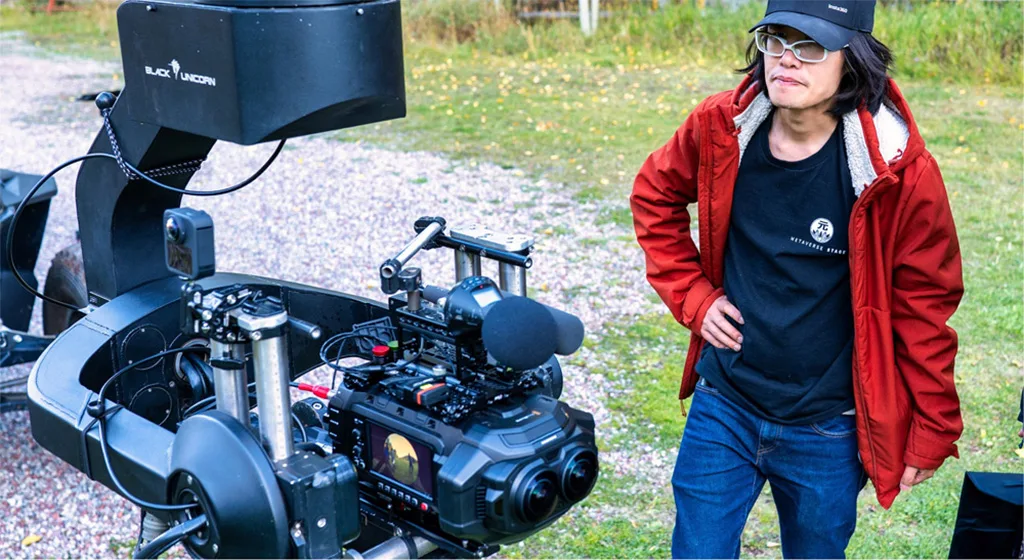
A trip to the west with Aspen Cowgirl
The short film Aspen Cowgirl follow closely Ellie, a young woman in search of her own path and Wade, a rancher with traditional values who faces a world in constant change. Their friendship is built not on words but on shared experiences: rural roads, horses and the rhythm of country life. "Filming this story in immersive 3D 180 format allows viewers to join the actresses in the back of the old pickup truck, feel the wind on their faces, and see the horses up close as they drive through Aspen's autumn landscape. It's about allowing audiences to experience the freedom, texture, and beauty of the West Country, not just as tourists, but as participants," he says. Turner, also director of this piece, who considers that the neutral density filters integrated into the piece were “crucial.”
 Since part of the plot takes place while the characters are on horseback, the film team Metaverse Stage faced the challenge of mounting and orienting the camera so that the viewer's field of vision would allow for the correct immersiveness in the piece. Hou comments on this: "Our goal was for the audience to feel like they were really going on that journey too, riding alongside the characters, instead of simply observing them. To achieve that feeling of presence, we placed the URSA Cine Immersive camera at the actors' eye level, so that viewers could experience the story from that perspective, as if they too were on horseback."
"As we were filming on rough country roads and narrow riding trails, stability was a huge challenge. To film the horseback sequences, we used an all-terrain vehicle. Polaris RZR equipped with a crane Pursuit Crane, allowing for fluid tracking shots next to the actors on horseback without losing a natural viewing angle. To eliminate vibrations, we used a special damping system that absorbed every bump and jolt, resulting in a fluid and comfortable viewing experience on Apple Vision Pro, without the camera mounting system being visible,” explains the producer.
Did you like this article?
Subscribe to our NEWSLETTER and you won't miss anything.
Related articles
 Blackmagic takes a step forward in IP with the new URSA Cine 12K LF 100G and URSA Cine Immersive 100G cameras
 Creating advertising campaigns for Apple Vision Pro with URSA Cine Immersive (Blackmagic)
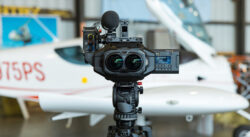 Rogue Labs uses URSA Cine Immersive (Blackmagic) to create content aimed at Apple Vision Pro
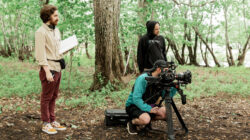 Blackmagic's URSA Mini Pro 12K leads journeys between universes in 'Do I Know You From Somewhere?'
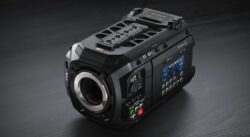 Blackmagic Design will market only the body of the Blackmagic URSA Cine 12K
 Blackmagic URSA Cine Immersive: first commercial camera system for Apple Immersive Video
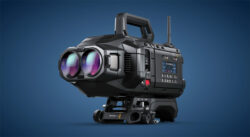 Blackmagic introduces URSA Cine Immersive camera: 8K stereoscopic 3D for Apple Vision Pro
Blackmagic Unveils URSA Cine Immersive Camera: 8K Stereoscopic 3D for Apple Vision Pro
Blackmagic introduces URSA Cine Immersive camera: 8K stereoscopic 3D for Apple Vision Pro
Blackmagic Unveils URSA Cine Immersive Camera: 8K Stereoscopic 3D for Apple Vision Pro
 URSA Cine 12K: the definitive Blackmagic camera for top-level productions
 Blackmagic Design introduces notable improvements to its URSA Broadcast G2 camera
 The Blackmagic URSA Broadcast G2, at the heart of the immersive concerts of Bizarrap in Buenos Aires
 Autodesk Moxion Rooms to offer real-time cloud-camera collaboration in film and television
 The URSA Broadcast G2 arrives, the new Blackmagic broadcast camera
 The Blackmagic Ursa camera now allows recording at 80 fps.