





Beyond Woody and Buzz: Thirty years later, where is animation going?
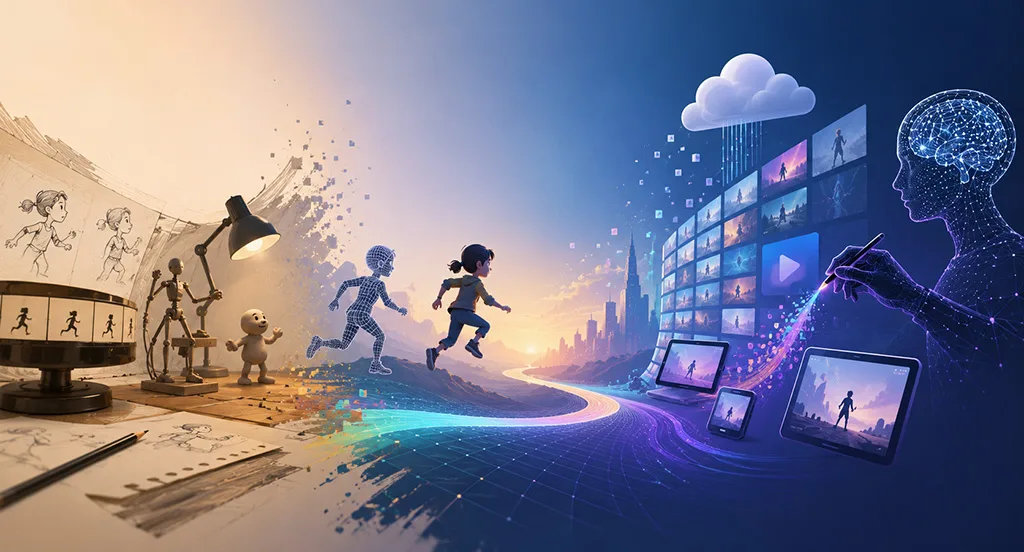

In this gallery, Miguel Puertas, brand business manager of Treintaycinco mm, takes advantage of the premiere of the fifth installment of the 'Toy Story' saga to reflect on the state of film animation, addressing such relevant issues as technological democratization or the emergence of artificial intelligence tools.
When Toy Story hit theaters in 1995, few of us could have imagined that that film would not only mark the birth of one of the most successful franchises in film history, but it would also mark the beginning of a radical transformation in the animation industry. Thirty years later, with the premiere of Toy Story 5, it is inevitable to look back to understand how a sector that has experienced some of the technological revolutions deepest of contemporary audiovisuals.
The interesting thing is that, although the conversation usually focuses on technical advances, the true transformation of animation during these three decades has been much broader than we can believe a priori. The way of producing, distributing, consuming and, above all, imagining stories has changed. Technology has been the driving force, but the impact has reached the entire value chain.
The true revolution has been the democratization of tools. (…) Today, independent teams and even individual creators can access software, graphics engines and rendering systems that were previously reserved for large companies.
Let us remember that, in 1995, the bet that Pixar made represented a break with traditional animation models. Digital production promised more efficient processes and new creative possibilities, although it was still far from the levels of sophistication we know today. What then seemed like an almost experimental innovation ended up becoming the dominant industry standard. Since then, each technological generation has pushed the boundaries of what was possible to represent on screen.
The visual evolution is evident. The characters, environments and physical simulations have reached levels of realism that were unthinkable just a few years ago. Hair, fabrics, lighting or particles are no longer secondary elements, but rather narrative components that contribute to the immersion and emotional construction of the stories.. However, reducing the evolution of animation to a question of graphic quality would be to oversimplify the phenomenon.
The true revolution has been the democratization of tools. Three decades ago, producing quality animation required technological infrastructure within the reach of very few studios. Today, independent teams and even individual creators can access software, graphics engines and rendering systems that were previously reserved for large companies. This accessibility has greatly expanded the creative ecosystem and has allowed the emergence of new players capable of competing in global markets.
Streaming as an actor of change
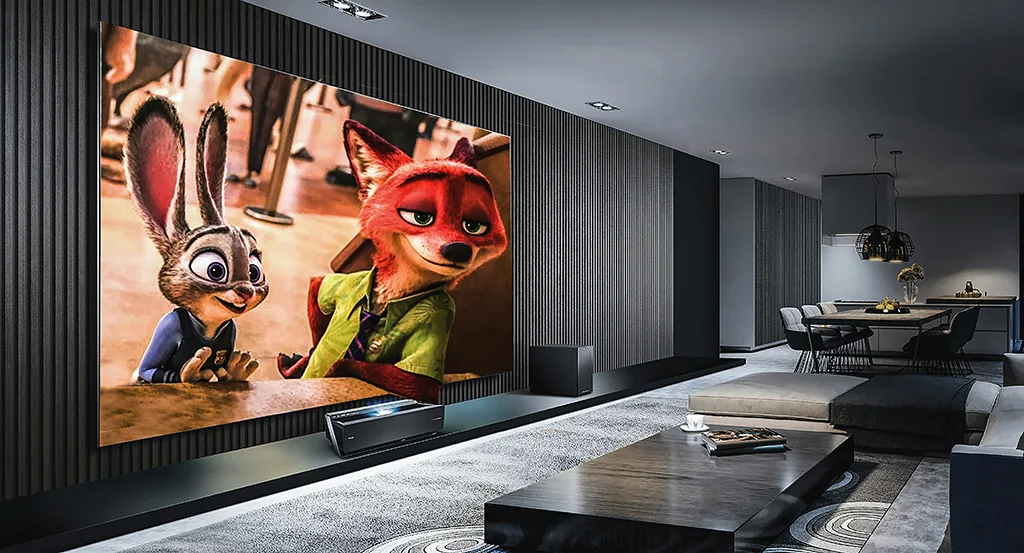
At the same time, the expansion of streaming platforms has transformed the rules of the game. For decades, animation relied heavily on traditional exhibition windows and box office logic. Today, distribution opportunities are much more diverse. Platforms constantly demand content and have contributed to increasing the production of series, feature films and hybrid formats aimed at increasingly segmented audiences..
If for years the industry seemed to converge towards a visual model greatly influenced by the success of Pixar and other major American studios, In the last decade we have seen a long list of proposals that challenge this uniformity.
This transformation has also favored greater aesthetic diversity. If for years the industry seemed to converge towards a visual model greatly influenced by the success of Pixar and other major American studios, In the last decade we have seen a long list of proposals that challenge this uniformity. Titles like Spider-Man: Into the Spider-Verse o Arcane and productions originating from other international markets have demonstrated that visual innovation continues to be a very powerful differentiation tool.
The impact of AI in the sector
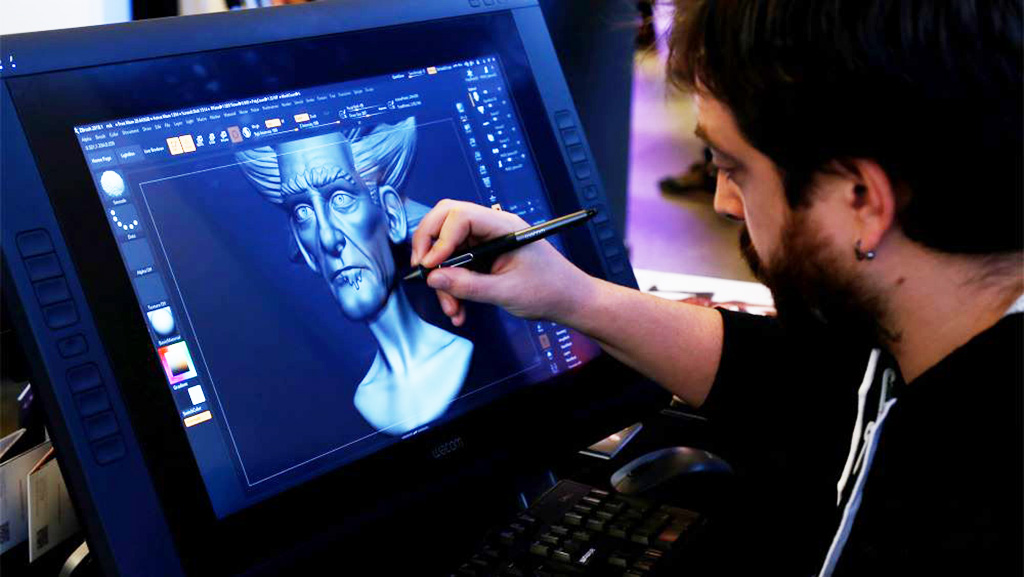
However, Every technological advance brings with it new challenges. The emergence of tools based on Artificial Intelligence has opened one of the most relevant debates for the future of animation. For the first time, many of the tasks that traditionally required hours of specialized labor can be partially or fully automated. Generation of visual concepts, creation of backgrounds, interpolation of movements, dubbing, localization or even development of animatics... These are processes that are already undergoing a profound transformation.
For small studios or independent creators, Artificial Intelligence can become an access tool that allows them to compete in more balanced conditions against large business structures.
Proponents of these technologies highlight their ability to increase productivity, reduce costs and accelerate production cycles. In a sector that is subject to enormous economic pressure and increasingly tight and demanding schedules, it is not easy to ignore these advantages. For small studios or independent creators, Artificial Intelligence can become an access tool that allows them to compete in more balanced conditions against large business structures.
But with opportunities of this type, obvious risks also appear. Automation raises questions about the future of certain professional profiles and the possible creative homogenization of content. If a large part of the creative processes become dependent on systems trained on pre-existing works, The industry must find mechanisms that guarantee originality, artistic diversity and the protection of human talent.
Automation raises questions about the future of certain professional profiles and the possible creative homogenization of content.
The issue is not only technological. In reality, the debate revolves around how we want creativity to evolve in the digital age. The history of animation shows that each innovation has initially generated uncertainty. It happened with the transition from traditional drawing to the digital environment and it happened again with the incorporation of new virtual production tools. However, in most cases, technology ended up expanding creative possibilities rather than replacing them.

The legacy of Toy Story
Perhaps the main lesson that the journey of Toy Story be precisely that. Thirty years later, what we all continue to remember are not the technical advances that made the film possible, but its characters, its emotions and its ability to connect with several generations of viewers. Technology allowed us to build that universe, but it was the narrative that gave it value and permanence among the public..
Toy Story 5 works as a reminder of the extraordinary adaptability of an industry that has known how to reinvent itself time and time again.
As the industry explores new tools and production models, it is important to remember that Technological innovation has never been an end in itself. Its true potential lies in expanding the ability to tell stories, to excite and to connect with audiences.. That has been the constant that has accompanied animation for the last three decades and will probably continue to be the decisive factor in the next thirty years.
The arrival of Toy Story 5 It does not just represent the return of a historic franchise. It also works as a reminder of the extraordinary adaptability of an industry that has known how to reinvent itself time and time again. And, in a time marked by Artificial Intelligence and technological changes that advance at great speed, perhaps the best question is not what tools we will use in the future, but what stories we will be able to tell people thanks to them.
Miguel Puertas
Producer and brand manager of Treintaycinco mm

Did you like this article?
Subscribe to our NEWSLETTER and you won't miss anything.
Related articles
 Thirty years after 'El sol del membrillo', Víctor Erice returns to the feature with 'Cerrar los ojos'
 VSN analyzes where we come from and where we are going in 2020
 The Cine Doré of the Spanish Film Archive celebrates thirty years
 ATTO Technology celebrates thirty years of history
 Riedel Communications celebrates thirty years with an unforgettable party
 Riedel celebrates thirty years reinventing networks and intercommunication at NAB
 Canon will celebrate thirty years since the launch of its EOS system in 2017
 LiveU: video transmission with the highest quality at the lowest bitrate wherever the news is
 'Blue Summer', a global trending topic thirty-three years after its premiere on TVE
 Spectrum for terrestrial broadcasting: where are we going in Europe?
 RNE's 'The Critical Eye' turns thirty years old
 Consumer Cloud: where is consumer entertainment heading?
 Ianiled54, high-performance, low-consumption light wherever it is needed
 Promovisa celebrates thirty years