





Amazonas 1 ends its useful life
El quinto satélite de la flota de Hispasat finaliza su proceso de reorbitado, que se inició el pasado 19 de junio de 2017, permaneciendo a partir de ahora en una órbita cementerio.
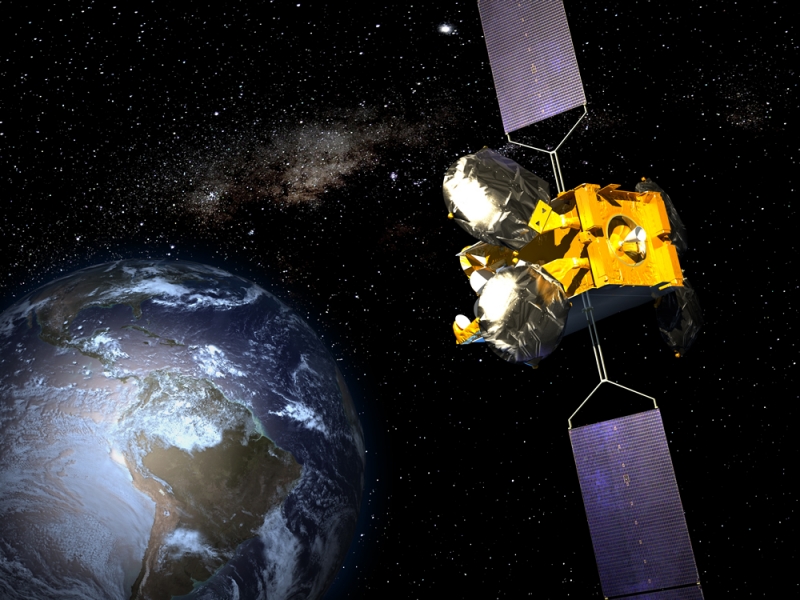
Hispasat ha finalizado este fin de semanael proceso de reorbitado del satélite Amazonas 1. Este proceso, que se inició el pasado 19 de junio, ha terminado tras la transmisión del último comando desde el Centro de Control de Satélites de Hispasat en Arganda del Rey, con el que se ha completado el procedimiento de pasivación del satélite después de haber prestado eficazmente servicios de comunicaciones a lo largo de toda su vida útil, a pesar de haber sufrido una fuga de combustible poco después del lanzamiento.
El satélite Amazonas 1 fue lanzado el 5 de agosto de 2004 desde Baikonur, a bordo del cohete Proton M Breeze M, de la compañía ILS. Construido por la empresa EADS Astrium, actualmente Airbus, fue el primer satélite ubicado en la posición orbital brasileña de 61º Oeste. En 2014, gracias a un acuerdo con Intelsat, el satélite fue trasladado a la posición 55,5º Oeste. A lo largo de su vida útil, el Amazonas 1 ha realizado más de 25.000 transmisiones desde 19 países diferentes, ha hecho 613 maniobras en órbita y ha sido testigo de 1.170 eclipses de Tierra y 29 de luna.
El Amazonas 1 fue la piedra angular de la expansión geográfica de la compañía hacia los mercados de Latinoamérica. Este satélite, con capacidades transatlánticas y panamericanas, ha dado cobertura a todo el continente americano, Europa y el Norte de África. Basado en la plataforma Eurostar 3000, sus principales servicios fueron la distribución de canales de televisión, tanto en Europa como en América, y otras soluciones de telecomunicaciones, como redes corporativas o aplicaciones en banda ancha, entre otros.
Antonio Abad, director técnico y de Operaciones de Hispasat, ha destacado que “el satélite Amazonas 1 ha sido muy especial para Hispasat porque supuso el primer paso en la internacionalización de la compañía. El satélite sufrió inicialmente una fuga de combustible que puso en cuestión su funcionamiento futuro. A pesar de esto, el Amazonas 1 ha cumplido con la mayoría de su vida útil, algo que era impensable tras aquel fallo. Eso demuestra que era un satélite robusto y fiable, en la línea de calidad a la que Airbus nos tiene acostumbrados, con la colaboración de la industria española, que también participó en su desarrollo”.
Por su parte Arnaud de Rosnay, SVP Telecommunications Satellites de Airbus, afirmó que “estamos orgullosos de ser los socios industriales de Hispasat desde su creación y les damos las gracias por su confianza, que nos ha permitido contribuir a sus numerosos éxitos. Amazonas 1 empieza una bien merecida jubilación y el relevo está listo, en particular gracias a Amazonas 2, también construido por Airbus, y que ofrece un incremento de capacidad en una de las principales posiciones orbitales de nuestro distinguido cliente Hispasat”.
Ahora, el Amazonas 1 ha terminado de recorrer los 300 km. que distan desde su posición a 36.000 Km. de distancia de la Tierra hasta la denominada “órbita cementerio”, donde ha sido definitivamente ubicado, tal y como establecen las recomendaciones de la Unión Internacional de Telecomunicaciones (UIT) y el Comité de Coordinación Inter-Agencia de Basura Espacial (Inter-Agency Space Debris Coordination Committee) para el buen mantenimiento de la órbita geoestacionaria cuando un satélite finaliza su vida útil.
Did you like this article?
Subscribe to our NEWSLETTER and you won't miss anything.
Related articles
 Atresmedia ends the single guideline and launches a new commercial strategy
 This is the public consultation on the 700 MHz band that the Government has just opened
 Amazonas 5 reaches its orbital position and enters service
 Hispasat's Amazonas 5 is already in space
 The Amazonas 5 satellite arrives at the Baikonur space base
 Antonio Banderas, Goya of Honor: “the second part of the game of my life has just begun”
 The Amazonas 4A satellite arrives at the Kourou launch base
 Last minute adjustments delay the launch of the Amazonas 4A
 Hispasat will launch the Amazonas 4A before the end of the year
 Media Networks successfully completes the migration to Amazonas 3
 The Amazonas 3 satellite begins the in-orbit testing phase
 The Amazonas 3 satellite arrives at the Kourou launch base
 AJA DataCalc – Useful Free Calculator for Professional Applications
 Everything ready for the launch of Amazonas 2