





HDViper: videoconferencia en alta definición
Este proyecto, impulsado por la Fundación i2CAT, presenta sus resultados en Celtic Event 2009. Se trata de una novedosa plataforma abierta y escalable para videoconferencia de alta definición.
 Basada en una aplicación denominada Snake, la Fundación i2CAT ha desarrollado el proyecto HDViper destinado a facilitar la comunicación por videoconferencia en alta definición. Las conclusiones de este proyecto se han presentado en Celtic Event 2009, evento organizado por el programa europeo de Investigación y Desarrollo Celtic, celebrado esta semana en París. Se trata de una novedosa plataforma abierta y escalable de videoconferencia en alta definición (HD) basada en una nueva aplicación llamada Snake, que permitirá un servicio fiable y atractivo tanto para los usuarios como para los operadores.
La aplicación está basada en la Arquitectura Orientada a Servicios (SOA), que define el uso de servicios para dar soporte a los requerimientos de software del usuario. En ésta, los diferentes nodos de la red hacen disponibles sus recursos como servicios independientes a los que se tiene acceso de un modo estandarizado, sin conocimiento de su implementación subyacente. A través de esta arquitectura, se podrán acceder a servicios multimedia, de control y de red.
La Fundación, coordinadora técnica del consorcio europeo del proyecto, ha sido la responsable de la implantación del núcleo de la plataforma de multivideoconferencia (MCU, Multipoint Control Unit). Esta nueva plataforma se aprovechará de las nuevas tecnologías de acceso (FTTx, VDSL y ADSL+) para desarrollar una auténtica videoconferencia en alta definición adaptable a muchos mercados diferentes.
“En la fase actual del proyecto se están desarrollando prototipos para probarlos en diferentes escenarios: el residencial, el sector de sanidad y e-salud, el sector empresarial y el e-learning”, asegura Flaminio Minerva, coordinador del Clúster Audiovisual de la Fundación i2CAT. El impacto esperado del proyecto es la “expansión del mercado de la videoconferencia, promoviendo así el papel de Europa y, concretamente, de España como líderes tecnológicos en servicios de videoconferencia HD sobre Internet”, añade. El protagonismo español en el consorcio de este proyecto es importante, puesto que, además de la Fundación i2CAT, participan Telefónica I+D, Alcatel-Lucent España y Androme Ibérica.
Asimismo, la Fundación i2CAT ha presentado en el Celtic Event otro de sus proyectos europeos más representativos: DRMSolution NG, que aportará una solución de interoperabilidad y convergencia de las diferentes tecnologías DRM existentes en el mercado. En él se desarrolla un sistema P2P híbrido fijo-móvil de superdistribución, “alineado con los intereses actuales de los operadores de telecomunicaciones, que buscan ofrecer servicios con fuerte demanda de los usuarios, sin que este acceso masivo colapse su infraestructura de red”, asegura Minerva. “El proyecto permitirá al usuario utilizar sus contenidos protegidos en múltiples dispositivos, disfrutando de este modo en el PC del contenido descargado en su teléfono móvil, así como vincular los derechos de uso a la identidad del usuario, no al dispositivo, y comprar derechos de uso para otro usuario”, añade. En este proyecto participan, a nivel español, Telefónica I+D, Telefónica Móviles y la Fundación i2CAT.
Los proyectos HDVIPER y DRMSolution NG se desarrollan en colaboración con el grupo de investigación mediaENTEL-BAMPLA de la Universitat Politècnica de Catalunya y están parcialmente financiados por el Ministerio de Industria, Turismo y Comercio.
The i2CAT Foundation es una entidad sin ánimo de lucro fundada en 2003 y presidida por el secretario de Telecomunicaciones y Sociedad de la Información de la Generalitat de Catalunya. La fundación pone la investigación y la innovación de Internet al servicio de la sociedad, mediante la colaboración entre la Administración pública, las empresas y los grupos de investigación de las universidades y del mundo educativo para el desarrollo de proyectos innovadores en el ámbito de las nuevas tecnologías de red.
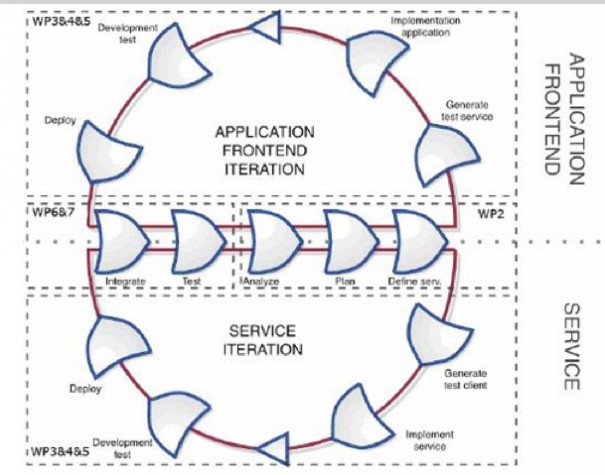
Flujo de trabajo propuesto en el Proyecto HDViper
Did you like this article?
Subscribe to our NEWSLETTER and you won't miss anything.
Related articles
 La Xarxa Audiovisual Local actualiza a alta definición su red de contribución
 La 2 de TVE, ya en alta definición en toda España
 The 4K-UHD Summit begins in which experts from around the world debate Ultra High Definition
 Aragón TV migrates its continuity to high definition
 Politics in Ultra High Definition
 Ikusnet, ahora en alta definición
 La Fórmula 1 vuelve a TV3 en alta definición
 Formula 1, in high definition
 All football in high definition on TV3 HD
 Royal wedding in high definition
 El Vaticano da su bendición a la alta definición
 Imagenio: alta definición sobre VDL a partir de diciembre
 TVE en alta definición en Madrid
 MTV Winter en alta definición y en 3D