





DTT will have to compete with Internet television
Ésta es la conclusión del proyecto de investigación Trilogy impulsado por la Fundación i2CAT y en el que han colaborado investigadores de la Universidad Politécnica de Cataluña, la Universidad Pompeu Fabra y la Universidad Ramon Llull.
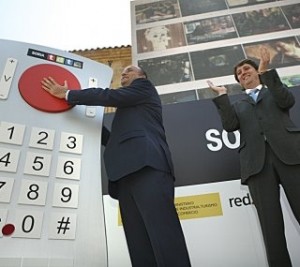 La Fundación i2CAT ha presentado en el MAC’09 los avances a nivel audiovisual de su proyecto de investigación Trilogy (FutuRE Internet technoLOGY)). i2CAT ha dado a conocer uno de los resultados más relevantes del proyecto: una plataforma experimental de difusión de contenidos audiovisuales en directo utilizando una infraestructura distribuida (conocida como arquitectura P2P). Albert Vidal, responsable del área de investigación de i2CAT, ha señalado que se trata de “una plataforma que permite la libertad total y que revolucionará el modo de consumir y producir contenidos, ya que cualquier usuario, con un ordenador convencional, podrá retransmitir un vídeo registrado en tiempo real a miles de usuarios repartidos por todo el mundo”. La plataforma permite además adaptar la calidad del contenido al tipo de dispositivo al que vaya dirigido (televisor, ordenador o móvil) y al ancho de banda disponible, con lo que “el receptor podrá ver los contenidos con el máximo de calidad que su dispositivo le permita”, añade Vidal.
El directivo de i2CAT señala también que desde esta Fundación están “construyendo la estructura de lo que será la televisión del futuro: una televisión no sometida a un dispositivo concreto (televisor), completamente flexible en el uso y con una calidad hasta tres veces mayor que la actual TDT”. Según el responsable de Investigación, “el futuro de la televisión se encuentra en estos nuevos métodos de difundir contenidos audiovisuales mediante Internet (conocida como Televisión IP), ya que permitirá el abaratamiento de la infraestructura necesaria o la flexibilidad para ofrecer contenidos y publicidad adaptados a los usuarios. Se están realizando muchos esfuerzos para llevar a cabo el polémico apagón analógico, pero lo más probable es que en los próximos años la TDT tenga que medirse con una televisión por Internet totalmente competitiva, una vez superados todos los obstáculos actuales”, concluye.
El proyecto de investigación Trilogy ha supuesto casi dos años de trabajo y ha contado con la colaboración de investigadores de la Universidad Politécnica de Cataluña, la Universidad Pompeu Fabra y la Universidad Ramon Llull. Los trabajos se han realizado en consonancia con las investigaciones sobre la Internet del futuro que se están realizando a nivel internacional para superar los grandes retos que actualmente ha de salvar la televisión IP: la calidad de imagen y la adaptación del formato a diferentes dispositivos. En este sentido, el proyecto Trilogy ha conseguido buenos resultados, entre los que destacan la obtención de nuevos mecanismos para el envío de grandes volúmenes de información sobre redes ópticas, sistemas de transmisión de contenidos audiovisuales con tres veces mayor calidad que la televisión digital actual, aplicaciones que permiten un uso energético más eficiente de las redes de telecomunicaciones o dispositivos de tamaño muy reducido (sensores) que permiten conectar sin hilos objetos de diferentes tipos a Internet y hacerlos interactuar entre ellos (M2M o Internet máquina a máquina).
Did you like this article?
Subscribe to our NEWSLETTER and you won't miss anything.
Related articles
 The 33rd Multiscreen Television Seminar will take place in February in León
 Television and Internet merge at BIT 2016 with Aicox
 Ericsson anticipates the Internet era of television at NAB
 53% of the population accesses the Internet while watching television
 Ono launches 'Ono TV Online', its new Internet television service
 Publiespaña integrates television and Internet marketing
 BBC takes a new step in television connected to the Internet
 Internet consumption in the US already exceeds that of television and print media
Consumers now spend the same amount of time on the Internet as they do watching television
Internet consumption in the US already exceeds that of television and print media
Consumers now spend the same amount of time on the Internet as they do watching television
 LABtv, television made art through the Internet
 Internet television, the sign of the times
 Internet consumption now exceeds television consumption
 PomeloTv: a new way of watching television… on the Internet
 Vivocom and ADNStream, together in Internet television