





Internet consumption now exceeds television consumption
The seventh edition of Mediascope Europe prepared by the European Interactive Advertising Association (EIAA) reveals that the Internet is consolidated as the medium most 'consumed' by Spaniards, even surpassing television. Spaniards spend more time connecting to the Internet from anywhere and at any time (5.5 hours a week) than reading the newspaper (4.6 hours) or magazines (3.6 hours).
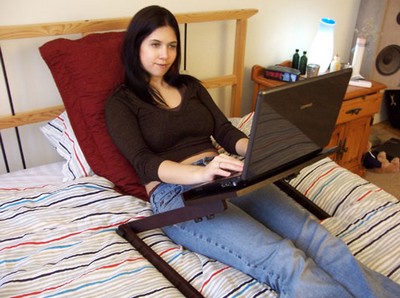 The European Interactive Advertising Association (EIAA) has released the results of the seventh edition of its Mediascope Europe study, which consolidates the Internet as the medium most 'consumed' by Spaniards, even surpassing television. Technological innovation together with the numerous options that users have to connect to the network have managed to significantly increase Internet use in Spain to 13.6 hours per week, compared to the 13 hours dedicated to television. This figure also places us as the fifth European country with the highest Internet consumption.
The EIAA's Mediascope Europe 2010 study, expanded this year to 15 European markets, also highlights how consumers are more open to new ways to enjoy the Internet and how this new trend is influencing their daily lives. And the majority of consumers have given an opportunity to connecting to the Internet through their mobile devices (48% vs. 46%), while the growth in the use of wireless broadband and laptops has highlighted how the great diversity of devices enabled to use the Internet is allowing consumers to be connected at any time of day and from anywhere.
In total, 2.3 million Spaniards (71 million Europeans) surf the Internet through mobile devices weekly and dedicate almost 5.5 hours per week to connecting through these devices (6.4 hours per week in Europe), “Internet mobility” thus becomes the preferred pastime of Spaniards before reading the newspaper (4.6 hours) or magazines (3.6 hours).
Young Spaniards have been the first to adopt this new trend and this has caused an increase in the number of young people between 16-24, with 14%, and 12% in ages between 25-34, who use the Internet on their mobile devices, with men being the majority users. This increasing trend among consumers to spend time connected seems to contribute to the improvement of coverage, speed and services offered over the Internet. Therefore, advertisers can see that consumers are increasingly familiar with accessing the Internet from anywhere or anywhere and take advantage of this data to develop new multimedia marketing strategies.
Internet as entertainment and tool
The Internet continues to demonstrate its capacity as a popular source of entertainment for consumers: 24% of Spaniards (25% in Europe) play games, 34% (25% of Europeans) listen to the radio over the Internet and 46% (32% in Europe) watch movies, television or online videos at least once a month. With almost a quarter of Europeans (29%) following brands closely thanks to the internet, the latter is not only used as an entertainment channel, but also as a functional medium. Likewise, the high percentage shows the high level of connection – both emotional and rational – that users have achieved. Regarding those Spaniards who have a phone with an Internet connection, 74% connect to social networks, 82% carry out some type of search and 85% use their email through their mobile phone at least once a month. This shows that these connections made online are technologically sophisticated and deeply committed – thus demonstrating that it is a great opportunity for advertisers to create brand image as well as make online recommendations.
Furthermore, “word of mouth” through the Internet continues to play a very important role in communication, with a high percentage of Spanish users, 85% (in the case of Europe only 71%), admitting that they maintain much more contact with family and friends since they use the Internet.
Once again, the mobile phone seems to be the big driver, since almost half of Europeans (48%) and twice as many users in Spain (up to 24%) access their phones with an Internet connection for much more than just having a simple telephone conversation. Spanish users who claim to communicate through social networks from their mobile phone have tripled to 12%, and 75% through instant messaging (16% in both cases in Europe). Advertisers can benefit from consumers' growing need to be constantly entertained and updating their social media profiles and activities, and use this to plan multimedia campaigns that capture consumers' attention across multiple platforms.
Convergence
According to Mediascope Europe, media convergence is increasing since the study shows that 21% of Spanish Internet users watch television while connected, 6% more than the previous year. In the case of Europe the figure is also notable, referring to a third of Europeans (30%). Taking into account the latest technological advances - such as Netbooks, tablets or the new iPad -, that almost half of European households (41% in Spain and 47% in Europe) already have at least one laptop, and that 121 million Europeans (10 million in Spain, 11% more than last year) use wireless broadband; Increased mobility and convergence seems inevitable. Advertisers should no longer look at media in isolation, but rather embrace it together as a single trend, and take advantage of the richness and diversity of opportunities it offers to advertising.
Michael Kleindl, President of the EIAA, said: “Technological innovation coupled with consumers' continued desire for media fusion presents a great opportunity for advertisers to see how we are moving in 2010. It is important for brands to adapt to the change, to the mobility that the Internet offers, and use this to shape their marketing strategies.”
Did you like this article?
Subscribe to our NEWSLETTER and you won't miss anything.
Related articles
 Hybrid television continues to replace traditional television consumption in Spain
 The time spent streaming on Samsung televisions exceeds linear television in Spain
 Pay television over IP exceeds 400 million euros during the first quarter of 2019
 Pay TV consumption picks up
 Television and video consumption increases 85% since 2010
 53% of the population accesses the Internet while watching television
 Streaming consumption almost equals that of conventional television
 Average television consumption is now 4 hours and 12 minutes a day
 Hybrid television, towards another form of television consumption
 Tablets, connected television and social networks enrich the television consumption scenario
 TV3 video consumption on the Internet exceeds 10 million views
 Internet consumption in the US already exceeds that of television and print media
 PomeloTv: a new way of watching television… on the Internet
 DTT will have to compete with Internet television