





Grass Valley K2 Dyno begins marketing
The Grass Valley system is capable of immediate variable speed replays in both SD and HD.
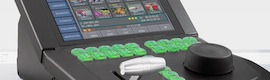
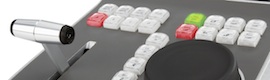
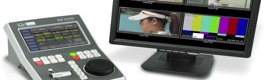
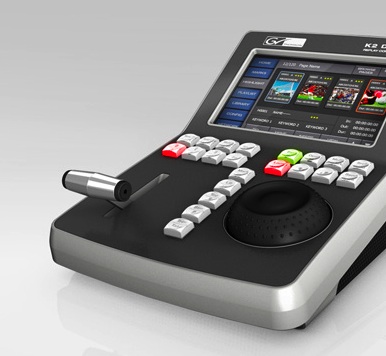 After its presentation in April in Las Vegas, Grass Valley has begun the commercialization of its K2 Dyno solution, a compact next-generation controller at a very competitive cost. Combined with the new Grass Valley K2 Summit SD/HD production client, the system helps sports producers and other professionals capture live events in SD and HD resolutions and immediately perform instant replays at variable speeds. These allow critical analysis during very fast passing events. It is perfect for HD mobile sports units and production facilities with shared storage.
The K2 Summit production client is specially designed to support live production of SD/HD events and live-to-tape/live-to-disk applications. The K2 Summit joins the renowned K2 media server family for broadcast playout applications, news production, and other live events. The K2 Summit production client can be configured as part of a centralized solution (SAN) that includes multiple production clients, media clients, K2 media server, and K2 RAID storage. It can also be configured as a production-independent client with internal or external storage with embedded server application for use in a distributed workflow environment. Both SAN and standalone systems are optimized to work in a file-based data environment.
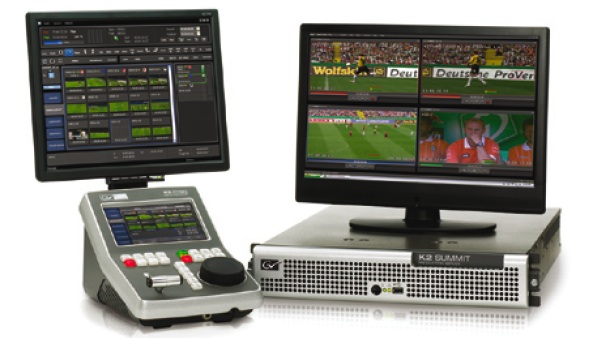 El controlador K2 Dyno puede operarse, en estructuras avanzadas, con la arquitectura de metadatos Grass Valley MediaFrame. Destacar, igualmente, que la solución puede importar/exportar MXF, QuickTime y GFX (SMPTE 360M) de forma directa mediante cualquier dispositivo USB.
Entre los productores y broadcasters que de forma pionera han utilizado ya el sistema se encuentra Arizona Cardinals y Buffalo Bills (dos equipos de la NFL con gran producción de contenidos) y Sweetwater Digital Productions (en EE.UU.); Comtelsat (para canales como The Green Channel), Venezuela; NBC, Kansai Telecasting Corporation y KN Mainichi Broadcasting, en Japón. En total ya hay operativos en todo el mundo un total de 23 sistemas.
Did you like this article?
Subscribe to our NEWSLETTER and you won't miss anything.
Related articles
 The French group RMC BFM begins its IP-UHD transformation with Grass Valley
 Grass Valley will bring the full power of Grass Valley Media Universe (GVMU) to IBC 2025
 AJA begins the commercialization of its OpenGear OG-3G-AMA
 For-A begins marketing its HVS-490 production mixer
 Grass Valley begins an international tour to show its proposals for 4K and IP environments
 Dorna Sports renews its commitment to Grass Valley's K2 Dyno repeater systems
 Newtek begins the commercialization of TalkShow
 Grass Valley Partners with AJA Video Systems to Enhance K2 Dyno and K2 Summit 4K Capabilities
 AJA begins marketing Io 4K for the new Mac Pro
 Wellen + Nöthen chooses Grass Valley K2 Dyno repeater systems
Grass Valley lanza ‘Multi-City K2 Dyno Training Tour’ y un programa de leasing
Wellen + Nöthen chooses Grass Valley K2 Dyno repeater systems
Grass Valley lanza ‘Multi-City K2 Dyno Training Tour’ y un programa de leasing
 RCN offered the whole spectacle of the U-20 World Cup with K2 Dyno from Grass Valley
 Grass Valley begins a new stage together with Francisco Partners
 Grass Valley Dyno Director expands the capabilities of K2 servers