





Antón Reixa defends independent production in Santander
El presidente de Filmanova asegura en el Foro 50+4 que se celebra estos días en Santander que la producción independiente alivia “costes” de la televisión pública y “garantiza la creatividad” y advierte que el sector se encuentra con el “peligro” de la repercusión que pueda acarrear la crisis económica, si se producen “recortes en las televisiones públicas”.
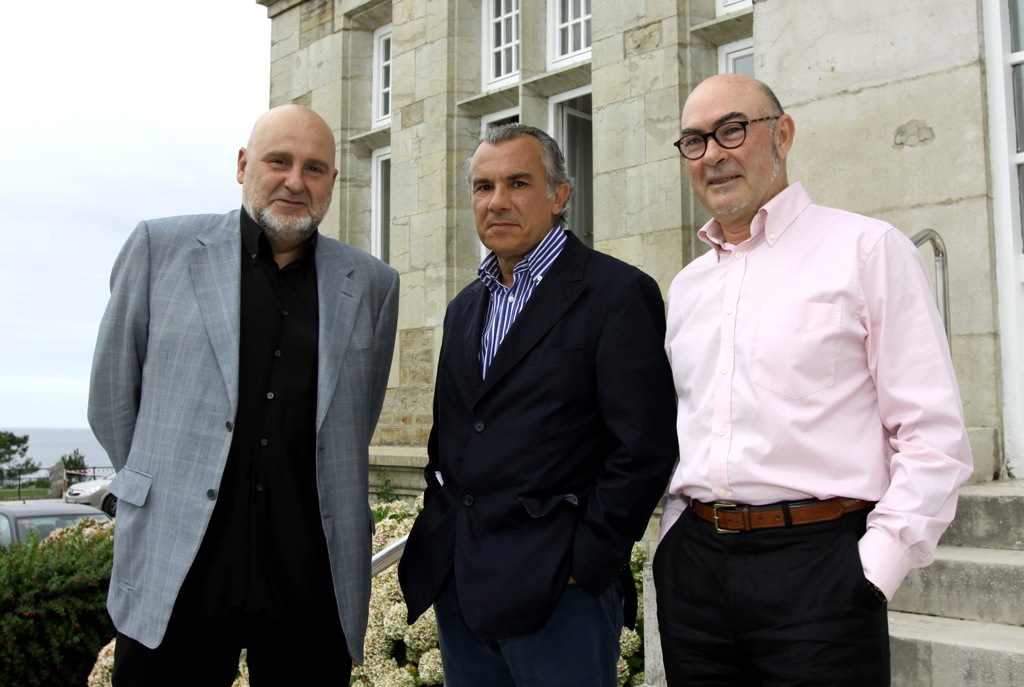
El director y productor independiente Antón Reixa ha lamentado este martes que, en la práctica, la relación entre el sector privado y la televisión pública esté “desplanificada”, cuando, a su modo de ver, la producción externa “garantiza la creatividad” y es capaz de ofrecer “productos competitivos a costes inferiores de los que se manejan en televisiones de cobertura estatal”.
Para Reixa, “todas las televisiones públicas tienen un problema laboral”, porque, desde su punto de vista, sólo deberían tener una plantilla estable para sus programas informativos. “El resto de la actividad de una cadena está en el terreno de lo intangible”, por lo que “no se puede” desarrollar con un “catálogo funcionarial”, opinó.
Es ahí donde la producción independiente podría aportar “creatividad” y “racionalidad” en el gasto, tal y como afirmó el presidente de Filmanova en una rueda de prensa celebrada en la Universidad Internacional Menéndez Pelayo (UIMP), con motivo de su participación en el Encuentro ‘Foro 50+4 de tendencias televisivas. Desafíos del servicio público televisivo en el entorno digital’, y en la que también intervinieron el director del Instituto Cervantes de Roma, Mario García de Castro, y el periodista y director del encuentro, Joan Álvarez.
Reixa defendió “la importancia” de “vertebrar un sector independiente de televisión”, puesto que, según indicó, “la democracia es más fuerte si existe una industria cultural”. Sin embargo, señaló que el sector se encuentra con el “peligro” de la repercusión que pueda acarrear la crisis económica, si se producen “recortes en las televisiones públicas”.
En este sentido, reivindicó que es “importantísimo que se preserve el esfuerzo en la televisión pública” y explicó que al igual que el Gobierno de la Nación estableció “primas para que la gente comprara coches” debería ofrecerlas también “para que la producción audiovisual continúe”, ya que “tiene un impacto en el empleo importantísimo”.
Expectativas TDT
En otro orden de cosas, Reixa se refirió a las expectativas que había creado la llegada de la TDT en el sector de la producción independiente y que, por el momento, se han visto frenadas. Así, manifestó que “cuando las cadenas se den cuenta de que deben ofrecer programación específica” y no reemisiones de programas de sus canales principales, “se verá que la producción independiente tiene mucho que decir”.
Igualmente, este productor gallego destacó la “importancia” de la televisión pública, un “elemento insustituible” a la hora de ofrecer “contenidos específicos” y cubrir algunas de las “necesidades” de la ciudadanía, que las cadenas privadas “no pueden atender”.
Español, un embajador en el exterior
Por su parte, García de Casas lamentó que España no esté liderando “como debiera” la información en español fuera de sus fronteras. No obstante, confió en las posibilidades que representan el Canal Internacional de TVE y el Canal 24 Horas, a los que definió como “piezas cardinales” del nuevo modelo de servicio público, basado en “una programación de excelencia y calidad sin fisuras”, que la Corporación de RTVE está implementando en estos momentos.
En la misma línea, advirtió de que el Canal Internacional “tiene un gran potencial por delante” e insistió en que, si se le dota de los recursos que requiere, “va a poder desarrollar una labor equiparable a la de la BBC” que, desde su punto de vista, es “una guía a seguir” porque “desarrolla un importante trabajo de diplomacia cultural fuera de sus propias fronteras”.
Para el director del Instituto Cervantes de Roma, la apuesta por la programación cultural se tiene que ver “forzosamente reforzada” en las señales de emisión hacia el exterior que, según dijo, “siempre han estado cuestionadas y han sido objeto de polémica” cuando, sin embargo, “deberían aclarase y redefinirse”.
Así mismo, elogió el papel del español como “uno de los grandes embajadores culturales de España en el exterior”. “Tenemos una lengua que tiene una gran demanda en los países europeos y americanos, que supone una gran oportunidad para sacarle partido a la crisis porque es en la lengua, la cultura, las industrias culturales y el talento donde está el valor añadido”, relató García de Casas.
Did you like this article?
Subscribe to our NEWSLETTER and you won't miss anything.
Related articles
 WorldDAB defends DAB+ as a driving force in the broadcast business
 La producción independiente europea manifiesta su “preocupación” por la propuesta europea AgoraEU (2028-2034)
 Spanish film associations join a global petition to protect independent production
 Méndez-Leite rejects violence against women in her speech and defends freedom of creation
 Producción independiente y plataformas: los dos pilares de la nueva Ley del Cine
 NHK defiende en la 4K HDR Summit que producir en 8K es más fácil que nunca
 EITB closes an agreement to promote independent Basque production
 Own and independent production in Spain reaches a historical maximum
 Emili Planas (Mediapro) defends better pixels versus more pixels at BIT Experience
 Hans Hoffman (UER/EBU) defiende en Sevilla la necesidad de una estandarización para UHDTV
 Canal+ Xtra, un nuevo hueco para la producción independiente
 Foro 50 analiza en Santander las principales tendencias en televisión
 A Contracorriente, un nuevo impulso para la producción independiente
 ASIMELEC defiende el papel de los fabricantes ante la confusión generada por la TDT de pago