





Sapec conecta sobre IP las sedes de Madrid y Castilla La Mancha de RTVE
Las señales de RTVE entre Madrid y las sedes de Castilla La Mancha se codificarán con los equipos de Sapec. La Corporación RTVE ha confiado una vez más en Sapec, compañía española a la que ya encargó el suministro e instalación de los equipos de codificación y decodificación que permitieron unir por red IP Madrid y las sedes de Extremadura.
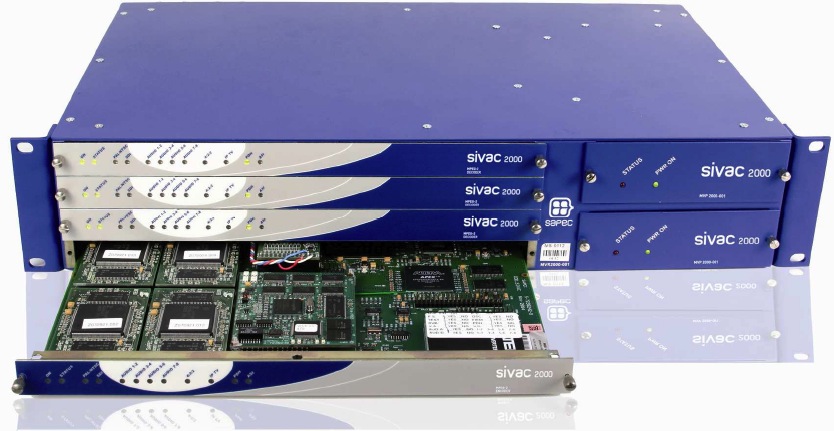
Sapec ha sido la empresa adjudicataria para realizar el suministro, instalación y puesta en marcha de todo el equipamiento de vídeo codificación necesario para realizar las contribuciones de video por red IP de RTVE, entre Madrid y las sedes de Castilla La Mancha.
La Corporación pública ha confiado una vez más en Sapec, compañía española a la que ya encargó el suministro e instalación de los equipos de codificación y decodificación que permitieron unir por red IP Madrid y las sedes de Extremadura
Los codificadores y decodificadores a suministrar en este proyecto pertenecen a la familia SIVAC 2000, diseñada y fabricada por Sapec que permite incluir hasta cuatro placas codificadoras/decodificadoras en un chasis de 2RU con fuente de alimentación redundante AC y alimentación DC. Este modelo cuenta con entradas PAL y SDI, 8 audios embebidos, analógicos o AES/EBU, compresión 4:2:2P@ML y MP@ML e interfaz de salida simultanea ASI e IP.
Dos han sido los aspectos claves que han permitido a Sapec ser la adjudicataria de este proyecto. Por una parte, el nuevo interfaz gráfico de estas soluciones con interfaz IP permite gestionar de forma sencilla múltiples equipos de una red IP. Su potente interfaz de salida/entrada IP de estos codificadores y decodificadores incluyen también herramientas de protección contra errores, FEC y permite la transmisión a 2 destinos unicast o multicast diferentes y con distinta configuración del FEC.
Por otro lado, el nuevo interfaz de salida/entrada IP incluye además la nueva tecnología desarrollada por Sapec FastIPsync , que permite eliminar el jitter de transmisión y recepción consiguiendo así reducir drásticamente el retardo de codificación y decodificación, con uno de los delays más bajos del mercado (aproximadamente 140ms ). También permite realizar una medida en tiempo real de la calidad de la red.
Did you like this article?
Subscribe to our NEWSLETTER and you won't miss anything.
Related articles
 WWTV conecta dos sedes separadas por 80 kilómetros con tecnología IP y la intercom Arcadia (Clear-Com)
 RTVE confía a Beatriz Pintado la dirección del Centro Territorial en Castilla-La Mancha
 RTVE unificará sus sedes en Castilla y León en un nuevo centro territorial
 Centro Territorial de Castilla-La Mancha de RTVE: una reinauguración mirando al futuro
 Laguna de Sapec conecta los centros de contribución de las sedes de IB3
 RTVE enlaza las Cortes de Castilla-La Mancha con una “small cell” 5G
 Sapec suministra equipamiento Nevion para transmisiones bajo DVB-T2 en Castilla-La Mancha
 Llega a Castilla-La Mancha el 4K gracias a la colaboración de Telecom CLM, Castilla-La Mancha Media y RTVE
 El Instituto de RTVE organiza el IV Campus Audiovisual en sus sedes de Madrid y Barcelona
 RTVE pone en marcha un innovador sistema centralizado de redacción en el centro territorial de Castilla-La Mancha
 Sapec suministra codificadores y decodificadores a Tv Castilla y León
 El tiempo en Castilla-La Mancha Televisión con Meteoplay3
 Zeligstudio pone color a la Navidad de Castilla-La Mancha Tv
 Estado sólido de Panasonic en Castilla La Mancha Tv