





Cinema 3D: LG introduces passive stereoscopy in the home
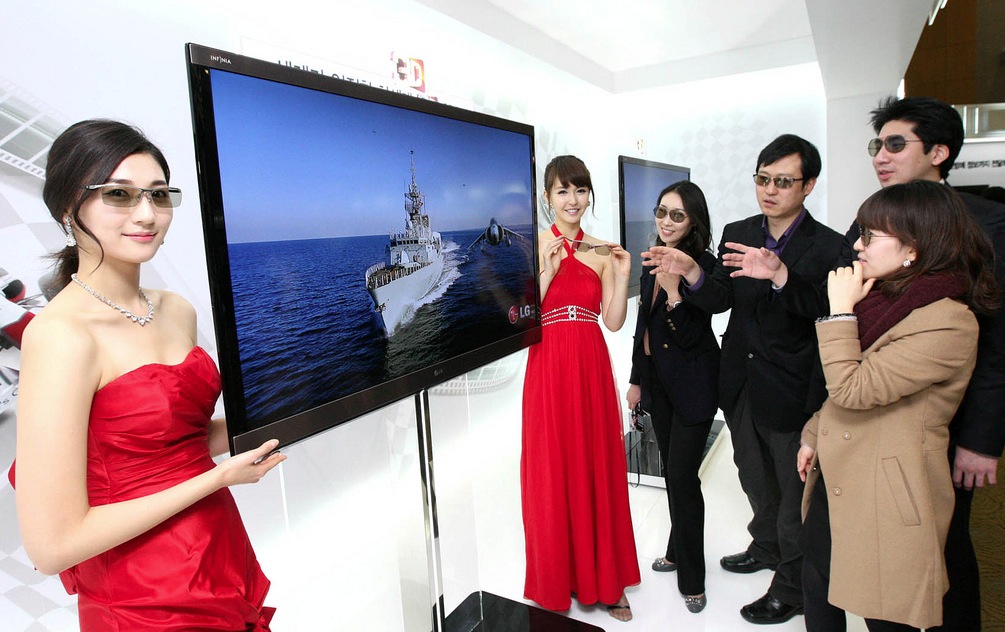
La experiencia de visionado 3D de la nueva gama de pantallas Cinema 3D TV de LG se basa en la tecnología Film Patterned Retarder (FPR), que optimiza la separación de imágenes del ojo izquierdo y derecho. Estas imágenes se fusionan después mediante el uso de unas gafas pasivas más ligeras y sin necesidad de recarga.
LG Electronics (LG) ha presentado en el Grand Palais de París con un despliegue espectacular y ante más de 1.500 invitados su nueva serie de pantallas con estereoscopía pasiva Cinema 3D Tv. Los invitados pudieron asistir a la proyección de la nueva película 3D Rio en una enorme pantalla de 27×11 emtros. Durante la presentación se batieron dos récords: el de reunir al mayor número de personas viendo una película 3D simultáneamente y el récord de la pantalla 3D más grande del mundo, ambos registros fueron confirmados por Guinness World Records tras el evento.
Frente a las opciones basadas en tecnología activa, basadas en la obturación de las imágenes que reciben ambos ojos, LG apuesta en la nueva gama Cinema 3D Tv por “gafas más cómodas, imágenes más brillantes y mayor ángulo de visión sin parpadeo”, según el fabricante.
“Hemos utilizado nuestro conocimiento en 3D para resolver las preocupaciones de los consumidores, como son el parpadeo de la imagen y gafas difíciles de usar, y ahora estamos preparados para anunciar un auténtico avance en 3D con la presentación del nuevo LG Cinema 3D TV”, ha comentado Havis Kwon, presidente y consejero delegado de la división de Home Entertainment de LG Electronics.
La experiencia de visionado 3D del Cinema 3D TV comienza con la tecnología Film Patterned Retarder (FPR), que optimiza la separación de imágenes del ojo izquierdo y derecho. Estas imágenes se fusionan después mediante el uso de unas gafas pasivas. Con tan solo 16 gramos de peso, estas gafas no tienen componentes eléctricos por lo que no producen ondas electromagnéticas y no necesitan ser recargadas nunca.
La imagen resultante ha obtenido la certificación Cinema 3D TV “sin parpadeo” otorgada por Intertek y TÜV, dos reconocidas agencias de certificación europeas, conviertiéndolo en la primera televisón 3D que recibe este certificación. Desde LG afirman que, con esta imagen tan homogénea, el Cinema 3D TV prácticamente elimina la sensación de mareo o fatiga ocular que podría aparecer con anteriores modelos de televisiones 3D, lo que significa que los usuarios pueden disfrutar de contenido 3D durante más tiempo y con mayor comodidad.
Para incrementar la calidad de imagen se ha incorporado el Light Boost 3D de LG, una delgada película que cubre la pantalla del Cinema 3D TV que asegura que las imágenes 3D se muestran con todo su brillo. Para contrarrestar cualquier zona oscura que a veces puede aparecer en el contenido 3D, el Light Boost 3D crea imágenes más nítidas y brillantes para una experiencia de visionado 3D aún mejor.
Did you like this article?
Subscribe to our NEWSLETTER and you won't miss anything.
Related articles
 Stereoscopy, protagonist on December 3, at Mistika #3Dday
 Standards for stereoscopy in cable networks
 Meduza, a curious project for 4K stereoscopy
 Stereoscopy… without complications, with Sony
 Experts give their opinion on animation, ICT convergence and stereoscopy
The EBU frames the use of stereoscopy on television
Experts give their opinion on animation, ICT convergence and stereoscopy
The EBU frames the use of stereoscopy on television
 Introduction to stereoscopy with Sgo
 Stereoscopy, without secrets
El Mercado 3D Wire analizará el futuro de la estereoscopía
Stereoscopy, without secrets
El Mercado 3D Wire analizará el futuro de la estereoscopía
 3ality stereoscopy will invade Las Vegas
 Ikegami also joins stereoscopy
 LG reinvents home entertainment with its wide range of “Infinia” HD LCD and LED televisions
 Sony 3D Technology Center: formación e investigación en estereoscopía
Stereoscopy fever reaches YouTube
Sony 3D Technology Center: formación e investigación en estereoscopía
Stereoscopy fever reaches YouTube