





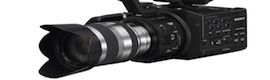
Sony NEX-FS100: Super 35mm. available to everyone
It shares the same E-type lens system (Sony's proprietary development) as the VG10 and NEX-3 and 5, and can work with other professional lenses using adapters; It incorporates the power of the Super 35 mm sensor that has made the PMW-F3 so popular; and offers the flexibility of working with an NXCAM-based workflow as, for example, the HXR-NX5 does. It is the new Sony NEX-FS100, a camcorder that uses the Super 35mm. available to everyone.
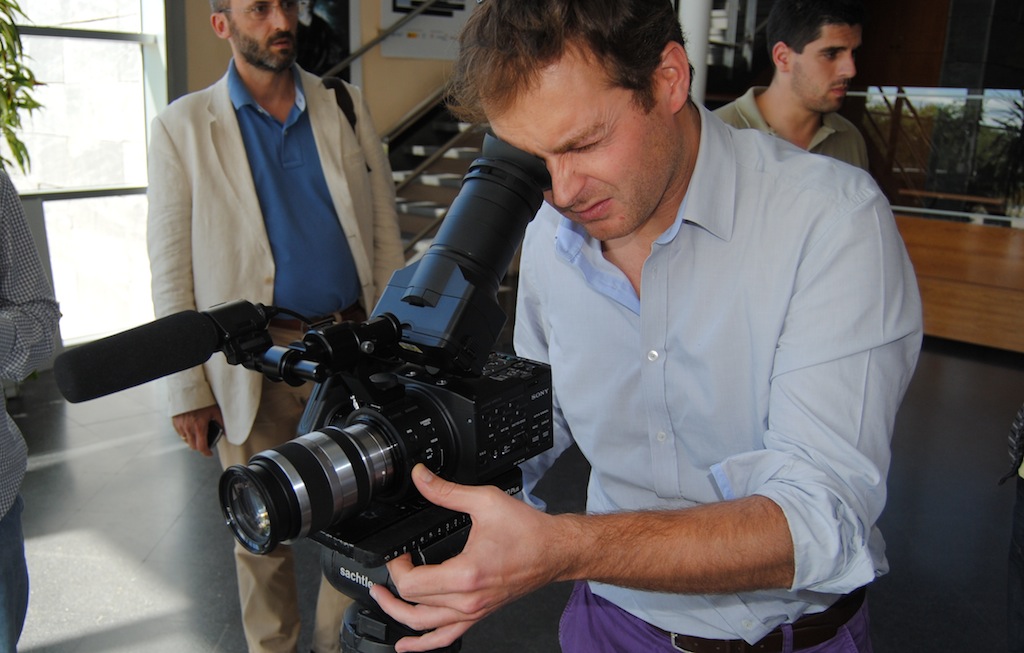
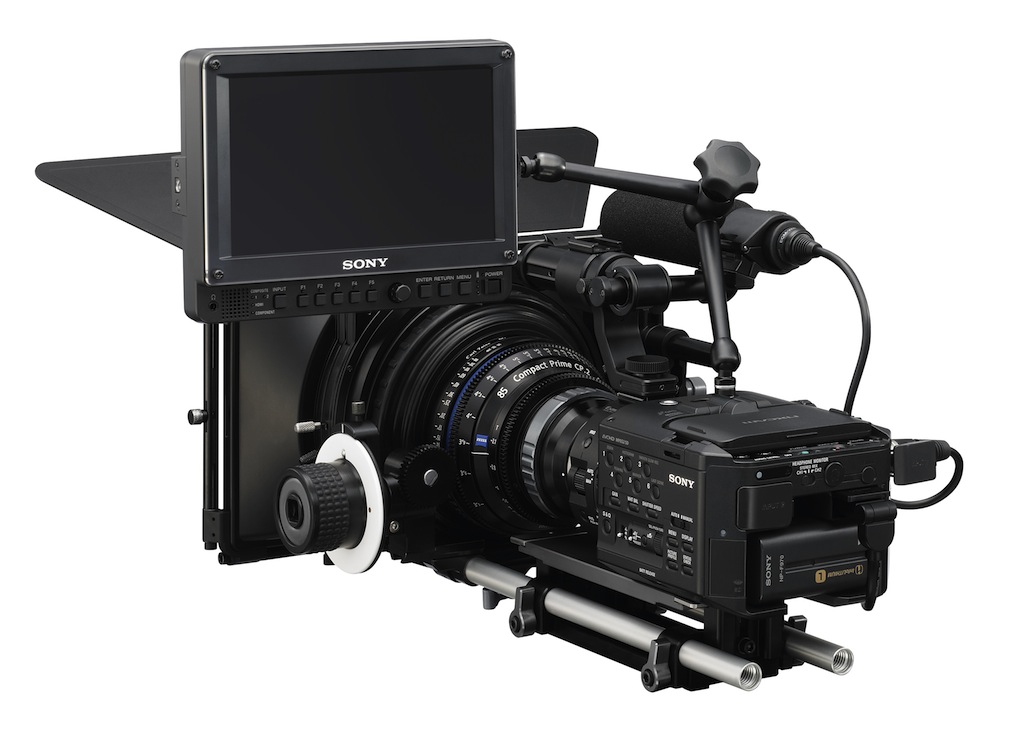 The FS100 camcorder Sony with Super 35 mm sensor. It marks the foray of the Sony E bayonet mount into the field of professional video, following the launch of the simple NEX-VG10. In fact, the NEX-FS100 shares the same lens system (Sony's proprietary development that is already being developed by third parties such as Zeiss) as the VG10 and the NEX-3 and 5. However, it incorporates the power of the Super 35 mm sensor that has made the PMW-F3 so popular, without forgetting the flexibility provided by working with an NXCAM-based workflow as, for example, the HXR-NX5 does.
Its Super 35 Exmor-type sensor offers 3.3 million pixels of effective resolution. The flexibility in the possibilities of this camera is such that the only part that we cannot influence is the sensor since it is inherent to the camera, however the possibility of choosing the codec and lens that we want with native mount or adapters (even for PL mount, and thus we could take advantage of our collection of PL lenses) opens a whole universe of possibilities. Since the distance between the mount and the sensor is only 18 mm, we have a greater distance between the focal plane and the sensor, thus being able to work with different adapters.
Its 23.4x13.2 mm sensor offers a depth of field typical of 35 mm. with a capture without line skipping, respecting the pixel size at all times (unlike some DSLR options that when working with a 36x20.25 sensor are forced to reduce the video area to a third of pixels when outputting to a 16:9 format).
But perhaps one of the most striking aspects of this highly sensitive sensor is its magnificent response even in very low light, allowing a gain of up to 30 dB (logically, not recommended...).
 Recording
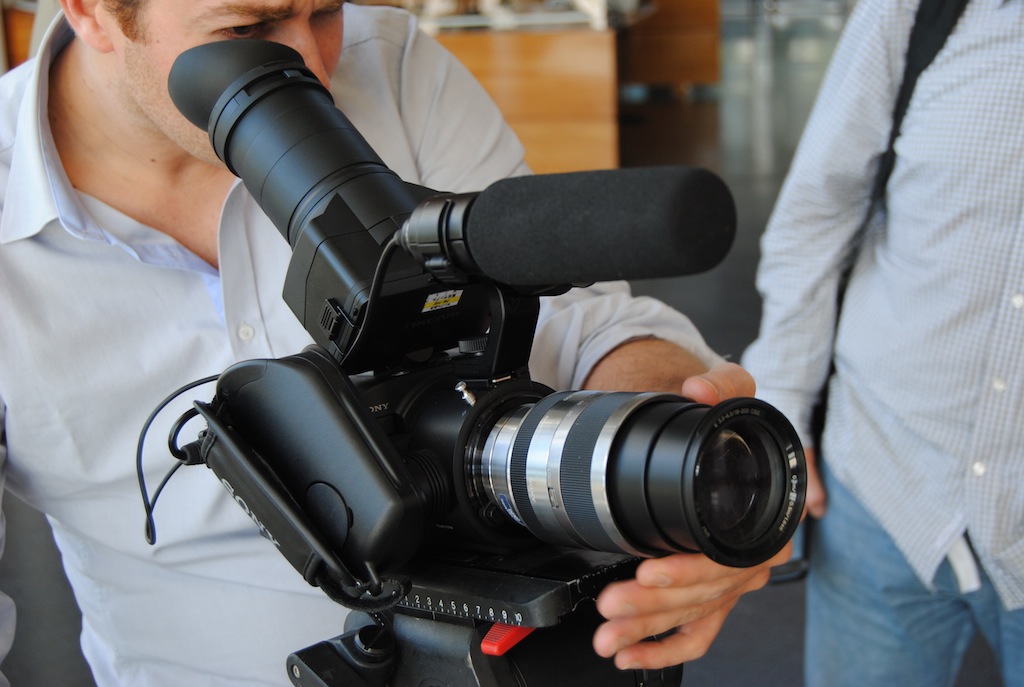
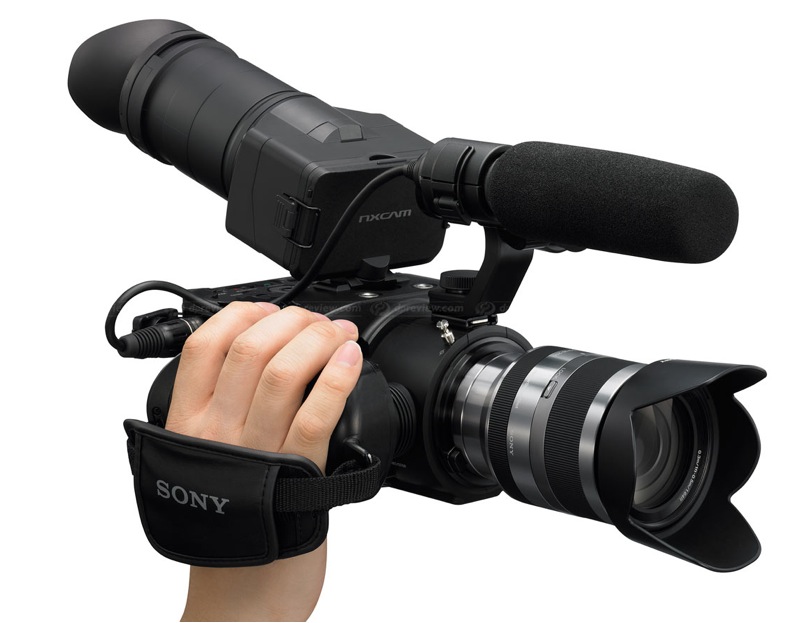
In recording, it uses the AVCHD format, being able to capture Full HD video sequences at 50 progressive frames per second and with a maximum data flow of 28 Mbps, using a card slot compatible with MemoryStick PRO Duo, SD Card, SDHC and SDXC as a storage system. With this camcorder, we also have the possibility of recording on its hard drive (128 GB) or even simultaneously on a card.
On the other hand, it should be noted that its HDMI connection allows you to easily have an uncompressed signal with embedded time code.
It is noteworthy, on the other hand, that All Pixels Scan technology eliminates the unpleasant rolling shutter effect.
In audio, it has two XLR inputs with phantom power.
It should be noted that the codec with which it works, AVCHD, is very robust with a much less destructive response and with a greater margin than usual when doing color correction than we are used to in this type of coding.
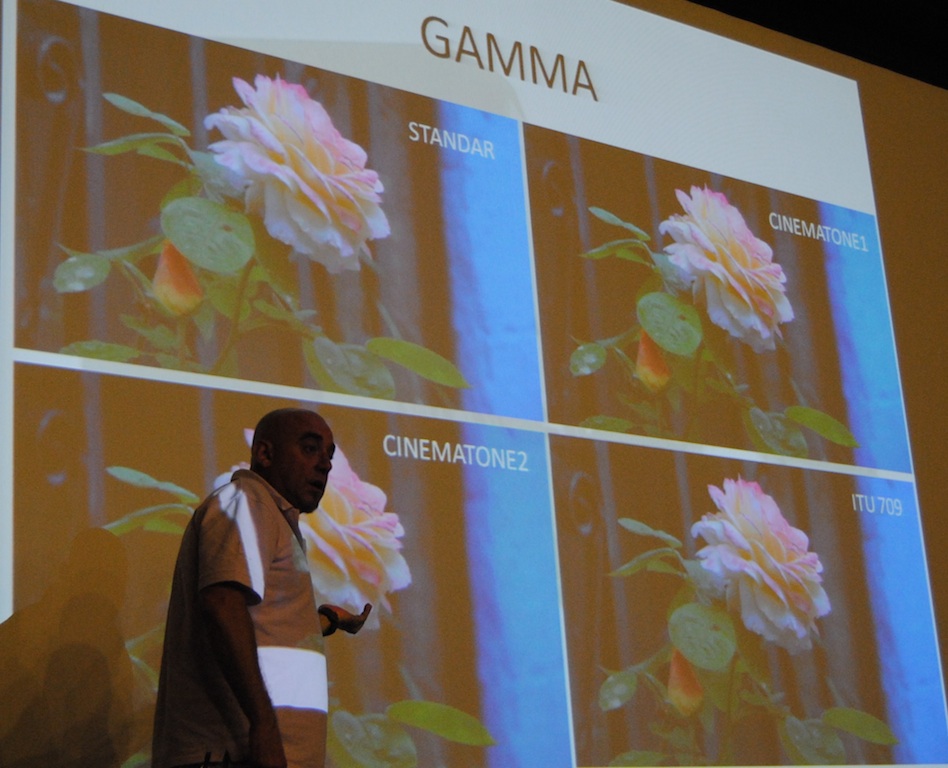
Even so, it is advisable to work on color correction during the shoot itself, using all the camera configuration menus, highlighting Gamma (with four selections: Standard, Cinematone1, Cinematone2, ITU 709) and Color Mode (Standard, Cinematone 1, Cinematone 2, Pro, ITU 709).
As the camera works at native 50p, we can work at different frame rates from 50p to 1 frame with the particularity that it uses high-speed camera simulator technology. In this case, although it does not really exceed 50p, with the help of its memory buffer it simulates high-speed capture (Smooth Slow Rec function) by simply marking the point from which we want to do the trigging.
Ergonomics
In terms of ergonomics, it presents a very interesting new design line, compact, that supports a variety of accessories and with a very accessible button panel. However, we miss that the orientation of the body across the width and despite being a very compact prism would prevent 3D recordings in a side-by-side configuration (in this case we would have to work with external synchronization and recording correcting the distance of the interaxial axis). However, for mounting on over/under rigs it is a perfect option, very well balanced in weight, so it is also perfect for use on stabilizers.
As far as automation is concerned, for work environments in news or documentary capture it is possible to automate all functions with the push of a button, thus speeding up immediate recording at any time. However, for other jobs it allows us to selectively automate some functions (focus, diaphragm, white balance...) leaving others manual. We could even controllably automate some parameters, leaving them automatic within those parameters that we choose. For example, leave the gain on automatic but check that it never goes above a certain range.
Clip management
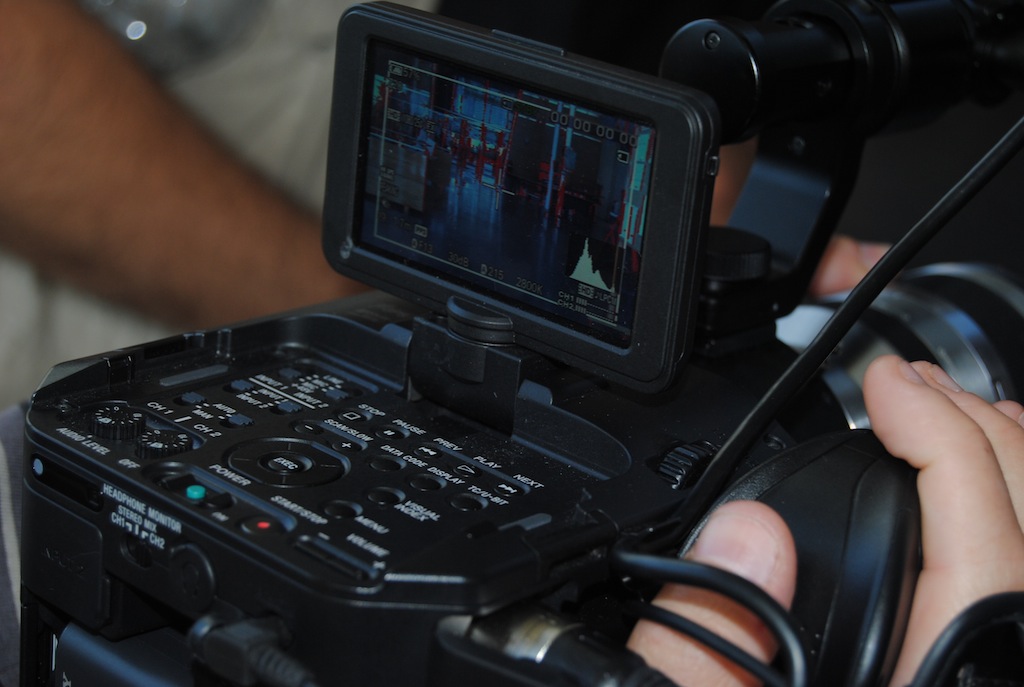
Another aspect to highlight is the simple management of clips through the button panel and through the use of its touch screen (3.5-inch panoramic LCD monitor).
This way we can quickly access any recorded material, or carry out actions such as capturing individual frames, dividing clips, deleting and copying clips and frames, memory repair (cleaning possible corrupt clips)...
The NEX-FS100 can present a histogram by luminance and count at any time, as a curious (and sometimes very practical) note with a GPS locator whose data is recorded in the form of metadata.
[youtube]http://www.youtube.com/watch?v=dnw5ED2Hc3w[/youtube]
Did you like this article?
Subscribe to our NEWSLETTER and you won't miss anything.
Related articles
 The Urbi et Orbi blessing will have a cinematic look Super 35 with Sony
 Sony and Fujinon, co-stars of the Halftime Show of the last Super Bowl
 Rihanna at the Super Bowl, in detail, thanks to Sony Venice with Fujinon lenses
 Peter Sykes: “Sony offers HDR solutions for everyone, regardless of budget”
 Sony expands the FS Super 35mm series with the new FS7 II camcorder
 Sony reveals the HDC-4800, its new Super-35mm 4K HFR camera with slow in 8x 4K or 16x HD
 PXW-FS5: Sony's new compact 4K Super 35 professional camera
 SXRD 4K, the brightest of all Sony projectors
 Europe's most advanced viewing platforms, now available to everyone
 The Super Bowl broadcast featured around thirty Sony HD cameras
 Sony and Filmutea announce a short film competition around the FS100
 Presentation of the new Sony NEX-FS100 at the ESCAC and ECAM
 Sony PMW-F3, the 35mm within everyone's reach
 Sony will launch its new NXCAM Super 35mm camcorder next year