





¿Dónde está la televisión de los jóvenes?
Los jóvenes con edades comprendidas entre los 14 y los 25 años son el segmento poblacional que menos televisión consume en la actualidad. ¿Por qué? Nereida López-Vidales, directora de OCENDI analiza este fenómeno en esta Tribuna.
 Los jóvenes con edades comprendidas entre los 14 y los 25 años son el segmento poblacional que menos televisión consume en la actualidad porque prefieren acceder a los contenidos de forma virtual y a través de dispositivos de móviles.
En España, su índice ha descendido por encima de los 10 puntos, pasando de un 20% en 1995, a un estimativo 6% según los estudios de Nielsen, Kantar Media y el Estudio General de Medios de 2009 y 2010. Aunque el año 2011 no está aún cerrado, se estima que este índice se mantenga en torno al 6-6,5% en todo el segmento (14-25 años). Y es que si los hábitos de consumo cambian en función de la edad, es un hecho que este sector de la población se caracteriza por acceder a la información a través de nuevos dispositivos y plataformas de distribución, así como por leer menos periódicos y ver menos la televisión.
En este sentido, la III Edición de Informe de Deloitte constata que, mientras las personas con edades entre 43 y 61 años y entre 62 y 75 dedican de 19 a 21 horas y media semanales, respectivamente, a ver televisión, el consumo se reduce a 15 horas semanales entre los adultos de 26 a 42 años, mientras que entre los jóvenes con edades comprendidas entre los 14 y los 25 años éstas se reducen a menos de 10 horas y media. En contrapartida, según datos extraídos del Primer Encuentro sobre televisión on line organizado por Televeo, el 70% de los jóvenes españoles ha descargado en alguna ocasión contenidos audiovisuales, mientras que el 40% ha consumido televisión o vídeos en streaming. Son, sobre todo, consumidores de redes sociales. Según los resultados de la 2ª Oleada del Observatorio de Redes Sociales (febrero 2010), responden al perfil denominado Trend Follower: jóvenes entre 16 y 25 años, muy activos en Internet, Tuenti, YouTube Fotolog, que usan estas redes como forma de ocio y entretenimientos, para tener información de eventos, fiestas o quedadas, pero en cuyo uso y consumo influye también el actor moda.
Así, Internet se erige como el medio favorito, especialmente entre los más jóvenes (14-17 años), donde el 40% dice servirse de la Red para entretenerse, frente al 26% de aquellos con edades comprendidas entre los 18 y los 25 años. Es el medio habitualmente elegido por los jóvenes para disfrutar de su tiempo libre, bien sea con el objetivo de consumir contenidos programados, realizar descargas o intercambiar ficheros de música, vídeo, fotografías,…
La práctica más habitual de entretenimiento en Internet, como es el hecho de relacionarse a través del chat o e-mails, redes social o Messenger, no se refleja en la encuesta confeccionada para este estudio porque muchos indivuduos desvinculan esta actividad de la produción ajena a ellos y relacionada directamente con los medios. La mayoría de los jóvenes que han expresado abiertamente su opinión conteplan los usos descritos como hábitos de relación con su círculo más cercano,pero no lo estiman “consumo” de medios.
Es más, para el grupo de menos edad, la televisión no se encuentra entre sus medios de comunicación favoritos para su tiempo de ocio, mientras que en el segundo subsegmento de edad hay un 15% de jóvenes que sigue prefiriendo la televisión para entretenerse, convirtiéndose para estos en su tercera opción, por detrás de Internet y del cine.
Para ambos grupos, el cine es la segunda opción señalada entre los medios de comunicación para disfrute de su tiempo de ocio. No obstante, también en este caso es notaria la diferencia entre los jóvenes de 14 a 17 años que señalan el cine como una de sus opciones favoritas (28%) y aquellos de 18 a 25 años (19%). Por el contrario, las diferencias entre los dos grupos son menores en el resto de medios consumidos, entre los que se encuentran la radio, las revistas y los periódicos.
De este modo, puede afirmarse que las nuevas generaciones de espectadores “han cogido el mando” (López, 2008), en el sentido que son usuarios y clientes de los medios; demandan contenidos y pagan por ellos, bien a través de la tarifa telefónica, bien por producto, y se decantan por contenidos express o a la carta que no les impida la realización de otras tareas en paralelo y que les deje no sólo elegir, sino también intervenir.
A los jóvenes no les gusta la televisión, ¿por qué?
A esta pregunta trata de responder el proyecto de investigación “Preferencia juvenil en nuevos formatos de televisión. Tendencias de consumo en jóvenes de 14 a 25 años”, realizado por el Observatorio del ocio y el entretenimiento digital, OCENDI. En el citado estudio se ha entrevistado personalmente a más de 1.470 jóvenes de 18 a 25 años y a 550 de 14 a 17 años en toda España. Además, se ha habilitado la encuesta en la web del observatorio para recoger más resultados. Finalmente, han sido un total de 2.266 jóvenes los que han aportado sus opiniones.
La competencia en televisión, agudizada por la multiplicación reciente de canales en abierto, ha tratado de poner en marcha fórmulas que dinamizaran y renovaran la rejilla programática. En este sentido, los últimos años han asistido a una combinación de estrenos de programas de variedades, series y contenidos deportivos que han dejado exhausto al espectador. La mayoría de las propuestas se sustituían en apenas unas semanas de emisión, dando lugar a otras “luces a medio gas” que no tuvieron mejor suerte. Han sido también años caracterizados por re-estrenos y fórmulas mejoradas de propuestas ya conocidas que inundaron las parrillas, clonando incluso las franjas horarias para evitar el trasvase de audiencias de un canal a otro. Aún así, y a pesar del esfuerzo de los programadores por innovar en las parrillas, los actuales contenidos televisivos no acaban de convencer a los más jóvenes, quienes dicen que ésta no es “su” televisión.
Entre los adolescentes (14-17 años), alrededor de la mitad de los encuestados consideran que en la televisión actual hay un abuso de programas del corazón (13,59%) y un exceso de periodismo rosa (12,41%), al tiempo que opinan que los contenidos emitidos están fuertemente condicionados por la publicidad (10,05%) y que hay pocos espacios cinematográficos (7,03%). En consecuencia, un 7,91% tildan al medio de telebasura, un calificativo que en el caso del segundo grupo de jóvenes investigado, aquellos con edades entre los 18 y 25 años, aumenta considerablemente. De hecho, un 20,56% de los jóvenes encuestados entre esas edades, hablan de la televisión actual como de telebasura. Para estos últimos, también hay un abuso de programas del corazón en el medio (16,04%), con espacios de poca calidad (15,58%) y parillas plagadas de poca variedad (13,63%).
En definitiva, consideran que es una televisión de poca calidad, que ofrece información interesada, no atiende a lo gustos de todos los sectores, con exceso de reality shows y programas con personajes que poco o nada tienen que ver con la profesión. Culpan a este “intrusismo” profesional de banalizar la escena televisiva y de perjudicar la transmisión de contenidos culturales o serios de calidad. En su opinión, la actual televisión atiende al entretenimiento “por el entretenimiento”, olvidándose de la función social, informativa y educacional que tiene asignado el medio de forma tradicional.
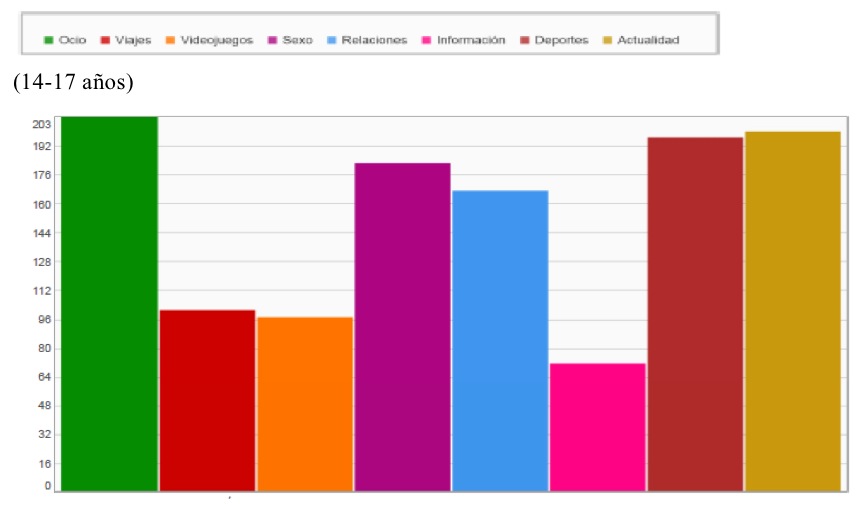
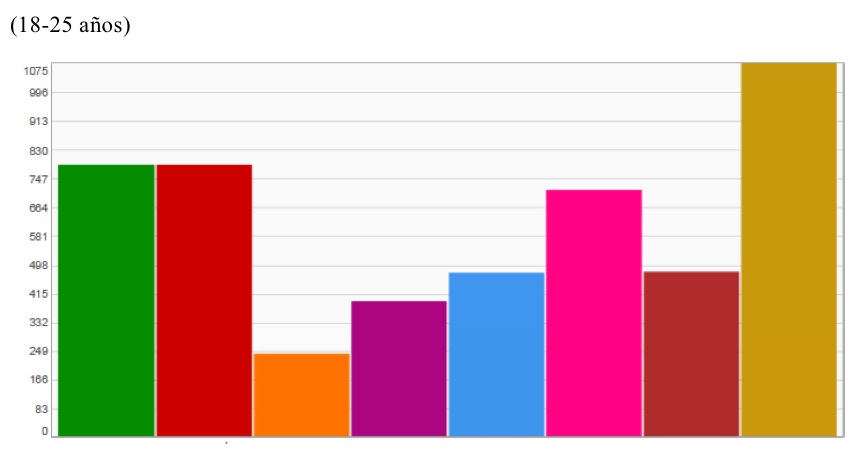
Con estos datos, el público de 14 a 17 años apuesta por una televisión con menos programas del corazón (12,56%), menos publicidad (11,35%), con más programas para jóvenes (8,93%), más cine (8,83%) y menos telebasura (8,13). Aquellos entre 18 y 25 años, por su parte, también se decanta por una menor presencia de los programas del corazón (14,7%), al tiempo que proponen una mayor difusión de la cultura (9,79%) y la emisión de programas con más calidad (9,55%).
De hecho, tal y como pone de manifiesto el gráfico, a los mas jóvenes les gustaría que los programas televisivos versaran sobre temas de ocio (16,99%), actualidad (16,32%) y deportes (16,07%), seguidos por aquellos de sexo (14,9), relaciones (13,64), viajes (8,28%), videojuegos (7,95%) e información (5,86%). En el siguiente tramo de edad (18-25 años), las preferencias también giran en torno a la actualidad (21,7%) y el ocio (15,86%), seguidos por los programas de viajes (15,86%), información (14,38%), deportes (9,66%), relaciones (9,64%), sexo (7,96%) y videojuegos (4,88%).
Nereida López-Vidales
Profesora de Nuevas Tecnologías en Universidad de Valladolid y Directora del Observatorio del ocio y el entretenimiento digital, OCENDI

Did you like this article?
Subscribe to our NEWSLETTER and you won't miss anything.
Related articles
 Six out of ten young people replace traditional television with streaming
 Mediapro y Unicorn suman más de 5.000 horas de televisión en abierto en esta temporada
 Caracol Televisión está de luto por la muerte de Luis Calle
 El consumo de la televisión en niños y jóvenes se dispara por la crisis del coronavirus
 VSN analyzes where we come from and where we are going in 2020
 More than half of young Spaniards no longer watch linear television
 Los espectadores ‘viejenials-jóvenes’ dedican cinco horas de media al día a ver la televisión
 La televisión no está muerta… goza de un excelente estado de salud
 El satélite para televisión más potente construido nunca en Europa ya está en el espacio
 Jóvenes y nuevas tendencias de futuro en el consumo de radio y televisión
 Atresmedia se compromete con los jóvenes creadores emitiendo sus proyectos en televisión
 El Instituto RTVE presenta su oferta formativa en Aula donde profesionales enseñarán cómo se hace la televisión
 Young Spaniards are committed to quality television and crossmedia
 La televisión, según un estudio de Ocendi, gusta poco a los jóvenes