





AV-HS410: el nuevo mezclador compacto y versátil de Panasonic
El nuevo mezclador multiformato HD/SD de Panasonic con 9 entradas estándar y un máximo de 13, ofrece interesantes funciones y efectos versátiles de alta calidad así como la posibilidad de trabajar con señales estereoscópicas.
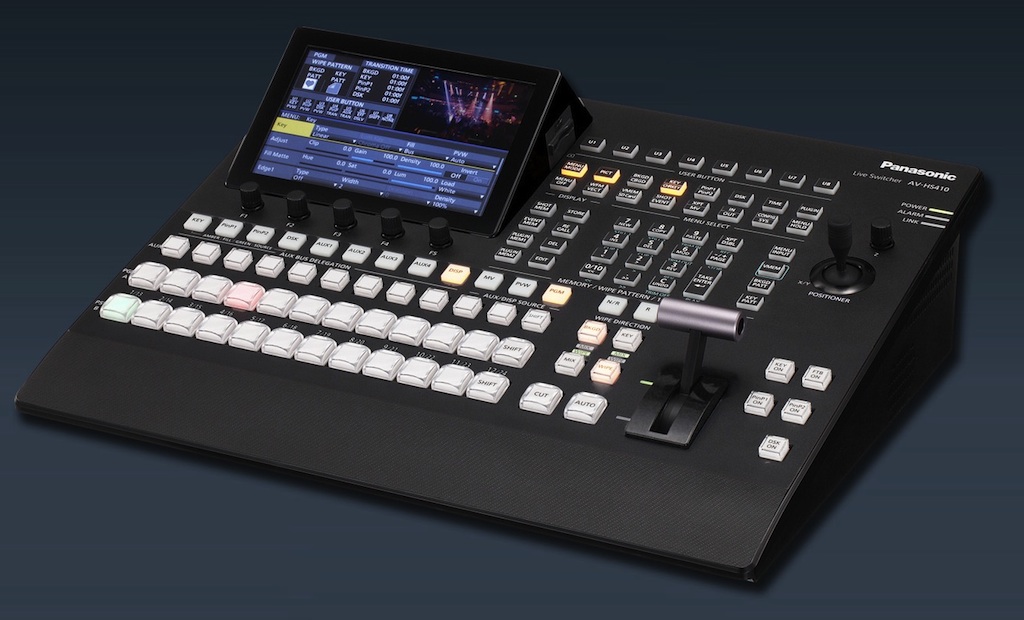
Panasonic cuenta ahora con el nuevo mezclador de video, AV-HS410, una herramienta compacta de una 1RU que proporciona una excelente versatilidad gracias a las ranuras para tarjetas opcionales.
Estas tarjetas opcionales habilitan el soporte para una variedad de señales de entrada, incluidas cámaras 3D. Además, mediante SDK es posible añadir funciones basadas en software.
Este mezclador multiformato HD/SD con 9 entradas estándar, con un máximo de 13, ofrece interesantes funciones de memoria con efectos versátiles de alta calidad. Soporta señales multiformato HD/SD, incluyendo 1080/24p, conmutable en frecuencias 60/50/24 Hz.
Dispone de 8 entradas SDI (HD/SD) y 1 DVI-D, así como cinco salidas SDI (HD/SD) y 1 DVI-D. Mediante dos tarjetas opcionales, podríamos contar con un máximo de hasta 13 entradas o 10 salidas. Todos los canales de entrada incorporan sincronizador de frame.
Su diseño compacto e integrado mejora el funcionamiento del relé avanzado en vivo, estando equipado con 4 canales up-converter, 8 canales punto a punto, 8 canales de procesamiento de video y 4 buses auxiliares.
Este mezclador de 1ME proporciona efectos muy versátiles, incluyendo transiciones con efectos digitales de vídeo y chroma keying con tecnología basada en el algortimo Primatte que proporciona una alta calidad en la realización de chromas en tiempo real.
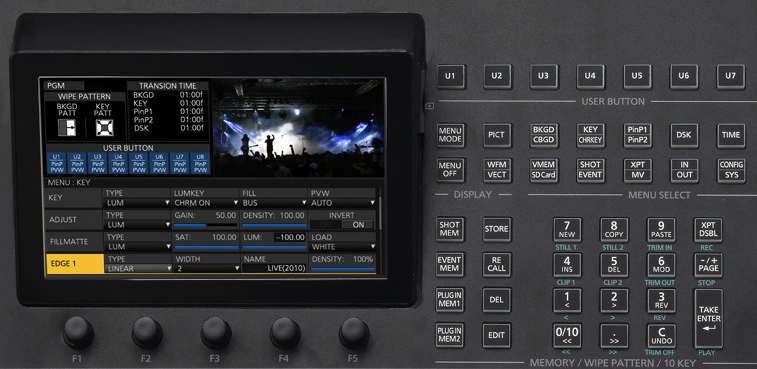
Su monitor LCD de 7 pulgadas (WVGA de 800×400) facilita su uso intuitivo y acceso a la memoria (con almacenamiento de tomas y eventos), funciones multipantalla (permite esplitear pantallas en 4/5/6/9/19/16 con posibilidad de incorporar niveles de audio, marcas para 4:3, reloj… Es de destacar que la función de Video Memory permite grabar y reproducir dos entradas con imagen congelada o en movimiento con señales de key.
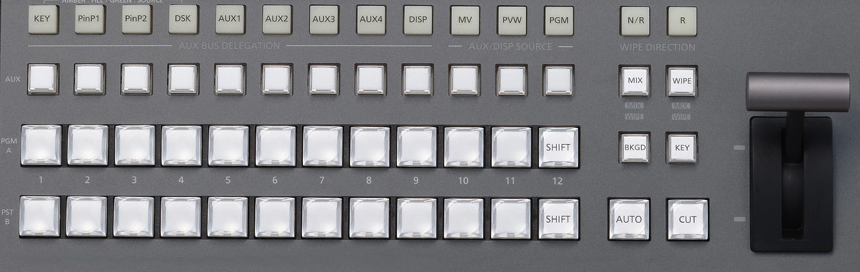
Una docena de botones de cruce en cada bus A y B, ofrecen un máximo de 22 con función Shift.
Stereoscopy
Una tarjeta opcional permitirá a partir de febrero la mezcla de señales estereoscópicas 3D así como funciones de asistencia para 3D en vivo que facilitarán la producción estereoscópica.
Esta tarjeta ofrecerá la posibilidad de trabajar con cuatro imágenes estereoscópicas (dos pares de señales izquierda/derecha) y hasta un máximo de cinco.
Con salidas izquierda/derecha directas, tres modos (LRMIXa, LRMIXb y LRDiff) permiten chequear de forma sencilla el paradaje de las señales 3D que se están mezclando.
Trabajando en 3D podremos, incluso, emplear composiciones con chroma key Primatte. La disposición del monitor en espejo (vertical/horizontal) y la corrección de la posición correcta de cada canal ayudan a compensar la grabación 3D procedente del rig.
Además, en todo momento podríamos comprobar la luminancia, distribución RTB y diferencias entre la imagen derecha/izquierda de cada señal estereoscópica.
Did you like this article?
Subscribe to our NEWSLETTER and you won't miss anything.
Related articles
 AV-HSW10: el nuevo mezclador compacto IP con procesamiento de 10 bits de Panasonic
 AMP Visual TV chooses the compact Sony XVS-G1 mixer for its mobile units
 Roland V-160HD: a compact, portable mixer with built-in streaming capabilities
 Canon CJ17ex6.2B: a versatile, compact, lightweight lens for 2/3″ 4K cameras
 Lumix S5, Panasonic's new full-frame hybrid camera that offers exceptional video in a compact body
 Roland V-60HD: un mezclador multiformato compacto, portátil y fácil de usar
 Roland lanza el nuevo mezclador compacto y de fácil transporte V-1HD
 Allen & Heath Qu-PAC: un sofisticado mezclador digital compacto
 Panasonic PT-RQ13K: proyección 4K en un equipo compacto y ligero
 Si Performer 1, el nuevo mezclador digital compacto de Soundcraft
 Panasonic AG-HPX600: a compact, highly expandable and future-ready camcorder
 Panasonic's new compact 3D camcorder impresses professionals
 Panasonic AG-HMX100, a new low-cost multi-format mixer
 Panasonic AV-HS450, new 16-input multi-format mixer