





AEQ's Phoenix audio codecs, in London 2012
El audiocodec Phoenix, junto al nuevo sistema de comentaristas AEQ totalmente digital, automatizado e integrado, supone un salto cualitativo en la calidad y fiabilidad del audio y las comunicaciones para la retransmisión de los grandes eventos deportivos.
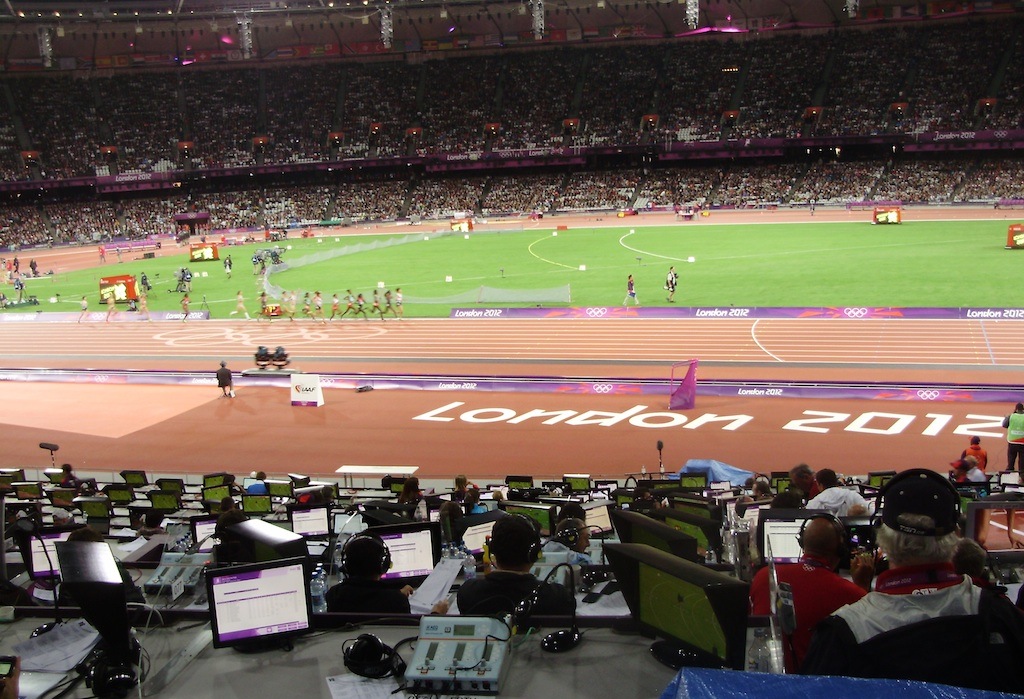
En la retransmisión internacional de sonido en grandes eventos, tales como unos Juegos Olímpicos, hay que transmitir los miles de circuitos de audio desde cada fuente (ya sea la voz de un comentarista, el sonido público o ambiental) hasta cada operadora de radio/teledifusión.
Cuando se utiliza una infraestructura común para este fin, es necesario establecer una estructura compleja de “Sistema de Comentarista”.
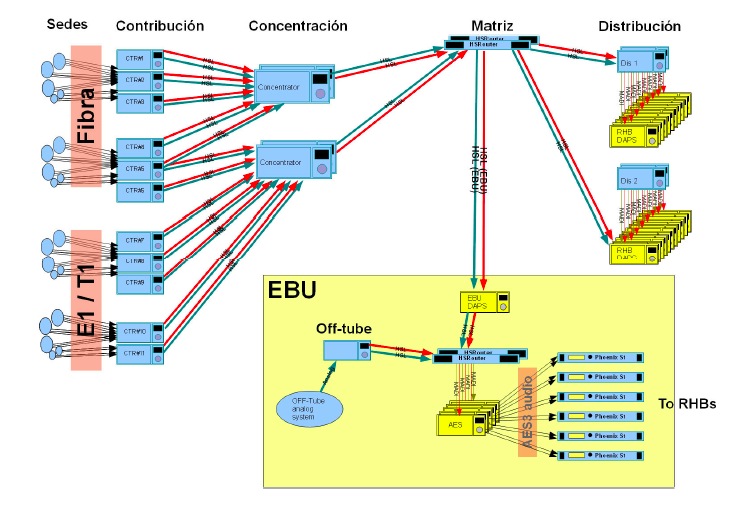
El audio lo genera la organización en las distintas sedes a través de posiciones de comentarista AEQ, asignadas a los diversos operadores de radio/teledifusión RHB o “rightholders”.
Todos los circuitos de cada sede son multiplexados y enviados desde cada sede hasta el IBC (Internacional Broadcasting Center), al denominado CSC (Commentary Switching Center) a través de routers AEQ BC 2000D. Es lo que se denomina parte de Contribución.
Una vez recopilados los circuitos de todas las sedes (Concentración), se llevan a una gran matriz principal AEQ TITAN de 5000×5000 circuitos que conmuta los circuitos según una planificación que hemos entregado previamente a la organización, para ser llevados a sus destinos. Esta conmutación también puede ser dinámica en caso de circuitos compartidos por varias operadoras en distintos momentos.
Redundancia del sistema
El sistema es redundante. En caso de fallo del camino principal, los circuitos conmutan manera automática al camino de backup. El hardware dentro de cada frame también está duplicado o al menos tiene tarjetas de reserva.
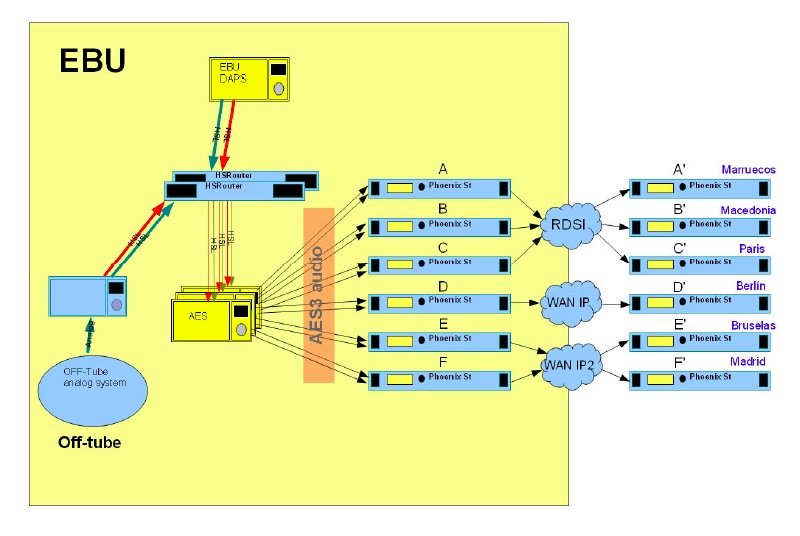
Además de las operadoras individuales, cada una con su DAP, representados arriba a la derecha, en el caso de EBU (European Broadcasting Union), se funciona de manera algo diferente: el switching de EBU dentro del IBC recibe un enlace directo de alta capacidad desde la matriz principal del CSC, y mediante otra matriz AEQ TITAN repartirá a las distintas operadoras dentro de la agrupación. Este audio será enviado mediante equipos dedicados a los países de destino utilizando diversos tipos de enlace, como E1, IP o RDSI.
La transmisión de circuitos E1 se hace directamente con frames AEQ BC2000 y tarjetas multiplexoras, existiendo otro equipo similar en los estudios del cliente. Para transmitir los circuitos por IP y RDSI, sin embargo, es necesario utilizar un audiocodec, con la máxima calidad de audio, fiabilidad y robustez frente a problemas en la línea , con recuperación garantizada de forma automática. Además es importante un óptimo aprovechamiento del canal. Hemos aprobado el audiocodec AEQ Phoenix Studio para esta aplicación.
Envío de audio a los operadores internacionales
En los Juegos Olímpicos de Londres, se utilizan enlaces punto a punto IP y RDSI. La transmisión se puede realizar con alta calidad, 15KHz con el algoritmo AEQ-LD+, o con los tradicionales circuitos G722 de contribución de 7,5 KHz.
Se mantiene la transmisión digital desde las entradas de micrófono de los comentarista hasta las mesas de mezclas de los operadores o en su caso el televisor del telespectador.

Envío de circuitos por IP
Los operadores con mayores recursos utilizan IP para la transmisión de sus circuitos. Se trata de una red WAN de alta capacidad y calidad de servicio garantizada de capa 2. Los equipos en Londres y en los países de destino, todos Phoenix Studio, están configurados dentro de una misma red lógica, por lo que todos tendrán una IP dentro del mismo rango.
Phoenix Studio dispone de dos canales, sería posible transmitir dos programas distintos utilizando una pareja de equipos y un simple enlace Ethernet. Ambos canales compartirán la misma dirección IP con protocolos RTP y RTCP ( Real Time Control) Protocol.
El método de señalización elegido es SIP (sin utilizar Proxy). El envío de audio, se realiza utilizando RTP y RTCP (Real Time Control Protocol).
Cada equipo tendrá un identificador o “URI” de la forma @. Por ejemplo, Phoenix_233@172.26.33.55. Estas URI pueden ser almacenadas en la agenda del Phoenix Studio
con un nombre más amigable (por ejemplo, “Audiocodec Paris 1”), para realizar las llamadas con total facilidad.
La codificación AEQ-LD+ tiene modos duales que duplican la capacidad efectiva del equipo: podemos enviar hasta 4 canales bidireccionales independientes con una pareja de equipos.
Envío de circuitos por RDSI
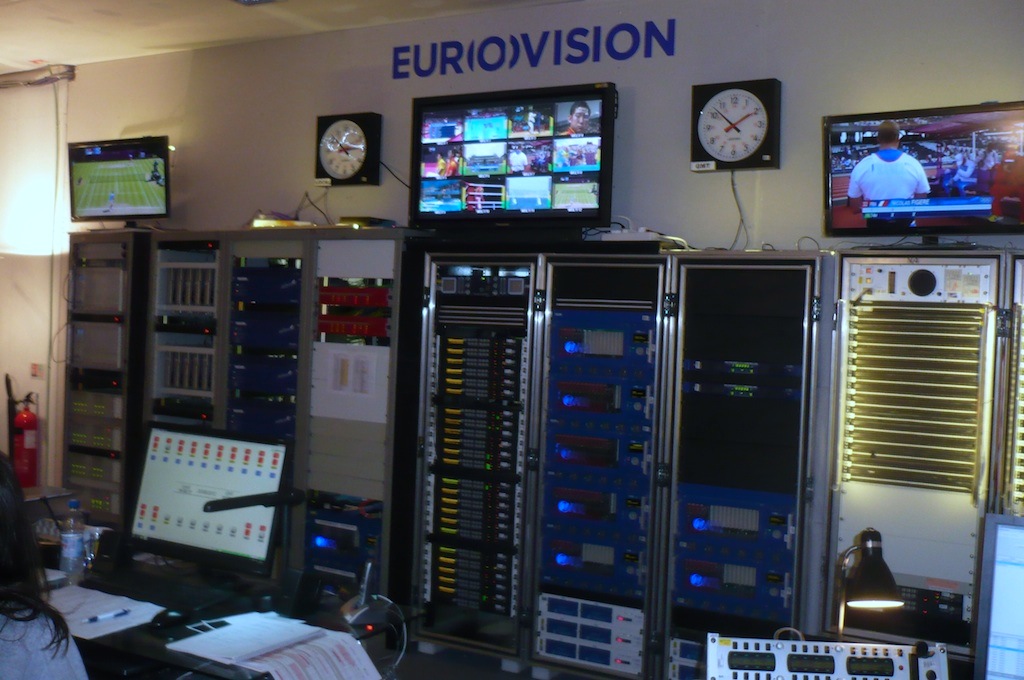
El audiocodec Phoenix Studio es un sistema multi-interfaz, y permite también conectarse con redes RDSI, utilizando el módulo de comunicaciones integrado al efecto. Algunas operadoras de radio/teledifusión, prefieren utilizar líneas RDSI para transmitir sus programas a través de Phoenix Studio.
Phoenix Studio permite la agregación de ambos canales B en uno solo de 128 Kbps que habilita una transmisión de mayor calidad. Para transmitir dos canales de 128 Kbps, son necesarias dos líneas RDSI, pero no dos equipos Phoenix Studio, puesto que cada equipo cuenta con dos bahías para módulos de comunicaciones.
Por último, en cuanto a la protección de fallos, es vital que el sistema sea tolerante a fallos y provea medios de recuperación automáticos. Phoenix Studio dispone de varios métodos de recuperación: Backup, Auto-colgado por ausencia de datos (RTP Inactivity Mode) y Auto-rellamada.
Javier Polo
Head of EBU Sports Operations
Did you like this article?
Subscribe to our NEWSLETTER and you won't miss anything.
Related articles
 AEQ Phoenix audiocodecs allow Internet streaming with program sending
 Antenna Hungária uses AEQ's Phoenix Alio audiocodecs in the broadcast of the European Water Polo
 AEQ Phoenix audiocodecs, at the World Cup in Russia
 Russian National Radio and Television VGTRK installs AEQ Phoenix IP audiocodecs
 European Radio uses AEQ's Phoenix Alio portable audiocodecs
 Insertel Canarias uses AEQ Phoenix audiocodecs for transport and contribution over IP networks
 Eurovision (EBU), with Sapec for Globosat, at the London 2012 Olympic Games
 Record coverage of Datafactory in London 2012
 Promax DTTV headends will play a key role in London 2012
 RTVE warms up for London 2012
 Ericsson in London 2012
 The London 2012 Games, for the first time in 3D
 London 2012 in Super Hi-Vision
 BLS prepares for the challenge of London 2012