





AEQ Phoenix audiocodecs allow Internet streaming with program sending
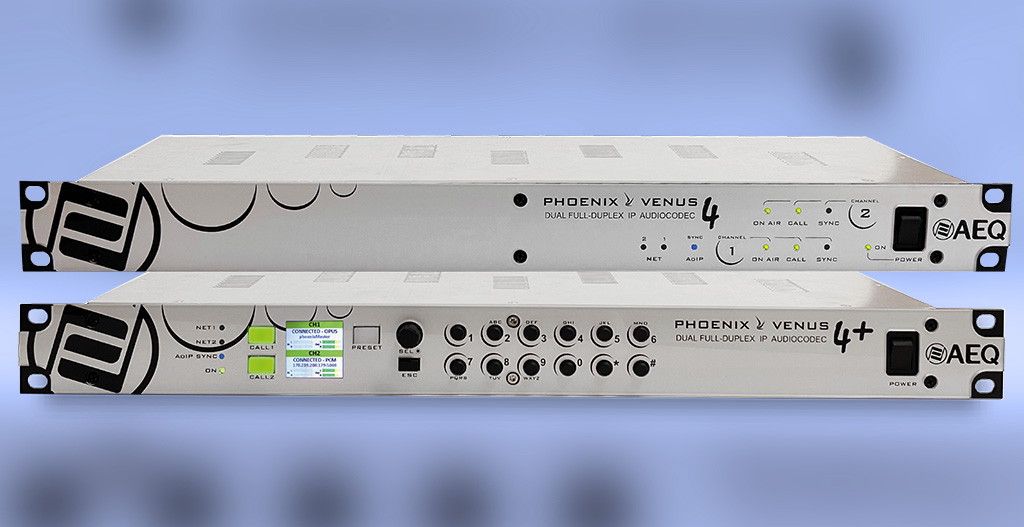
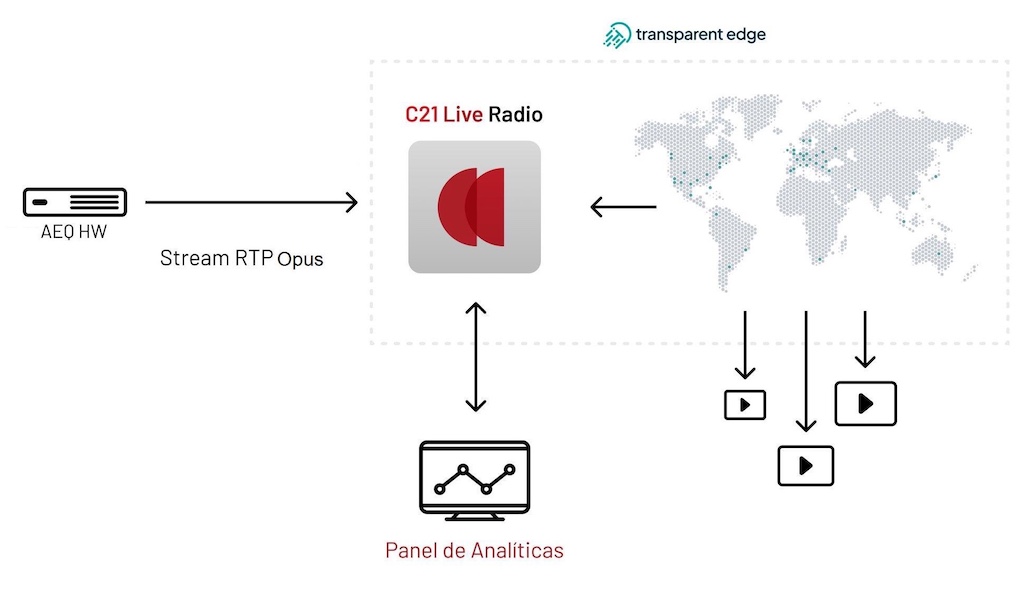
AEQ cuenta con una solución para distribuir audio a través de Internet usando un proveedor de servicios de replicación externo, al que se podrá enviar el audio, ya codificado, usando audiocodec de la familia Phoenix.
Un servidor de replicación en la nube se encarga de tomar un stream de audio codificado y enviarlo a múltiples destinos a través de Internet. El servidor que realiza la replicación puede estar fuera, en Internet, o bien encontrarse en las propias instalaciones de la emisora. La ventaja de la primera alternativa consiste en que la emisora se puede olvidar del mantenimiento de dicha máquina y no necesita contratar una conexión a Internet con un gran ancho de banda.
Además, el stream ya se envía codificado al “entrypoint” lo que reduce aún más los requerimientos de dicha conexión para la “ingesta” (entrada de audio hacia el servidor que replica).
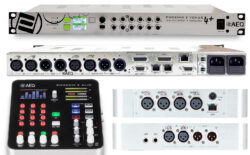
En el estudio sólo será necesario un audio codificador dedicado de alta calidad y con distintos tipos de entrada disponible (analógica, digital o incluso Dante/AES-67). Los audio codificadores AEQ Phoenix han sido probados y son compatibles con varios sistemas de replicación gracias a la diversidad de algoritmos de codificación disponibles y a que implementan (entre otros) el método de transmisión standard RTP.
Esta solución se ha probado junto a servidores de replicación que soporten la familia de algoritmos OPUS como los que ofrece la empresa española Cires 21 (C21 Live Radio). Esta propuesta ofrece varios niveles de servicio, en función principalmente del número de usuarios que se pueden conectar simultáneamente y del bitrate de cada conexión (que determina su calidad), aunque además se ofrecen funciones adicionales para cada plan.
La calidad percibida por los usuarios depende tanto de la codificación hacia la ingesta, que realiza el audio codec y se envía una sola vez (por lo que el ancho de banda aquí no es un problema), como de la recodificación que se hace en el servidor de replicación, que utilizará un bitrate ajustado para no usar una tasa de datos excesiva, ya que se multiplica por el nº de usuarios. Cires21 nos ofrece la opción de utilizar 64kbps o 128kbps, con codificación MP3.
Cabe destacar que 64 kbps pueden ser suficientes si se envía voz o una señal mono, pero si la transmisión contiene música estéreo, se recomienda contratar al menos 128 kbps.
Configuración del audiocodec
En el caso de Cires 21, la ingesta debe realizarse según el protocolo standard RTP. Para establecer un flujo RTP, podemos utilizar un audiocodec Phoenix Mercury, de un canal.
En primer lugar, es necesario definir la codificación adecuada, por ejemplo OPUS MUSIC 128kbps estéreo. Hay que tener la precaución de desactivar el auto-colgado por ausencia de RTP, tan solo hay que realizar la llamada al Entrypoint definido por Cires 21.
Sólo es necesario indicar la dirección IP y puerto por el que alcanzaremos el servidor, que son proporcionadas por Cires 21. El estado del equipo dirá siempre CONNECTED_NO_DATA. Esto es correcto porque no se recibe tráfico de vuelta.
Recepción
To escuchar el stream, los usuarios pueden tener dos alternativas: Por un lado, es posible utilizar directamente una URL para escuchar el stream usando un navegador Web, que incluirá los decodificadores adecuados. Por otro, también es posible utilizar un programa reproductor dedicado. En tal caso, se utilizará una dirección para abrir el stream. Varios ejemplos de estos reproductores son VLC, FFplay, VideoJS o Shaka-Player. En ellos existe una opción de abrir ubicación de red.
La plataforma de demostración de Cires 21 permite emitir hasta 6 streams distintos. Cada entrypoint tiene un puerto asignado distinto.
Retardo
En todo sistema de replicación de streams a través de Internet se producen retardos, debidos en parte a la recepción, decodificación, buffering, recodificación y distribución a través de la infraestructura de Internet de los stream, pero sobre todo a la presencia de un buffer grande en el dispositivo receptor.
Se pueden obtener retardos extremo a extremo a partir de los 8 segundos. Usando un reproductor como VLC o similar, los buffer son algo más grandes, por lo que retardos de hasta 30 segundos son usuales.
Este retardo inevitable debe tenerse en cuenta a la hora de escoger un sistema de este tipo, ya que podría ser excesivo para, por ejemplo, transmisiones deportivas en directo, pero no tiene importancia alguna en retransmisiones de programas de radio musicales, tertulias…
Redundancia
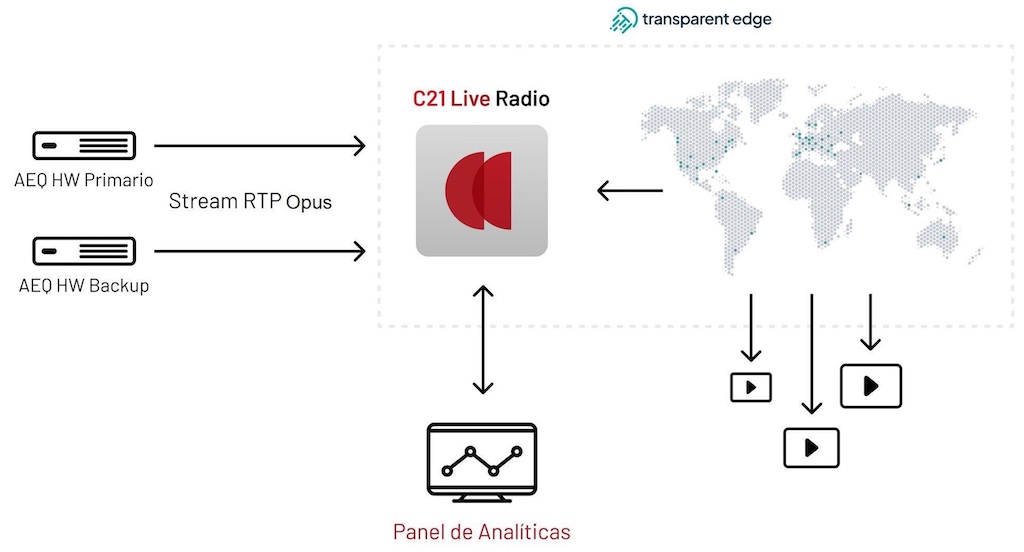
Cires 21 ofrece un servicio opcional de servidores redundantes. Es decir, puede ofrecer dos servidores que generarán los mismos stream hacia Internet, cada uno con su ingesta de audio codificado. Si uno de ellos falla, automáticamente se generarán los stream con el otro, de forma que el servicio no se interrumpa.
Podemos tener dos accesos a Internet separados en el estudio, y utilizar dos audiocodecs Phoenix Mercury, cada uno conectado a un acceso. Introduciremos el mismo audio (analógico o digital), en ambos canales. Cada uno llamará a un destino diferente especificado por Cires 21.
También se puede utilizar un único Phoenix Venus 4 o Venus4+, cada canal del mismo usando un puerto Ethernet distinto. En este caso, introducir el mismo audio en ambos canales es más fácil si se utiliza entrada Dante.
Monitorización
Cires 21 ofrece un acceso mediante Web en el que, una vez hecho login con las credenciales proporcionadas por ellos, podremos tener acceso a estadísticas de las conexiones, ver el número de usuarios conectados…
Did you like this article?
Subscribe to our NEWSLETTER and you won't miss anything.
Related articles
 Radio Marca connects with its correspondents through AEQ audiocodecs
 AEQ audiocodecs allow the retransmission of 'New Music Now-Express' from a train in the Netherlands
 RTVE mantiene su apuesta por el IP con la compra de 427 audiocódecs de AEQ
 Limecraft Flow ya permite el empaquetado y envío de contenidos
 AEQ prepara otro webinar sobre audiocodecs
 In the midst of the coronavirus crisis, COPE broadcasts from home with AEQ's Alio audiocodecs
 Antenna Hungária emplea los audiocodecs Phoenix Alio de AEQ en la retransmisión del Europeo de Waterpolo
 Los audiocódecs AEQ Phoenix, en el Mundial de Fútbol en Rusia
 Russian National Radio and Television VGTRK installs AEQ Phoenix IP audiocodecs
 Europea Radio emplea los audiocodecs portátiles Phoenix Alio de AEQ
 Insertel Canarias emplea los audiocodecs AEQ Phoenix para transporte y contribución sobre redes IP
 AEQ's Phoenix audio codecs, in London 2012
 Prodys Ikusnet: envío de noticias por satélite o Internet
 Omnibus iTX para Internet Tv y aplicaciones streaming