





Dolby y Philips anuncian la especificación del formato Dolby 3D autoestereoscópico
Esta especificación pretende generalizar la entrega de contenidos 3D de alta calidad en multitud de dispositivos. Dolby muestra en NAB 2013 cómo los profesionales creativos pueden utilizar herramientas como Nuke y Ocula de The Foundry para crear ya contenido Dolby 3D.
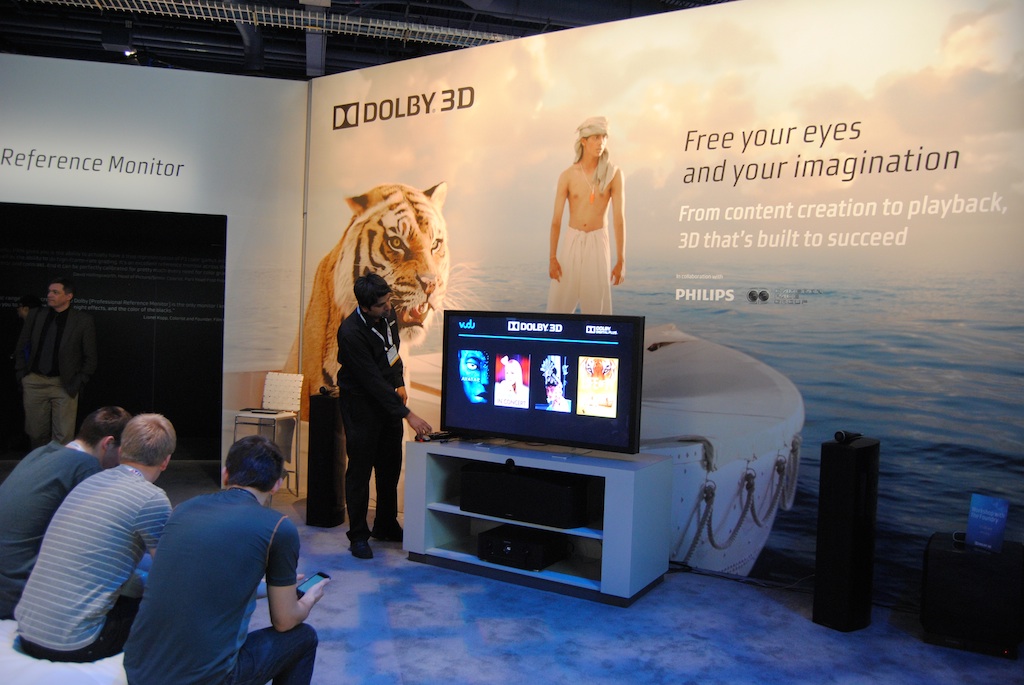
Dolby y Philips han aprovechado su paso por NAB 2013 para anunciar el formato Dolby 3D, una nueva especificación de distribución de contenido para Dolby 3D.
El formato Dolby 3D garantiza que la distribución de contenido 3D a televisores, smartphones, ordenadores personales y tablets tenga la mejor calidad posible y refleje con precisión la intención del creador del contenido. El formato Dolby 3D, que adjunta información esencial de reproducción al contenido, estará disponible mediante un programa de licencia. The Foundry, proveedor líder en herramientas de postproducción presentará la futura integración del formato Dolby 3D en sus productos de posproducción Nuke y Ocula.
Dolby 3D es un completo paquete de tecnologías para la creación, distribución y reproducción de contenido 3D sin gafas. que produce imágenes autoestereocópicas tan reales como la vida misma. Además de eliminar la necesidad de las gafas, Dolby no tiene un espacio específico de visión óptima de forma que los espectadores pueden disfrutar de imágenes más nítidas independientemente de dónde se sienten.
Roland Vlaicu, director denior de transmisión de imágenes de Dolby Laboratories ha destacado que “los productos y herramientas de The Foundry están detrás de los novedosos efectos visuales en 3D en películas como Avatar, Tron: Legacy y Hugo. Con la oferta de potentes herramientas para crear contenido Dolby 3D, Dolby y Philips simplificarán más que nunca la creación en Hollywood de contenido para televisores 3D sin gafas y otros dispositivos”.
Simon Robinson, director científico y co-fundador de The Foundry, ha señalado por su parte que “los profesionales que utilizan nuestras herramientas de posproducción quieren saber que sus creaciones se van a poder ver de manera espectacular independiente de dónde o como decida verlo el espectador. El formato Dolby 3D garantizará que la idea original del creador del contenido se reproduce de manera intacta en el hogar”.
Según Guido Voltolina, director del proyecto conjunto entre Dolby y Philips, la especificación del formato Dolby 3D es un hito importante para la eliminación de los obstáculos que facilitarán la posibilidad de personalizar el visionado en 3D en televisores, tablets, smartphones y portátiles. “Gracias a las herramientas de creación de contenido de The Foundry, podremos proporcionar una experiencia 3D sin gafas que posibilitará el éxito del 3D en el hogar”, ha afirmado.
Did you like this article?
Subscribe to our NEWSLETTER and you won't miss anything.
Related articles
 Imagine Dragons inaugurará CES con un concierto en formato Dolby Atmos
 Goldcrest renews its studio to be able to offer soundtracks in Dolby Atmos format
 Sony Pictures Home Entertainment and Dolby Announce Collaboration on Dolby Vision 4K Ultra HD
 Christie and Dolby partner to develop Dolby Vision projection system for Dolby Cinema
 Cameron/Pace Group supports Dolby 3D format
 Cinegy, now with support for Dolby Digital and Dolby E
 Soundub launches room with the new Dolby Atmos format
 Dolby IMB is now fully compatible with the DCI specification
 Dolby will show Dolby 3D without glasses for the first time in Europe
 The DVB Board of Directors approves the Second Phase of the 3DTV specification
 Dolby and Philips reveal autostereoscopic 3D format at NAB
El consejo directivo de DVB aprueba la especificación 3DTV
Dolby and Philips reveal autostereoscopic 3D format at NAB
El consejo directivo de DVB aprueba la especificación 3DTV
 Sony RayModeler: prototipo holográfico y autoestereoscópico a 360 grados
 WHDI contará con una especificación 3D a finales de año