





Canal+ produce y emite un proyecto pionero en UHDTV 4K
En colaboración con SES Astra y Telefónica Servicios Audiovisuales, y con tecnología de última generación de Newtec, Ovide, Promovisa, Sapec, Sony y Trigital, Canal+ está llevando a cabo las primeras experiencias en 4K.
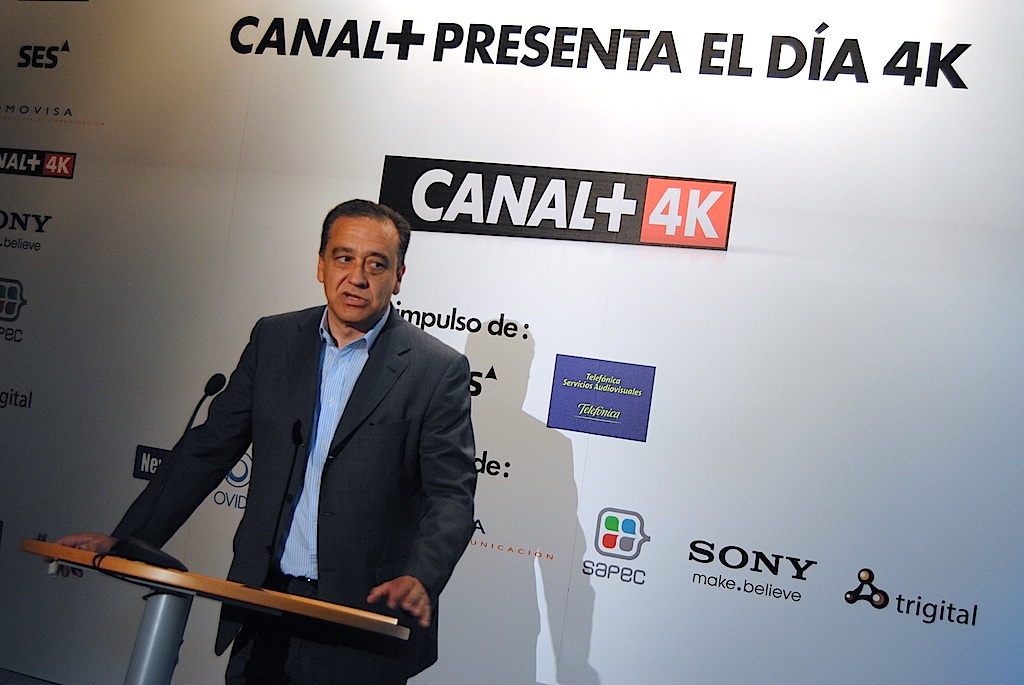
Canal+, plataforma pionera en España en las emisiones en alta definición y posteriormente en 3D, ha dado a conocer este jueves en Madrid su nueva apuesta por la Ultra Alta Definición (UHDTV). En colaboración con SES Astra y Telefónica Servicios Audiovisuales (TSA), y con tecnología de última generación de Newtec, Ovid, Promovisa, Sapec, Sony y Trigital, Canal+ está llevando a cabo las primeras experiencias en 4K. Con este proyecto, Canal+ ha querido poner a prueba la cadena completa de producción, emisión y recepción de contenido 4K.
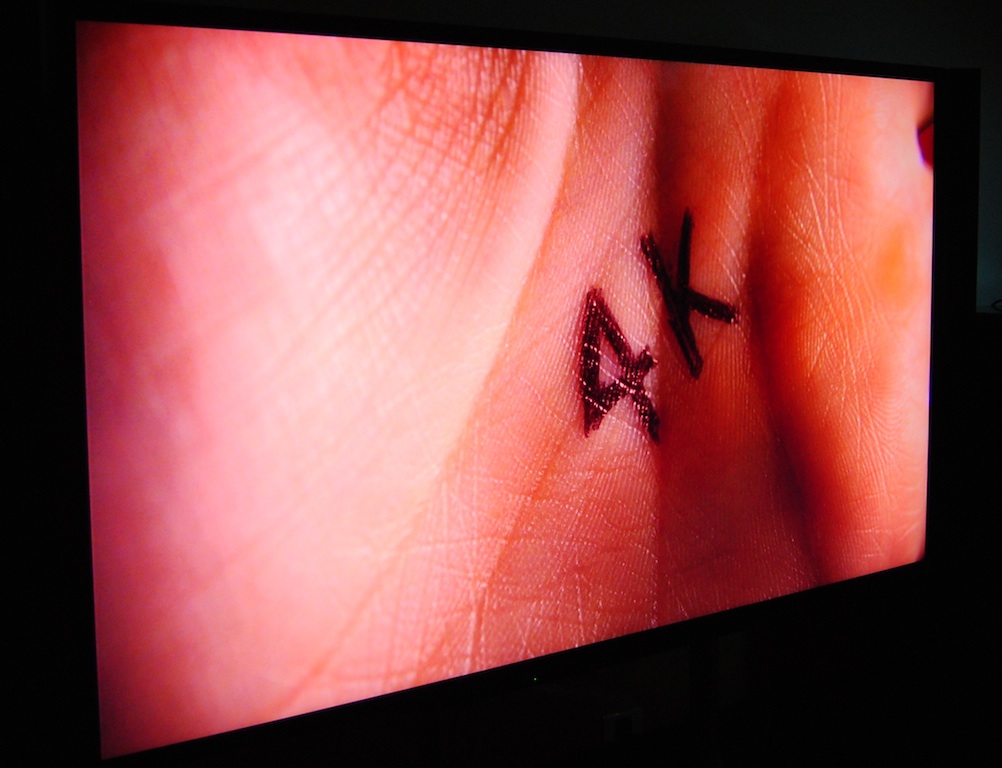
A lo largo de este 13 de junio, Canal+ está emitiendo una pieza de cinco minutos en UHDTV con una imagen de 3840×2160 píxeles, 4 veces superior al número de píxeles de una imagen en HD.
Los, aún escasos, espectadores que cuenten con un televisor 4K pueden seguir esta emisión a través del satélite Astra a 19,2ºE en la frecuencia 10 906.00 (polarización vertical).
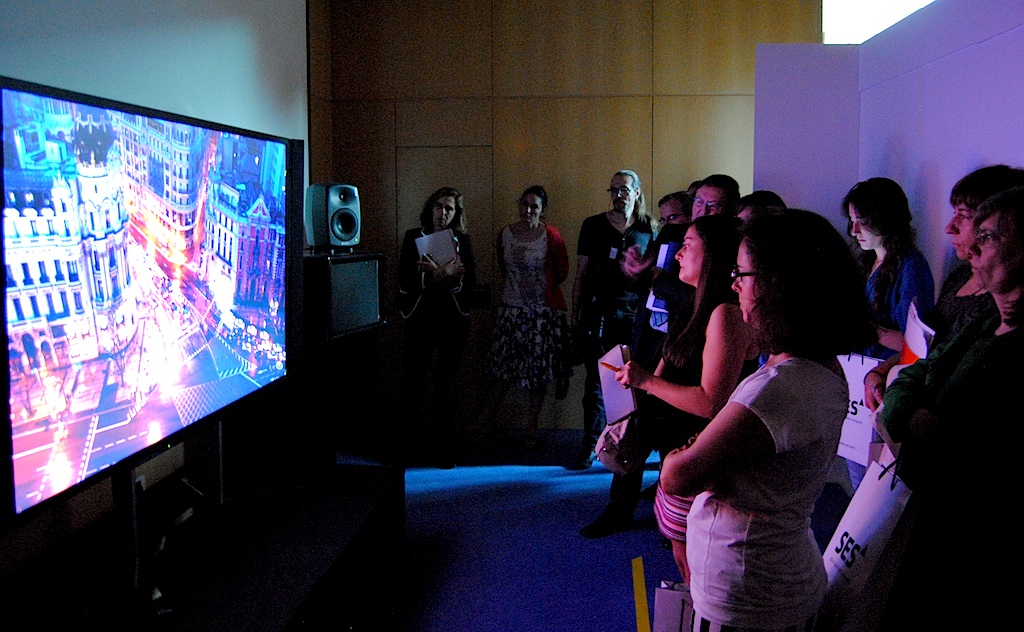
Un proyecto colaborativo
Canal+ ha reunido en este primer proyecto 4K a numerosas empresas del sector que se han implicado en las diferentes fases desde producción a postproducción y emisión.
Ovide ha facilitado las cámaras, ópticas y material auxiliar de grabación, Promovisa se ha encargado de los elementos de la edición offline, Trigital ha participado en el acabado final de la pieza-demo 4K, Newtec ha colaborado con sus moduladores y demoduladores, Sapec ha llevado a cabo la codificación bajo estándar ITU H264 (MPEG4/AVC) de las imágenes, TSA ha facilitado las tramas ASI y el uplink al satélite, y SES Astra ha aportado la capacidad satelital.
Adolfo Remacha, director técnico de PRISA Tv, ha llamado la atención sobre la mayor resolución, un margen dinámico más extendido en zonas claras y oscuras, y un espacio de color extendido que aporta el 4K. También ha hecho referencia a la inmersividad que supone esta alta resolución. “El 4K permite que podamos situarnos más cerca de la pantalla, con una sensación totalmente inmersiva sin apreciar píxeles y líneas como ocurre ahora en la alta definición actual. Frente a la distancia para ver alta definición, que es tres veces la altura de la pantalla, ahora con la Ultra Alta Definición el espectador se podrá situar apenas a metro y medio en televisores de gran formato, mejorando así esta experiencia visual inmersiva”, ha destacado Remacha.
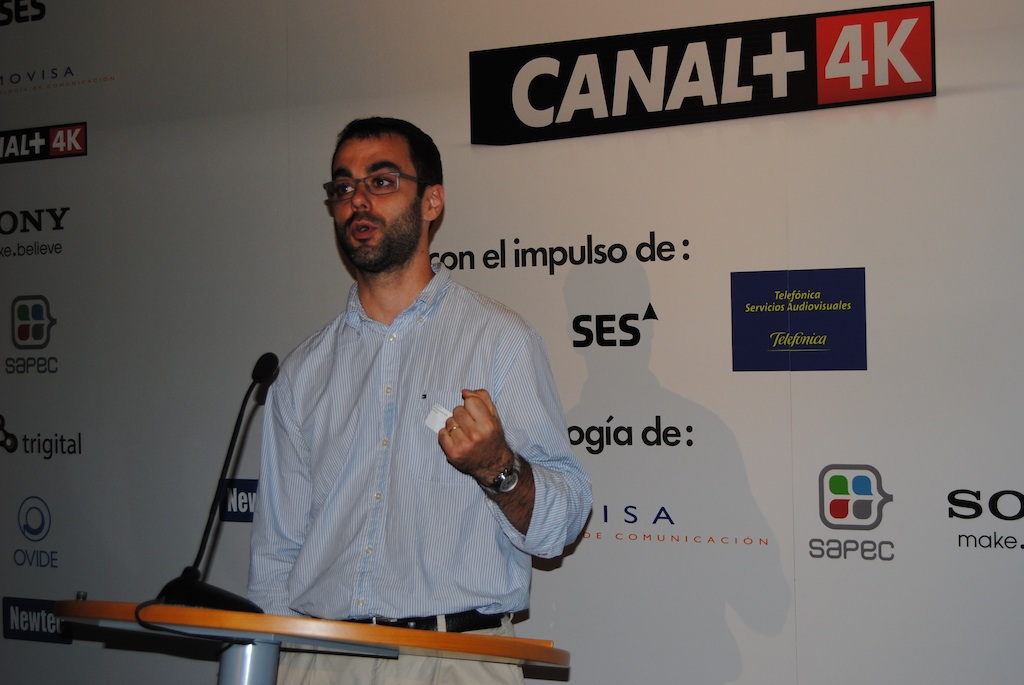 Sergi Maudet, director técnico de Ovide, ha remarcado que diferencia de otras revoluciones como supuso la irrupción del HD o el 3D, “ahora, la falta de contenidos no sería un problema ya que hay más de mil películas que están rodadas en 4K”. Además, ha señalado que, por fin, sí se dan las condiciones para, no solo producir sino también, almacenar y emitir 4K.
Durante la presentación de esta experiencia, David Martínez, director de sistemas en Promovisa, ha hecho un repaso a la fase de postproducción llevada a cabo sobre Avid Media Composer y Nitris contra las imágenes RAW de las imágenes (offfline).
Por su parte, Pedro Escalona, director general de Trigital, se ha centrado en el proceso de acabado de la pieza 4K con DVS Clipster partiendo de las EDL suministradas por Media Composer.
Miguel Ángel Cristóbal, director general de Sapec, ha reseñado que “el reto tecnológico era poder utilizar una fuerte compresión, mayor de 150 a 1, manteniendo la calidad y el detalle de imagen que ofrece la tecnología HDTV. Esta compresión es la que permite poder difundir la señal de UHDTV a 6 Gbps por un transpondedor de satélite a 40 Mbps”.
 Fernando Andreu, director comercial para el Sur de Europa en Newtec, ha comentado que “hemos aportado nuestros moduladores MDM6000 y MDM6100 que soportan las nuevas DVB-S2 Extensions para lograr una mayor eficiencia, de hasta 37% más, en comparación con DVB-S2. Esta optimización del segmento espacial va a facilitar la inclusión de contenidos 4K UHDTV en las plataformas de televisión por satélite”.
Dolores del Campillo, directora del proyecto en TSA, ha llamado la atención sobre el trabajo de la compañía para generar la trama-ASI a partir de un fichero de vídeo 4K para posteriormente enviarlo a los equipos necesarios que pusieran la portadora en el satélite.
Luis Sahún, director general de Astra, ha reseñado que para esta emisión se está utilizando una configuración 8PSK 2/3, 22 Mbaud, Pilot On, Roll-off 35%. Además ha hecho un llamamiento a la Administración para que tenga en cuenta el 4K en las futuras ordenaciones del espectro.
Para la producción de esta prueba piloto se han utilizando cámaras Sony F65 RS junto a ópticas ARRI Master Prime, generando un volumen de datos, a 120 fps, de 5 gigabits por segundo. Héctor Sierra, responsable de cuentas directas de Sony Profesional, ha llamado la atención sobre la sensación inmersiva que “ofrecen 8 millones de píxeles que permiten ver detalles a sólo 1,6 metros de distancia en pantallas de 84″”.
Sierra ha comentado que, coincidiendo con la Copa Confederaciones, Sony participará con la producción de varias señales 4K unidas sin costuras mediante software facilitando la captura de detalles mediante la ampliación de determinadas zonas de esas señales con tan alta resolución.
Por último, Adolfo Remacha, ha estimado que habrá que esperar unos dos o tres años para que contemos con procesos totalmente industriales en entornos de captación, postproducción, cabeceras en tiempo real, satélites y receptores…”Los Juegos Olímpicos de 2016 podrían significar el pistoletazo de salida para emisiones regulares en 4K en Europa. Canal+ estará ahí cuando sea posible y viable una explotación comercial”, reconoce Remacha.
Did you like this article?
Subscribe to our NEWSLETTER and you won't miss anything.
Related articles
 RTVE confirma su nuevo canal 2Cat, un proyecto 100% en catalán que arrancará en otoño
 Ninja Kidz YouTube Channel Produces Latest Hit Using Blackmagic Design Solutions
 El primer canal de televisión de música dance, Clubbing TV, ya emite en Ibiza y Formentera
 Cellnex broadcasts three 4K contents on a single DTT channel
 Imagina US produces the Copa América Centenario for the Argentine channel TyC Sports
 The “clásico”, the first live sporting event to be broadcast in Spain on UHDTV
 BT Sport selects Ericsson to launch UK's first UHDTV channel
 Hispasat presenta su canal piloto en UHDTV para América
 The new channel BeIN Sport, a project of Al Jazeera in France, underway
 Telefónica implements a pioneering multimedia charging project in the car
 NRD Multimedia realizará el proyecto del nuevo Canal 9 de Costa Rica
 Netia helps spread French cinema in a pioneering social media project
 Canal+ estrenará en su web, ‘Oído caníbal’, un proyecto experimental e independiente
 Canal+ entrega el Premio Proyecto Corto 2009 en Gijón