





28º Encuentro de Telecomunicaciones y Economía Digital, el reto europeo
Los últimos avances en telecomunicaciones llegan a la Universidad Internacional Menéndez Pelayo en un encuentro organizado en colaboración con AMETIC y la Fundación Telefónica y en el que participan los primeros ejecutivos de las más importantes compañías del sector.
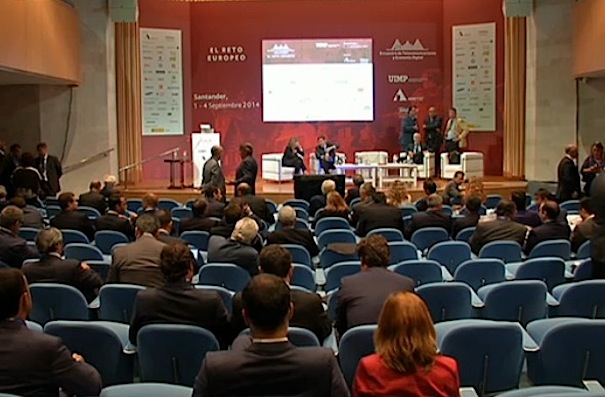
Organizado por la Universidad Menéndez Pelayo, en colaboración con AMETIC y la Fundación Telefónica, Santander alberga desde hoy lunes y hasta el próximo jueves, 4 de septiembre, el 28º Encuentro de Telecomunicaciones y Economía Digital: el reto europeo.
Partiendo del concepto que las TIC son uno de los pilares de nuestra economía con aproximadamente el 8% del PIB español, este encuentro reúne a los primeros ejecutivos de las más importantes compañías del sector para analizar el momento que atravesamos con un especial enfoque de miras en Europa y en cómo perciben la situación desde sus respectivas compañías y qué recomendaciones pueden ofrecer para poder desarrollar la economía digital en nuestra zona de proximidad.
En numerosas mesas de debate, los expertos pondrán en común la situación europea que, tras años de liderazgo, está sufriendo un preocupante estancamiento así como propondrán vías para la regeneración de nuestra industria, reportando riqueza para los europeos, generación de valor, empleo y una economía mucho más sostenible y respetuosa con el medio ambiente. Macrotendencias como movilidad, big data y digitalización total, reindustrialización, transformación digital de los modelos de negocio o la revolución de los contenidos en Europa son algunas de las cuestiones que abordará este encuentro.
El ministro de Industria, José Manuel Soria, inaugura este curso en el que participarán los secretarios de Estado de Telecomunicaciones, Víctor Calvo-Sotelo, de Cultura, José Mª Lassalle, de Investigación, Desarrollo e Innovación, Carmen Vela, y de Empleo, Engracia Hidalgo. A ellos se unirán importantes nombres de la industria tecnológica en España como los presidentes de Telefónica y Vodafone, César Alierta y Vittorio Colao, la presidenta de Microsoft España, María Garaña, o la Premio Príncipe de Asturias a las Ciencias Sociales 2013, Saskia Sassen.
Las TIC, motor de la recuperación
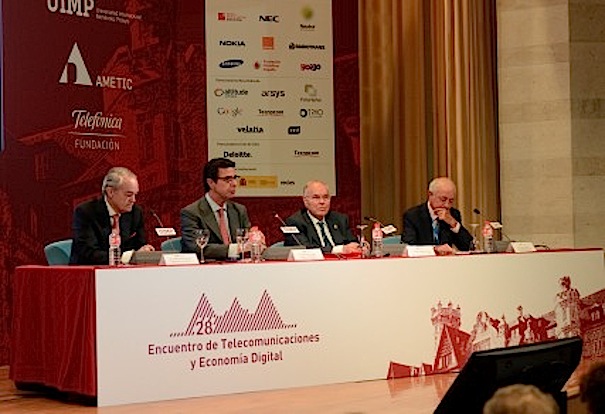 Durante su discurso de apertura, José Manuel Soria ha incidido en los índices macroeconómicos y sociales que evidencian la recuperación de la economía española. “En esta senda de crecimiento, las telecomunicaciones y la economía digital juegan un papel clave”, ha subrayado.
El ministro Soria se ha apoyado en las cifras de un sector de relevante peso económico como son las TIC, que, según ha explicado, genera una facturación anual superior a los 91.000 millones de euros, emplea a 400.000 personas e invierte 15.000 millones de euros cada año.
Soria ha destacado la actual estrategia de Ministerio de Industria, Energía y Turismo, que según ha apuntado se basa en responder a cuatro grandes desafíos: la reindustrialización del país basada en la economía digital, la extensión de la banda ancha ultrarrápida, la mejora de la competitividad y la productividad, y la confianza y seguridad en el entorno digital.
Como respuesta a estos retos, el Gobierno, con el apoyo y la colaboración del sector TIC, ha diseñado y puesto en marcha la Agenda Digital para España, cuya cifra de inversión supera los 2.000 millones de euros, para el periodo 2013-2015.
Durante su intervención, el ministro Soria también ha dado a conocer los múltiples proyectos que el Ministerio de Industria, Energía y Turismo desarrolla en relación con las Telecomunicaciones, y ha marcado como prioridad máxima “conseguir la mejor 4G de Europa y hacer del sector de las telecomunicaciones y de la economía digital el motor que España necesita”.
Tras realizar un profundo análisis de la realidad de las Tecnologías de la Información y la Comunicación en clave nacional, José Manuel Soria ha anunciado también los retos que hay que abordar a corto plazo en el marco europeo. En este sentido ha propuesto el impulso de un paquete digital europeo que aborde los retos digitales en su conjunto con medidas legislativas y no legislativas. A la vez ha apoyado una rápida aprobación de los actuales reglamentos europeos en tramitación como el del Mercado Único de Telecomunicaciones que debería estar aprobado durante el presente semestre de la presidencia italiana.
Acceso al streaming en directo.
Did you like this article?
Subscribe to our NEWSLETTER and you won't miss anything.
Related articles
 The 31st Digital Economy and Telecommunications Meeting will focus on the transversality of digital transformation
 Comienza en la UIMP el VIII Encuentro Hispasat sobre Telecomunicaciones Espaciales
 AMETIC organiza el “2º Encuentro de Economía Digital”
 I+D, big data e Internet de las cosas centran la primera jornada del 28º Encuentro de Telecomunicaciones y Economía Digital
 El 29º Encuentro de Telecomunicaciones y Economía Digital reúne en Santander a los primeros ejecutivos de las empresas tecnológicas
 AMETIC convoca el 29º Encuentro de Telecomunicaciones y Economía Digital
 José Manuel Soria at the 1st Digital Economy Meeting: “the digital economy is no longer a challenge, it is a reality”
 VII Encuentro sobre Telecomunicaciones Espaciales en la UIMP
 El Encuentro de las Telecomunicaciones desgrana las claves de la nueva Economía digital en la UIMP
 La economía digital centrará el programa del XXVII Encuentro de las Telecomunicaciones
 La UIMP acoge el VI Encuentro sobre Telecomunicaciones Espaciales
 El mercado audiovisual europeo representa 107,4 mil millones de euros de la economía de la Unión
 El dividendo digital, nuevo reto de la televisión digital
 V Encuentro sobre Telecomunicaciones y Gobiernos Locales